 Pin It
 There's something about the smell of cumin and turmeric hitting a hot pan that instantly transports me to a tiny kitchen in London where my friend Priya first taught me how to make curry. She didn't measure anything, just knew by instinct when the spices had toasted enough, when the coconut milk needed stirring. Years later, I finally made this dish alone and realized I was doing it exactly the way she'd shown me—but with chickpeas, which made it feel like my own creation. Now it's the one meal I can throw together on a Wednesday night when everything feels too busy, and somehow it tastes like comfort and time with people I love.
I made this for a potluck once and watched someone take a second bowl before finishing their first—that's when I knew I'd nailed it. The coconut milk makes it rich without being heavy, and the spinach at the end adds this brightness that catches everyone off guard. It was the dish that came home empty, which in my book is the highest compliment.
Ingredients
- Yellow onion: The foundation—dice it fine and let it turn translucent, which takes longer than you'd think but is worth the wait.
- Garlic and ginger: Fresh always, never jarred; the aromatics that make your kitchen smell like you know what you're doing.
- Red bell pepper: Adds sweetness and color, though any color works if that's what you have on hand.
- Baby spinach or kale: Wilts in at the end so it stays bright and doesn't turn the curry murky.
- Carrot: Optional but adds earthiness and a little natural sweetness that balances the spices.
- Chickpeas: Drain and rinse them well—this step matters more than you'd think for keeping the curry clean-tasting.
- Coconut milk: Full-fat if you want richness, light if you prefer less heaviness; both work beautifully.
- Vegetable broth: The base that keeps everything from being too thick or one-note.
- Diced tomatoes: Canned is fine, actually better for consistency than fresh.
- Curry powder: The star of the show—smell yours before you buy; quality varies wildly.
- Cumin, turmeric, smoked paprika: These three are what give it depth; don't skip any.
- Chili flakes: Optional heat, but a tiny pinch transforms it for people who love spice.
- Coconut oil or olive oil: Either works; coconut oil adds subtle flavor, olive oil is more neutral.
- Cilantro and lime: Finish with these—they brighten everything and feel like a gift to yourself.
Tired of Takeout? 🥡
Get 10 meals you can make faster than delivery arrives. Seriously.
One email. No spam. Unsubscribe anytime.
Instructions
- Heat and soften:
- Pour oil into your pot and let it shimmer before the onion goes in—you want it sizzling slightly, not timidly steaming. Let the onion turn translucent and lose its raw edge, which usually takes 3-4 minutes and fills your kitchen with the most welcoming smell.
- Build the aromatics:
- Add garlic, ginger, and pepper, then wait for fragrance—this is how you know the flavors are waking up. Two minutes is enough; you're not trying to cook them through, just release their essence.
- Toast the spices:
- Stir in all the dry spices and let them sit in the hot oil for about a minute, stirring constantly so they toast but don't burn. This is the moment everything shifts from raw ingredients to something that smells like actual curry.
- Build the curry:
- Add tomatoes, coconut milk, broth, chickpeas, and carrot in one go, stirring so nothing sticks to the bottom. The mixture should look loose and fragrant, like something worth waiting for.
- Simmer gently:
- Bring it to a simmer, then lower the heat so it bubbles gently under a lid for 15 minutes, stirring now and then. This is when you can breathe for a moment—the pot is handling things, and your only job is to let it do its work.
- Finish bright:
- Stir in the spinach and let it wilt uncovered for 2-3 minutes while you taste and adjust salt and pepper. If it's thicker than you want, add a splash of broth; if it needs more spice, trust your instinct.
 Pin It
 I remember serving this to someone who said they'd never had a homemade curry before, and watching their face when they realized how simple it actually is. That's when I understood—this recipe isn't about being fancy or difficult; it's about being genuinely good and showing up for yourself on a regular Tuesday.
What Makes This Different
Most curries you make from scratch feel like a production, with spice grinding and coconut cream whisking. This one strips away the performance and keeps the soul—it's all about the spices toasting in oil and chickpeas absorbing flavor as everything simmers together. The coconut milk does the heavy lifting without needing cream or butter to feel rich, and the whole thing comes together in one pot so you're not juggling pans halfway through dinner.
Variations Worth Trying
Once you've made this a few times, it becomes a canvas. I've added cubed tofu for extra protein, swapped kale for spinach when that's what was in the drawer, and even thrown in diced sweet potato for earthiness. The spice level shifts depending on who's eating—I keep chili flakes on the table so people can adjust their own heat, which feels more respectful than deciding for them.
Serving and Storage
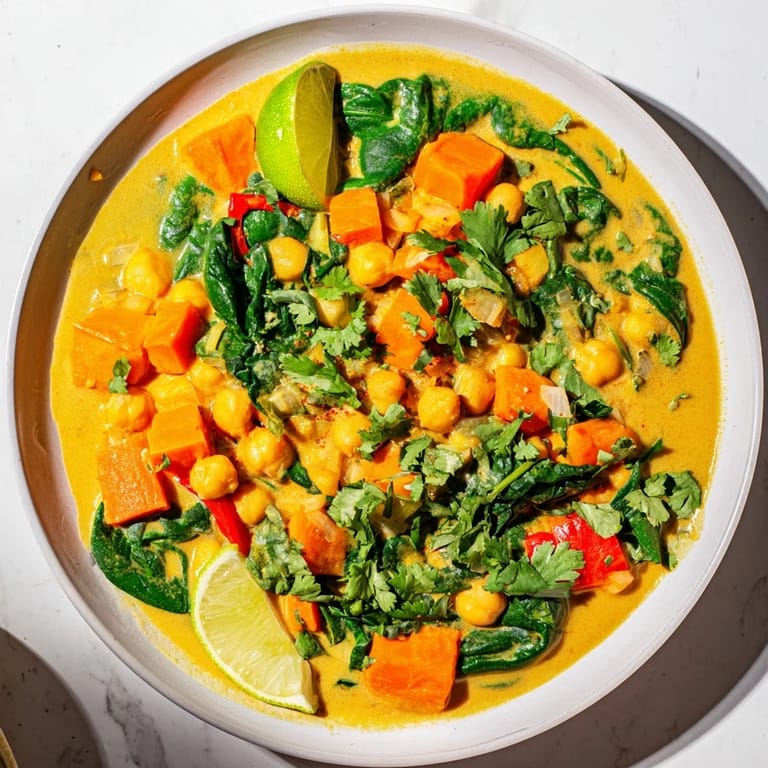
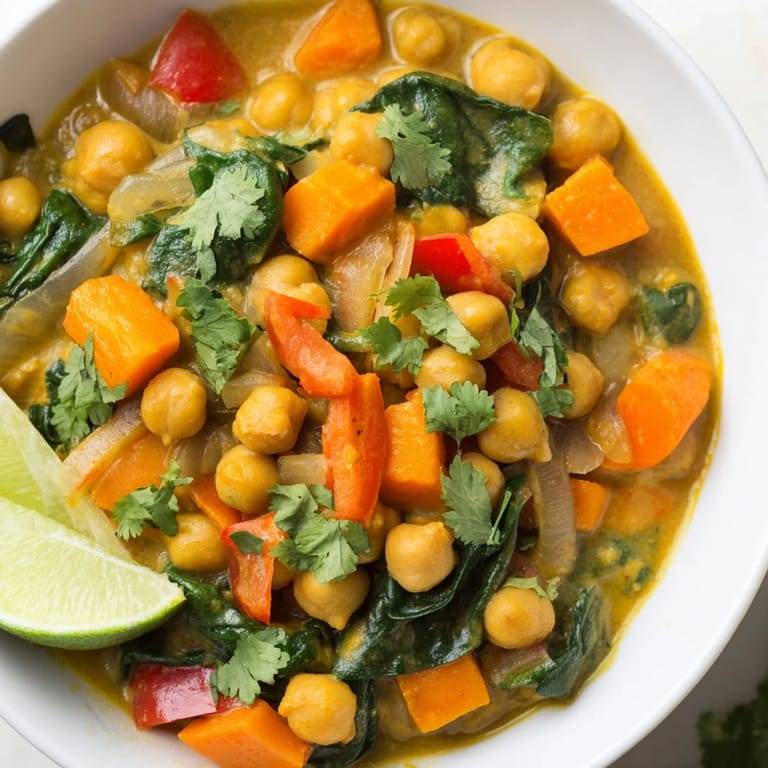
Serve it hot in bowls with cilantro scattered over the top and lime wedges on the side—the acid from the lime is essential, not optional. Jasmine or basmati rice soaks up the sauce perfectly, and naan tears through the curry like you're meant to eat it that way. Leftovers keep for 4 days in the fridge and actually taste better the next day as flavors deepen and meld.
- Squeeze lime right before eating, not before storing, so everything stays bright.
- Rice can cook while the curry simmers, so timing works out naturally.
- Keep chili flakes and cilantro at the table so people customize their own bowls.
 Pin It
 This is the meal I return to when I need to remember that good food doesn't require hours or complicated technique—just real ingredients, a little patience, and the willingness to trust the process. Make it, share it, and watch how it becomes someone's favorite too.
Recipe Questions & Answers
- → Can I use fresh chickpeas instead of canned?
Yes, fresh chickpeas can be used but will require soaking overnight and longer cooking times before adding to the curry.
- → What can I substitute for coconut milk?
Use almond milk or cashew cream for a similar creamy texture, though the flavor will be milder.
- → How can I adjust the spice level?
Modify the amount of chili flakes or omit them entirely for a milder dish; adding fresh chili peppers can increase heat.
- → Is it possible to prepare this dish in advance?
Yes, the curry tastes great when made ahead and stored in the refrigerator for up to 3 days; flavors deepen over time.
- → What vegetables can I add or substitute?
Try kale or Swiss chard instead of spinach, or include diced carrots and bell peppers for extra texture and color.
- → Can I add protein to this dish?
Adding cubed tofu or tempeh boosts protein and complements the curry’s flavors well.