 Pin It
 There's something almost meditative about slicing vegetables on a humid summer afternoon, knowing that in twenty minutes you'll be eating something cold and alive with flavor. I discovered this sesame-ginger noodle salad during one of those stretches where the kitchen felt too warm to turn on the oven, and I needed something that tasted like it required effort but didn't. One bite and I understood why it became my go-to when friends dropped by unexpectedly—it's the kind of dish that feels both casual and composed.
I made this for a potluck once where someone had forgotten to bring a contribution, and I watched them eat three bowls while sitting on the counter, not bothering with a plate. That moment—when food becomes unself-conscious comfort instead of a social obligation—told me this recipe had staying power.
Ingredients
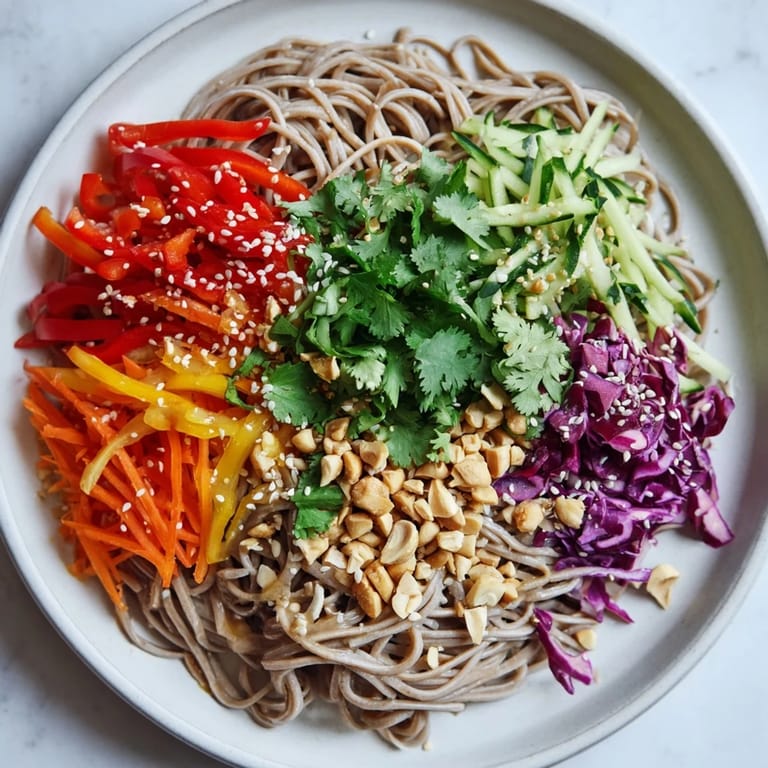
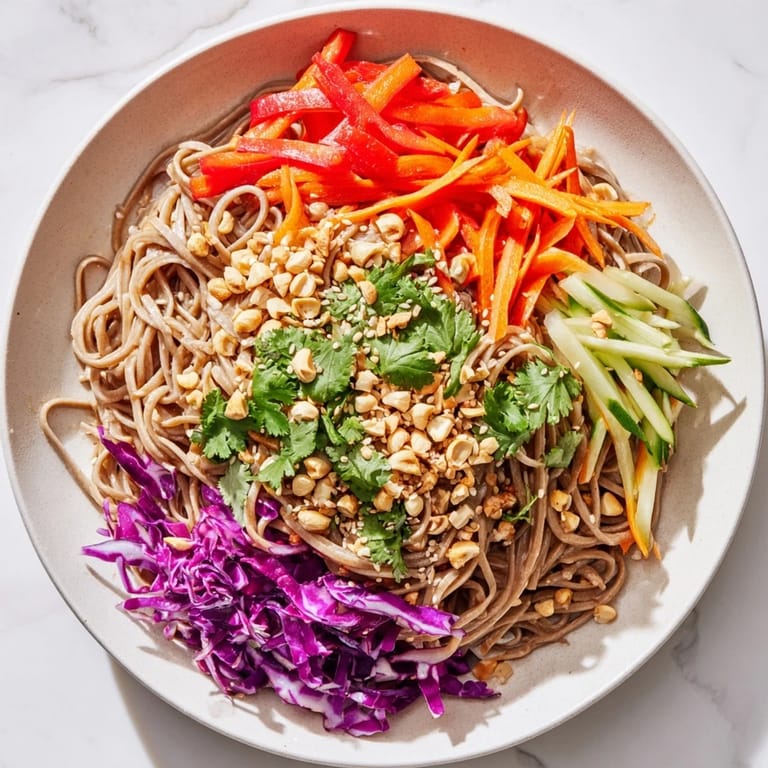
- Soba or rice noodles (250g): Soba noodles carry a delicate nuttiness that pairs beautifully with sesame, but rice noodles work equally well if you need them gluten-free—don't skip the cold rinse or they'll clump together.
- Carrot, julienned: The sweetness balances the salt in the dressing, and the slight firmness gives you something to bite into.
- Red bell pepper, thinly sliced: It adds brightness and crunch that doesn't wilt even after hours of sitting.
- Cucumber, seeded and julienned: Seeding matters here because you want crisp, not waterlogged—trust the extra step.
- Spring onions, finely sliced: A raw allium brings sharpness that cuts through the richness of the sesame oil.
- Red cabbage, thinly shredded: It holds its texture longer than other vegetables and lends a subtle earthiness.
- Fresh cilantro, chopped: This herb is optional only if you actively dislike it—most people discover they love it here.
- Soy sauce (3 tbsp): The backbone of the dressing; tamari works if you need gluten-free.
- Rice vinegar (2 tbsp): Sharper than white vinegar and less aggressive than red, it keeps the dressing bright without overwhelming.
- Toasted sesame oil (2 tbsp): Buy the good stuff—a little goes a long way and it's what transforms ordinary into memorable.
- Honey or maple syrup (1 tbsp): It rounds out the sharpness and gives the dressing body.
- Fresh ginger, finely grated (1 tbsp): Ginger paste from a tube works in a pinch, but freshly grated tastes noticeably more vibrant.
- Garlic clove, minced: Raw garlic is assertive; mince it fine so it distributes evenly.
- Sriracha or chili sauce (1 tsp, optional): Start with half if you're unsure about heat levels.
- Toasted sesame seeds (1 tbsp plus more for garnish): Toasting them yourself if you have the time deepens the flavor considerably.
- Roasted peanuts or cashews, chopped: The textural contrast matters; don't skip it even if you think you might.
Tired of Takeout? 🥡
Get 10 meals you can make faster than delivery arrives. Seriously.
One email. No spam. Unsubscribe anytime.
Instructions
- Boil and chill the noodles:
- Bring a large pot of water to a rolling boil and cook the noodles exactly to package instructions—a minute longer and they turn mushy, a minute short and they're starchy. Drain immediately, rinse under cold running water while stirring gently with your fingers, then spread them on a plate or cutting board to cool completely.
- Prep your vegetables:
- Julienne the carrot and cucumber into matchsticks, slice the pepper and spring onions, shred the cabbage, mince the garlic, grate the ginger, and chop the cilantro—do this all at once so you're not scrambling later.
- Build the dressing:
- In a small bowl, whisk together soy sauce, rice vinegar, sesame oil, honey, ginger, garlic, and sriracha if using, along with the toasted sesame seeds. Taste it and adjust for balance—it should be salty, sharp, and slightly sweet all at once.
- Combine everything:
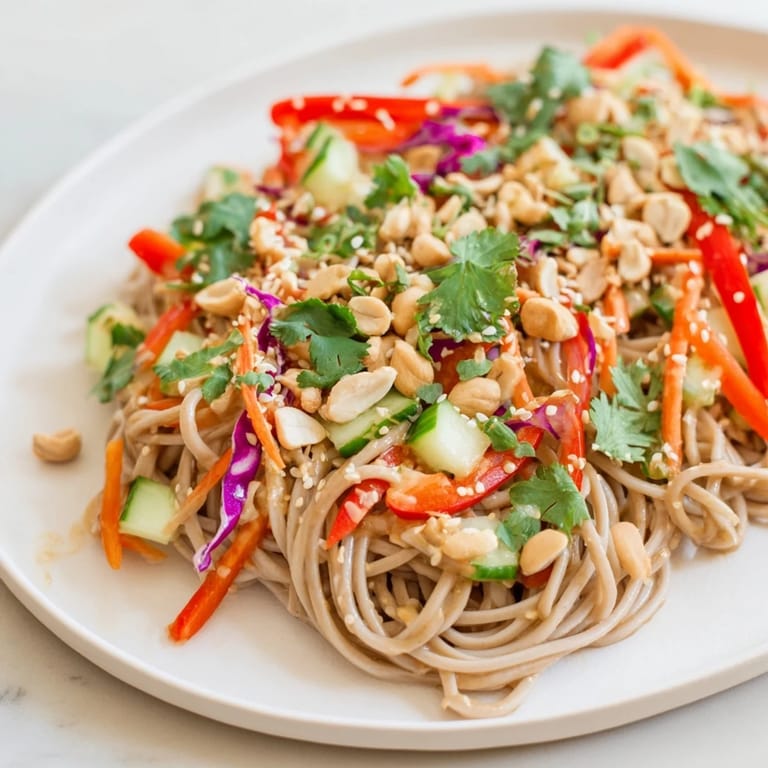
- In a large bowl, toss the cooled noodles with all the vegetables and cilantro, then pour the dressing over everything. Use salad tongs or two forks to toss until every strand is coated and the vegetables are evenly distributed.
- Serve with toppings:
- Divide among bowls and scatter roasted peanuts and extra sesame seeds on top. Eat immediately for maximum crunch, or cover and refrigerate for up to an hour—the flavors will deepen but the noodles will soften slightly.
 Pin It
 Once, while eating this straight from the bowl over the sink in quiet, I realized I was genuinely happy in that small moment—no performance, no occasion needed, just cold noodles and the hum of the refrigerator. That's when I knew I'd keep making it for the rest of my life.
Why This Dressing Works
The ratio of soy sauce to vinegar to sesame oil creates a dressing that's cohesive rather than separated, with each element supporting the others. Honey tempers the salt and vinegar without making it sweet, and ginger adds a warmth that feels almost architectural. Most people expect Asian dressings to be bright, but this one has depth—it builds in your mouth rather than fading.
Variations and Additions
This salad is patient with improvisation. I've made it with mint instead of cilantro when that's what I had, swapped white sesame seeds for black, and added thinly sliced grilled chicken or marinated tofu when I wanted more protein. The foundation is sturdy enough that you can play with it, and the dressing is bold enough to anchor whatever you add.
Serving and Storage Tips
Serve this chilled or at room temperature, depending on how warm it is outside and how you're feeling. It pairs naturally with iced tea, cold beer, or crisp white wine, and it's substantial enough to be a complete meal without anything else. If you're making it ahead, dress it no more than an hour before serving, though you can prep all the components the morning before.
- Store leftovers in an airtight container for up to two days, knowing that the noodles will absorb more dressing and become softer.
- Undress the salad if you know you'll have leftovers, storing the dressing separately so you can add as much as you want.
- The toasted nuts are best added just before eating to maintain their crunch and toasted flavor.
 Pin It
 This recipe exists because summer is real and sometimes you need food that doesn't ask you to suffer for it. Make it, eat it, share it with people who need something cold and kind.
Recipe Questions & Answers
- → What type of noodles are best for this salad?
Dried soba noodles work well for their texture and flavor, but rice noodles are a great gluten-free alternative.
- → Can the dressing be made ahead of time?
Yes, the sesame-ginger dressing can be prepared in advance and refrigerated to enhance the flavors before tossing with the noodles and veggies.
- → How should the noodles be prepared for this salad?
Cook noodles according to package instructions, then drain and rinse under cold water to stop cooking and cool them completely before combining.
- → Are there any recommended toppings for added texture?
Roasted peanuts or cashews and extra toasted sesame seeds add a delightful crunch and nutty flavor.
- → Can proteins be added to make this a more filling dish?
Yes, cooked shrimp, grilled chicken, or tofu can be included for extra protein and heartiness.
- → Is this dish suitable for vegetarian diets?
Absolutely, the ingredients are plant-based, making it well suited for vegetarian eating preferences.