 Pin It
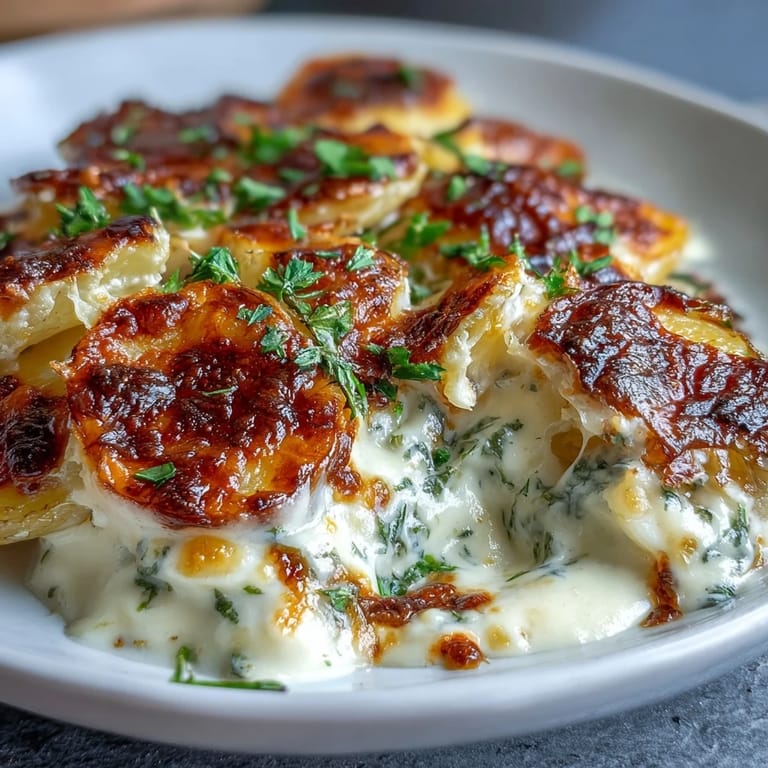
 My neighbor showed up at a potluck with a casserole dish wrapped in a kitchen towel, steam still rising from under the foil, and I knew immediately it was au gratin potatoes by the smell alone—that unmistakable blend of cream, garlic, and melting cheese that fills a kitchen like a warm invitation. One taste and I was texting her for the recipe before dessert arrived, because something about the way those tender potato slices surrendered to the rich sauce felt like comfort food elevated to an art form. What drew me in wasn't just the flavor; it was watching my kids actually ask for seconds of a potato dish, which felt like a small victory in the kitchen.
I made this for Easter dinner last spring, and my mother-in-law—who has opinions about everything—actually put her fork down and asked for the recipe, which in her language means absolute approval. The whole table went quiet except for the sound of scraping dishes, and my partner squeezed my hand under the table, the kind of small gesture that reminds you why you cook for people in the first place.
Ingredients
- Yukon Gold or Russet potatoes: Yukon Golds are waxy and hold their shape beautifully when sliced thin, but Russets work if that's what you have—just watch them so they don't get mushy.
- Heavy cream and whole milk: The combination of both creates a sauce that's rich without being heavy, and the milk keeps it from breaking during baking.
- Garlic cloves: Minced fine so they dissolve into the cream and perfume every layer without any sharp, raw bites.
- Salt, pepper, and nutmeg: That whisper of nutmeg is the detail that makes people pause mid-bite and try to figure out what they're tasting.
- Gruyère cheese: This is the one ingredient I don't skip on—it has a depth that sharp cheddar can't quite match, and it melts into something almost velvety.
- Parmesan cheese: The addition of Parmesan gives you that crispy, golden top and adds a salty complexity that balance the richness.
- Fresh chives or parsley: A last-minute garnish that catches the light and adds a reminder that something green and fresh existed in this creation.
Tired of Takeout? 🥡
Get 10 meals you can make faster than delivery arrives. Seriously.
One email. No spam. Unsubscribe anytime.
Instructions
- Heat your oven and prepare the dish:
- Set the oven to 375°F and butter your baking dish generously—rub it with a cut garlic clove if you're feeling fancy, since the warmth will release its oils into every corner. This small step flavors the whole dish from the foundation up.
- Warm the cream mixture gently:
- Combine the heavy cream, milk, garlic, salt, pepper, and nutmeg in a saucepan and warm it slowly over medium-low heat until steam rises—you're looking for just-steaming, never boiling, because boiling cream can break and separate. Let it sit off heat for a moment so the flavors get to know each other.
- Layer the first round of potatoes:
- Arrange half your thinly sliced potatoes in an even layer across the bottom of the dish, overlapping them slightly like shingles on a roof. This is where patience matters—uneven layers mean uneven cooking.
- Add the first cheese layer:
- Sprinkle half of your Gruyère and Parmesan mixture over those potatoes, distributing it so every bite will have cheese. Don't be shy here.
- Layer the remaining potatoes:
- Add the rest of your potato slices in an even layer, then pour that warm cream mixture slowly over everything, tilting the dish so it reaches all the corners. Watch it settle between the layers—it's oddly satisfying.
- Top with final cheese:
- Scatter the remaining Gruyère and Parmesan across the top, knowing this will become your golden crust. This is what people will see first, so make it look intentional.
- Bake covered, then uncover:
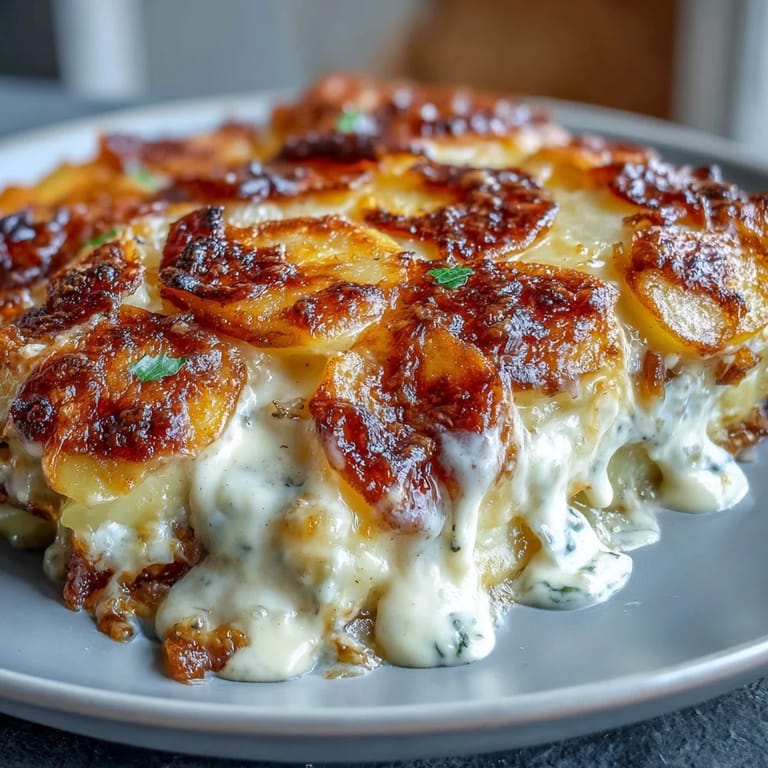
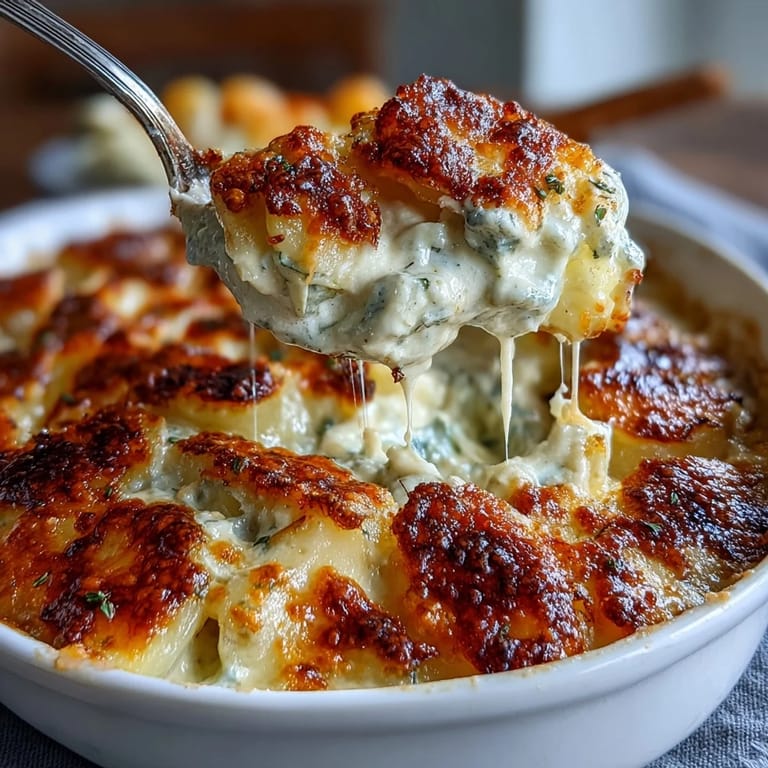
- Cover loosely with foil and bake for 40 minutes so the potatoes can soften in a gentle steam, then remove the foil and let it bake another 20 to 25 minutes until the top is burnished golden and the potatoes are tender when you pierce them with a knife. You'll know it's done when the cheese bubbles slightly at the edges and smells like heaven.
- Let it rest before serving:
- This 10-minute rest is crucial because it lets everything settle and firms up just enough to serve cleanly. It's also when the aroma peaks and everyone gathers around hungry.
 Pin It
 There's a moment when you pull this out of the oven and the golden cheese top is crackling slightly, steam rising through the bubbles, and you realize that something so simple—just potatoes, cream, and cheese—became something people will remember. That's when cooking stops being about following steps and starts being about creating moments.
The Art of Thin Slicing
The thickness of your potato slices determines whether this dish becomes creamy perfection or dense and starchy, so it's worth taking time here. I learned this the hard way after attempting to slice two pounds of potatoes with a dull knife while chatting on the phone, and ended up with some pieces thick enough to survive uncooked in the center. A sharp knife or mandoline makes this effortless, and uniform thickness means every layer cooks at exactly the same rate, so no surprises when you dig in.
Cheese Choices and Substitutions
Gruyère is the traditional choice, and it's worth seeking out because its nutty flavor and melting quality are genuinely special, but I've made this successfully with sharp white cheddar when Gruyère wasn't available, and it created a different but equally satisfying dish. The Parmesan is non-negotiable for that salty finish and crispy top, but other hard cheeses like Pecorino Romano would work if you prefer something with more bite. The key is choosing cheeses that melt smoothly and have enough personality to stand up to all that cream.
Timing and Temperature Tips
An oven thermometer changed my cooking life because what my oven claims is 375°F and what it actually is are sometimes two very different things, and I've learned this by opening the oven door a few times to find either barely-cooked potatoes or a burnt top with a raw center. The covered baking phase is what cooks the potatoes through in gentle steam, so don't be tempted to skip it or rush it. Once the foil comes off, keep an eye on the top's color rather than watching the clock—it's done when it's deep golden, not blonde, and slightly bubbling at the edges.
- A knife pierced through the top cheese layer and into the potato should meet no resistance if everything is cooked through.
- If your top is browning too fast before the potatoes are tender, loosely tent foil over just the top and keep baking.
- The 10-minute rest isn't optional—it firms up the sauce and makes serving look intentional rather than sloppy.
 Pin It
 This dish has a way of becoming the thing people specifically ask you to bring, the side dish that somehow outshines the main event. Make it once, and you'll understand why it's been a classic for generations.
Recipe Questions & Answers
- → What type of potatoes works best?
Yukon Gold or Russet potatoes are ideal for thin slicing and layering due to their starchy texture.
- → Can I substitute the cheeses used?
Gruyère can be swapped with sharp white cheddar for a different but still flavorful melt.
- → How do I avoid the sauce boiling over?
Heat the cream mixture gently over medium-low heat until steaming but not boiling to prevent curdling.
- → What adds extra flavor to this dish?
Rubbing the baking dish with a cut garlic clove or adding thinly sliced sweet onions between layers enhances taste.
- → How do I know when it’s fully cooked?
The potatoes are tender when pierced with a knife and the top is golden brown and bubbly.