 Pin It
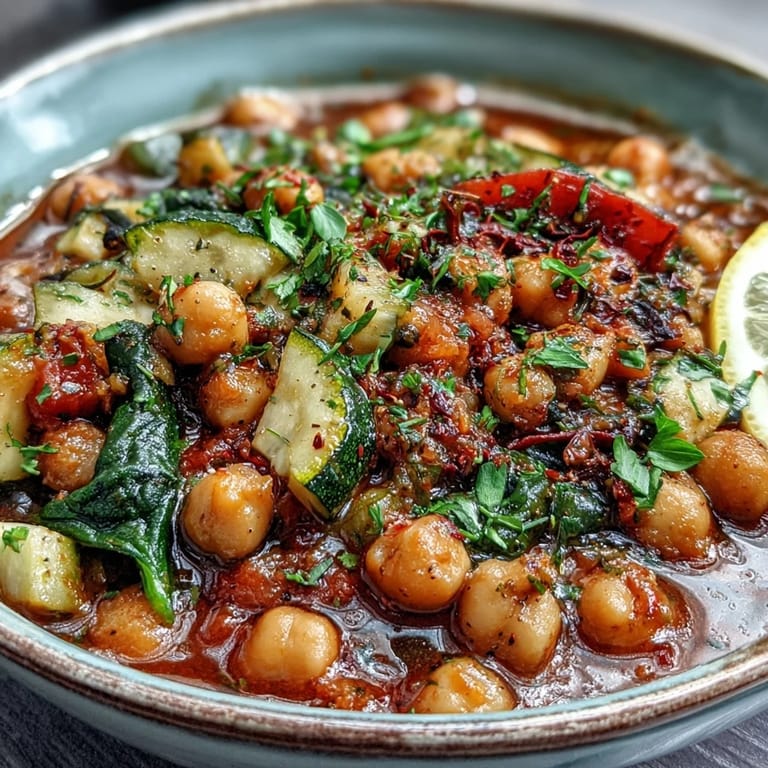
 There's something quietly magical about watching a pot of humble chickpeas transform into something that actually makes your body feel better. My friend Sarah handed me a bowl of this stew on a gray Tuesday afternoon, and I remember being struck by how the turmeric made everything glow golden under the kitchen light. She mentioned almost casually that her gut had never felt happier, and that stuck with me more than any health article ever could. Now whenever I make it, I'm not just cooking dinner—I'm doing something genuinely kind for myself.
I made this for my book club once, and something unexpected happened—nobody talked about the books that night. Instead, we all just kept eating, asking about the spices, mentioning how full yet energized we felt afterward. One person went home and texted me the next day that she'd made it again with kale instead of spinach and loved it even more. That's when I realized this stew has a quiet confidence about it; it doesn't need to prove anything.
Ingredients
- Chickpeas (2 cups cooked): These are the backbone of everything, loaded with fiber that actually does something for your digestion, so don't skip rinsing canned ones to reduce sodium.
- Onion (1 medium, diced): The base of flavor—let it get properly translucent so it dissolves into sweetness rather than staying sharp and raw.
- Garlic (2 cloves, minced): Add it after the onion softens or it burns and turns bitter, which I learned the difficult way.
- Carrots (2, sliced): Cut them into similar sizes so everything finishes cooking at roughly the same time.
- Celery (2 stalks, sliced): This quieter vegetable adds earthiness that balances the brightness of tomatoes.
- Red bell pepper (1, diced): A bit of sweetness and color that makes the stew feel alive on the plate.
- Zucchini (1, diced): Add this later so it stays tender and doesn't turn to mush.
- Fresh spinach (1 cup): Wilts in moments at the very end, adding nutrition without any effort.
- Diced tomatoes (1 can, 400g): Use canned for consistency unless you have beautiful fresh ones in season.
- Vegetable broth (4 cups): Low-sodium matters because you control the salt level from there.
- Olive oil (2 tbsp): Good quality if possible—it becomes part of the flavor, not just cooking medium.
- Ground cumin (1 tsp): The warm spice that makes this feel Mediterranean rather than random.
- Smoked paprika (1 tsp): Don't skip this—it adds depth that regular paprika can't touch.
- Ground turmeric (½ tsp): The anti-inflammatory star, though subtle in flavor.
- Ground coriander (½ tsp): A gentle floral note that ties everything together.
- Black pepper (½ tsp): Freshly ground makes a difference if you have a grinder.
- Salt (¾ tsp, or to taste): Taste as you go because salt preferences vary and canned ingredients already contribute some.
- Bay leaf (1): Remove it before serving—I learned this lesson by serving it once and watching someone politely spit it out.
- Fresh parsley (optional garnish): Adds brightness and makes the bowl look intentional.
- Lemon wedges (optional): A squeeze of acid at the end lifts the entire stew.
Tired of Takeout? 🥡
Get 10 meals you can make faster than delivery arrives. Seriously.
One email. No spam. Unsubscribe anytime.
Instructions
- Build your aromatics:
- Heat the olive oil in a large pot over medium heat, then add the diced onion and let it cook undisturbed for about 3 minutes until the edges turn translucent and soft. You'll smell when it's ready—that gentle, sweet onion smell rather than sharp and raw.
- Add depth with the soffritto:
- Stir in the minced garlic, carrots, celery, and red bell pepper, cooking for another 5 minutes while stirring occasionally. Everything should soften slightly and the kitchen will smell like you know what you're doing.
- Toast the spices:
- Add the cumin, smoked paprika, turmeric, coriander, black pepper, and salt all at once, stirring constantly for about 1 minute. This releases the essential oils and prevents them from tasting raw or bitter in the finished stew.
- Bring in the substance:
- Pour in the chickpeas, diced tomatoes with their juice, vegetable broth, and bay leaf, stirring everything together. Bring the whole pot to a boil, then immediately reduce the heat to low—this is where the stew stops rushing and starts becoming something worth eating.
- Let it simmer quietly:
- Leave it uncovered for 20 minutes, stirring occasionally so nothing sticks to the bottom and everything flavors evenly. The broth will darken slightly and smell increasingly complex and inviting.
- Add the tender vegetables:
- Stir in the diced zucchini and cook for another 7 minutes until it's just tender but not falling apart. This timing matters because overcooked zucchini disappears into mush.
- Finish with brightness:
- Add the fresh spinach and cook for 2 minutes until it's completely wilted, then remove the bay leaf. Taste and adjust the salt or spices—this is your moment to make it exactly what you want.
- Serve and celebrate:
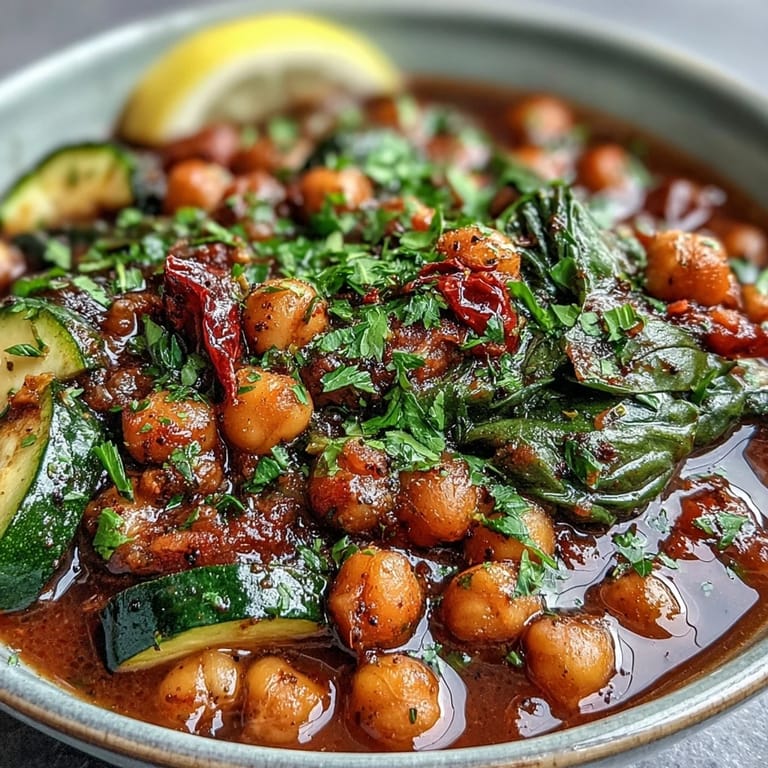
- Ladle it into bowls, top with fresh parsley if you have it, and add a squeeze of lemon juice. The warm stew in a bowl is both humble and nourishing, the kind of thing that feels like the right choice.
 Pin It
 My mom tried this stew once and spent the whole meal asking about the spices, fascinated by how something could taste complex without any meat. I realized then that this dish quietly challenges assumptions about what nourishing food needs to look like. It proved something I keep forgetting: the simplest meals sometimes have the most interesting stories behind them.
The Spice Story
The spice blend here isn't random—it's Mediterranean through and through, but with enough warmth to feel grounding rather than bright. Turmeric gets all the attention for its anti-inflammatory properties, but the real magic is how cumin and smoked paprika create a foundation that makes people actually want to eat vegetables. When I first made this without the paprika, it tasted flat and one-dimensional; adding it back in was like turning up the volume on a song you already loved.
Timing and Texture
The sequence of adding vegetables matters more than most recipes admit—root vegetables need the full simmer time to become genuinely tender, while zucchini and spinach only need minutes or they'll vanish. I think of it like a timeline: the first vegetables are building the foundation, the zucchini joins when the foundation is solid, and the spinach is just a final whisper of fresh greens. Learning to respect these timings changed how I think about cooking in general, not just stews.
Variations and Flexibility
This stew is forgiving in ways that make it perfect for improvisation—whatever vegetables are in your crisper drawer can probably work here with minimal adjustment. I've made it with kale instead of spinach when I had it, added diced sweet potato for extra substance on hungrier days, and once threw in fresh dill at the end because it was sitting on my counter judging me. The chickpeas and spice blend are your constants; everything else is negotiable based on what you have and what you're craving.
- Swap the spinach for kale or chard if that's what you have—add them with the zucchini for longer cooking time.
- Add a pinch of red chili flakes if you want heat, or stir in a splash of balsamic vinegar if you want more depth.
- Serve it over brown rice or with crusty whole grain bread to make it more substantial if you're feeding hungry people.
 Pin It
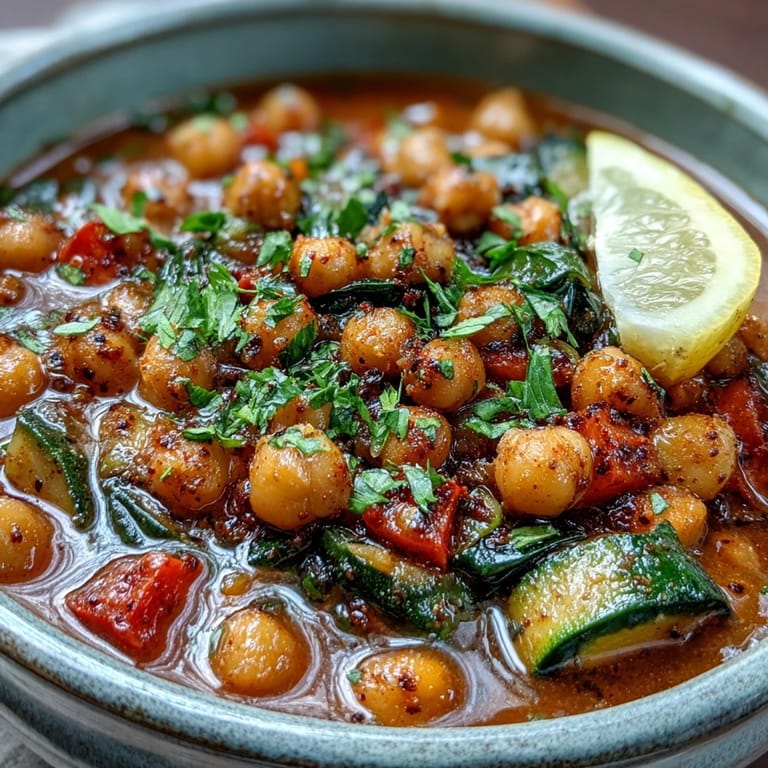
 This stew sits at the intersection of everything I want from food: it's genuinely good for you but never feels like punishment. Make it when you need something warm and real.
Recipe Questions & Answers
- → How long does this chickpea stew keep in the refrigerator?
The stew stores well in an airtight container in the refrigerator for 4-5 days. The flavors actually develop and deepen over time, making it an excellent option for meal prep.
- → Can I use dried chickpeas instead of canned?
Yes, soak 1 cup dried chickpeas overnight, then cook until tender before adding to the stew. This will require additional time but yields excellent texture and flavor.
- → What vegetables can I substitute in this stew?
Kale, chard, sweet potatoes, or butternut squash work beautifully. The base of onions, carrots, and celery provides the foundation, while other vegetables can be adjusted based on season and preference.
- → Is this stew freezer-friendly?
Absolutely. Cool completely, then transfer to freezer-safe containers. It freezes well for up to 3 months. Thaw overnight in the refrigerator before reheating gently on the stovetop.
- → What should I serve with chickpea stew?
Whole grain bread, brown rice, or quinoa make excellent accompaniments. A crisp green salad with vinaigrette provides refreshing contrast. For a complete meal, pair with roasted vegetables or crusty bread.
- → Can I make this stew in a slow cooker?
Sauté onions, garlic, and spices first, then transfer everything to the slow cooker. Cook on low for 6-7 hours or high for 3-4 hours. Add zucchini and spinach during the last 30 minutes.