 Pin It
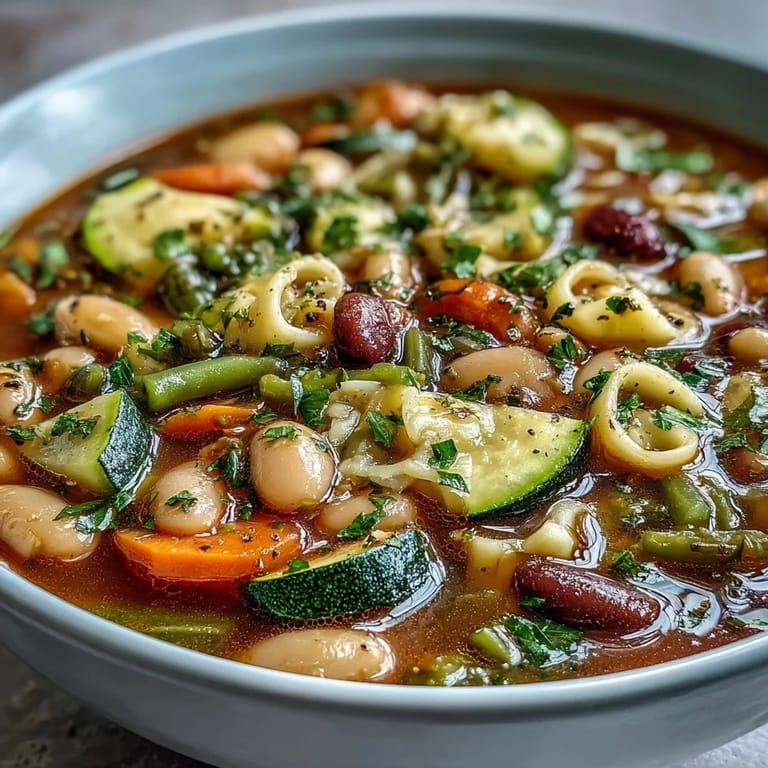
 My neighbor Maria taught me that minestrone isn't something you perfect—it's something you build, season by season, whatever's in your garden or the market that day. The first time I made it, I was convinced I needed to follow every step precisely, but watching her toss in handfuls of zucchini and beans with zero measuring cups changed everything. Now when that pot simmers on my stove, I can almost hear her voice saying the vegetables do the talking, not the recipe.
I made this for my daughter's soccer team after a rainy Saturday tournament, and watching ten muddy kids devour bowl after bowl while still in their uniforms reminded me why I cook at all. Someone even asked for the recipe—written on the back of a crumpled permission slip because that's how genuine moments happen.
Ingredients
- Olive oil: Use a decent extra virgin if you can—it's the foundation of flavor here, not just a cooking medium.
- Yellow onion, carrots, and celery: This holy trinity is where the soup's soul lives; don't rush the sauté or you'll miss the sweetness developing.
- Garlic: Two cloves minced fine, added after the softer vegetables so it doesn't burn and turn bitter on you.
- Zucchini, potato, and green beans: The supporting cast that gives structure and substance; peel the potato if you like, or leave the skin for earthiness and nutrients.
- Diced tomatoes: Canned is perfect here—no need to pretend fresh is always better when the can does the work for you.
- Cannellini beans: Rinse them well to remove the starchy liquid that clouds your broth and mutes the flavors.
- Small pasta: Ditalini or elbow macaroni work best because they cook evenly and don't overwhelm the vegetables.
- Vegetable broth: Quality matters; cheap broth will whisper when you need it to sing.
- Dried Italian herbs and bay leaf: These anchor the flavor profile and remind you that you're making something with roots.
- Spinach or kale: Add it at the very end so it stays bright and doesn't turn to mush.
- Fresh parsley: A handful scattered on top just before serving—this final flourish is what makes people notice.
- Parmesan cheese: Optional but worth it; let guests add their own so everyone gets what they want.
Tired of Takeout? 🥡
Get 10 meals you can make faster than delivery arrives. Seriously.
One email. No spam. Unsubscribe anytime.
Instructions
- Build Your Base:
- Heat the olive oil in a large pot over medium heat and add the onion, carrots, and celery. Let them soften for about five minutes, stirring occasionally—you're looking for the moment when the kitchen starts to smell like an Italian grandmother's kitchen, that's when you know it's right.
- Deepen the Foundation:
- Stir in the garlic, zucchini, potato, and green beans, cooking for three more minutes until everything is glistening and fragrant. The garlic should soften but not color, which is the difference between delicious and burned.
- Bring It Together:
- Add the diced tomatoes, rinsed cannellini beans, vegetable broth, dried herbs, and bay leaf, then bring the whole thing to a rolling boil. You'll see the color shift and deepen as the tomatoes break down and marry with the broth.
- Let It Simmer:
- Reduce the heat, cover the pot, and let it bubble gently for twenty minutes—this is when you stop hovering and do something else, trusting that time is doing the work. The vegetables will begin to soften and the flavors will start finding each other.
- Add the Pasta:
- Uncover the pot, stir in your pasta, and simmer uncovered for eight to ten minutes until both the pasta and vegetables are tender but not falling apart. Stir occasionally so the pasta doesn't stick to the bottom and burn.
- Final Greens:
- Fish out the bay leaf, then add your spinach or kale and let it wilt for two minutes in the heat—this is where the soup turns from good to alive. The greens brighten everything visually and nutritionally.
- Season and Taste:
- Now comes the most important step: taste it and season with salt and pepper until it tastes like what you want to eat. Trust your tongue, not the recipe.
- Serve with Love:
- Ladle into bowls, scatter fresh parsley over the top, and offer Parmesan on the side so people can make it their own. Serve with crusty bread and maybe a glass of Chianti if the moment calls for it.
 Pin It
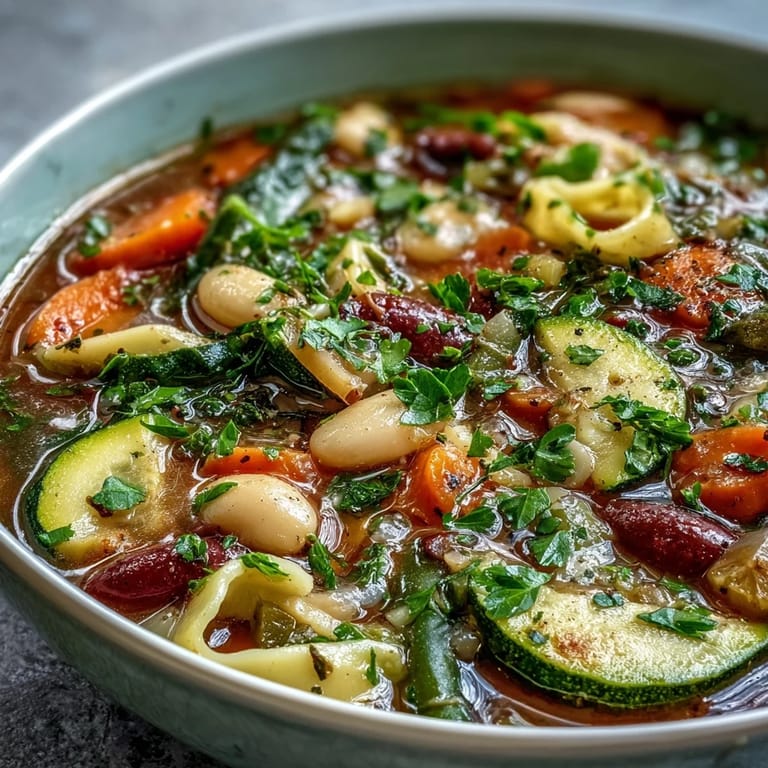
 There's a moment about thirty minutes into cooking minestrone when someone walks past your stove and stops, drawn by the smell alone. That's when you know you're doing something worth doing.
When to Make This
Minestrone is the soup you make when the weather turns and you want something warm but not heavy, or when you're feeding people and you want them to feel cared for without spending all day in the kitchen. It's equally at home on a Tuesday night when the fridge needs cleaning or at a casual dinner table where people actually want to talk to each other. I've made it in every season and it never feels out of place—spring versions get fresh peas and tender herbs, winter ones get heartier vegetables and longer simmering.
Customizing Your Minestrone
The beauty of this soup is that it's more guide than gospel—I've made it with white beans instead of cannellini, added half a head of chopped cabbage when I had it, thrown in leftover cooked grains for extra substance. Some cooks add a Parmesan rind during simmering and fish it out before serving, which deepens the umami in a way that feels almost like cheating because it's so effective. The vegetables can shift with what's in season and what calls to you—there's no police coming to check if your minestrone matches a template.
Storage and Serving Suggestions
This soup actually improves on its second day as the flavors continue finding each other in the refrigerator, so making a double batch is never a bad idea. It freezes beautifully for up to three months, though I usually keep it on hand for the rest of the week because it's such a reliable friend. Let me share a few thoughts that might help when you're plating and serving this.
- If you're reheating it and the pasta has absorbed liquid and swelled, add a splash of broth or water to bring it back to soup consistency.
- Don't add the fresh parsley and Parmesan until the last second—these finishing touches stay bright and can't be rushed.
- Serve with bread that can actually stand up to soup, something crusty enough to dunk without disintegrating.
 Pin It
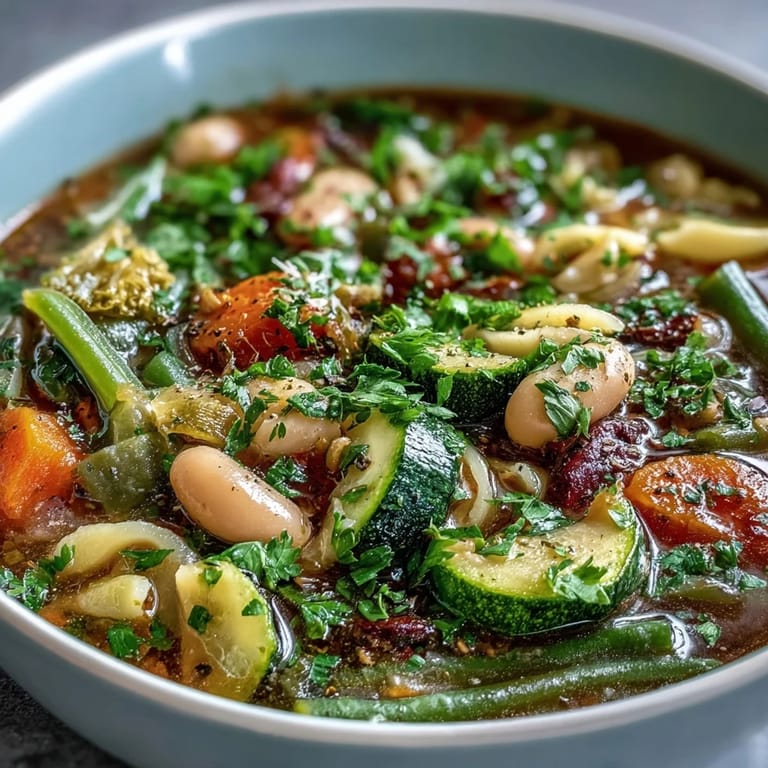
 Make this soup and you'll understand why people have been making versions of it across Italy for centuries—it's honest food that asks very little and gives so much. Your kitchen and your people will thank you.
Recipe Questions & Answers
- → What vegetables work best in minestrone?
Traditional minestrone includes onions, carrots, celery, zucchini, potatoes, and green beans. You can also add seasonal vegetables like cabbage, peas, or Swiss chard based on what's available.
- → Can I make this gluten-free?
Absolutely. Simply substitute regular pasta with your favorite gluten-free pasta variety. All other ingredients are naturally gluten-free.
- → How long does minestrone keep in the refrigerator?
Stored in an airtight container, minestrone keeps well for 4-5 days. The flavors often improve overnight as the ingredients meld together.
- → Should I cook the pasta separately?
Cooking pasta directly in the broth adds body to the soup as starch releases. If meal prepping, cook pasta separately to prevent it from becoming too soft.
- → Can I freeze minestrone soup?
Yes, freeze for up to 3 months. For best results, slightly undercook the pasta or add it when reheating, as pasta can become mushy when frozen.
- → What's the secret to deeper flavor?
Adding a Parmesan rind during simmering infuses the broth with umami richness. Remove it before serving for an authentic Italian touch.