 Pin It
 There's a moment in every cook's life when a humble vegetable stops being obligatory and becomes genuinely exciting—that's when I discovered what honey-mustard glazed Brussels sprouts could do. My neighbor brought a roasted batch to a potluck one autumn, and I watched people actually reach for thirds of a side dish, which almost never happens. I had to know her secret, and when she casually mentioned it was just honey, mustard, and a hot oven, something clicked. Now these crispy-edged, caramelized sprouts have become my answer to "what should I bring?"
I made these for my partner's family dinner once when I was stressed about what would feel "special enough" for a holiday table, and they became the dish everyone remembered. Someone actually said "these are better than the main," which I'm still riding on months later. That's when I realized it wasn't luck or some fancy technique—it was just good ingredients and honest heat, which is the best kind of cooking lesson.
Ingredients
- 1 lb Brussels sprouts, trimmed and halved: The cut side down matters more than you'd think—that flat surface touching the hot pan is where the real magic happens, creating a golden crust that makes these taste almost nutty.
- 2 tbsp olive oil: This is your heat conductor, so don't skip or swap it for something lighter; it needs to handle 425°F without flinching.
- 2 tbsp honey and 1½ tbsp Dijon mustard plus 1 tbsp whole-grain mustard: Together these create a glaze that's sweet and sharp at once, with the whole grains adding texture and keeping things interesting.
- 1 tbsp apple cider vinegar: This tiny amount cuts through the richness and keeps the glaze from tasting one-dimensional or cloying.
- ½ tsp garlic powder, ½ tsp salt, ¼ tsp black pepper: Seasoning is where patience pays off—taste as you go, because these ratios work but your palate might want slightly different balance.
- 2 tbsp fresh parsley (optional): A bright finish that's worth the five seconds to chop, though honestly, the dish shines without it too.
Tired of Takeout? 🥡
Get 10 meals you can make faster than delivery arrives. Seriously.
One email. No spam. Unsubscribe anytime.
Instructions
- Get your oven hot and your prep done:
- Preheat to 425°F and line a baking sheet with parchment paper—this is the moment to be proactive, because once the glaze is on those sprouts, you'll want to go straight to the oven.
- Make the glaze:
- Whisk together the olive oil, honey, both mustards, garlic powder, apple cider vinegar, salt, and pepper in a large bowl until the mixture looks smooth and slightly glossy. The whisking matters here; you're emulsifying those ingredients so they cling to the sprouts rather than pool at the bottom of the pan.
- Coat the sprouts thoroughly:
- Add your Brussels sprouts halves to the bowl and toss until every piece is coated, using your hands if a spoon feels awkward—you want no naked sprouts hiding underneath.
- Arrange them for caramelization:
- Spread the sprouts in a single layer on your baking sheet with the flat, cut side down; this is where the browning magic starts.
- Roast and flip:
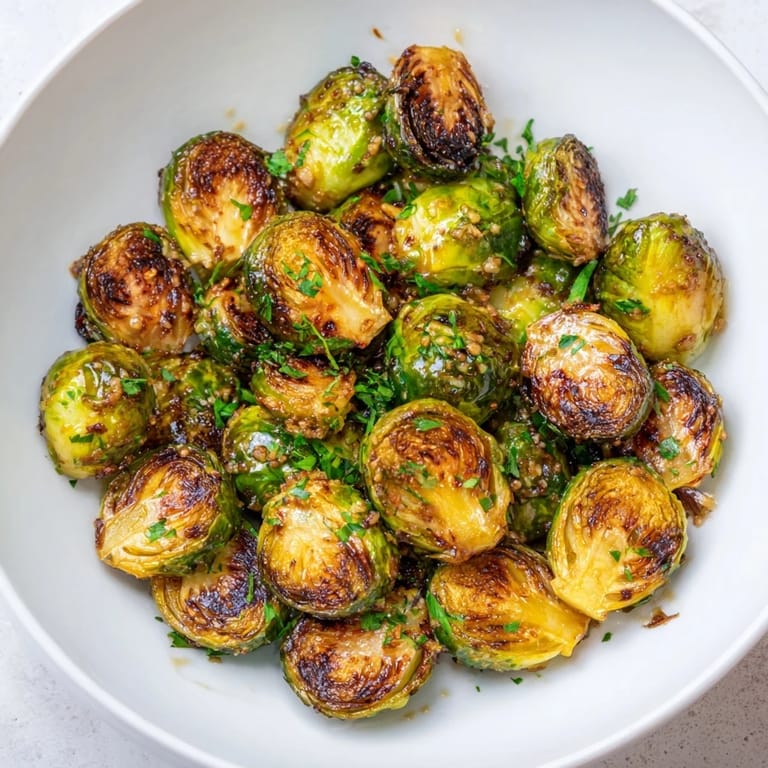
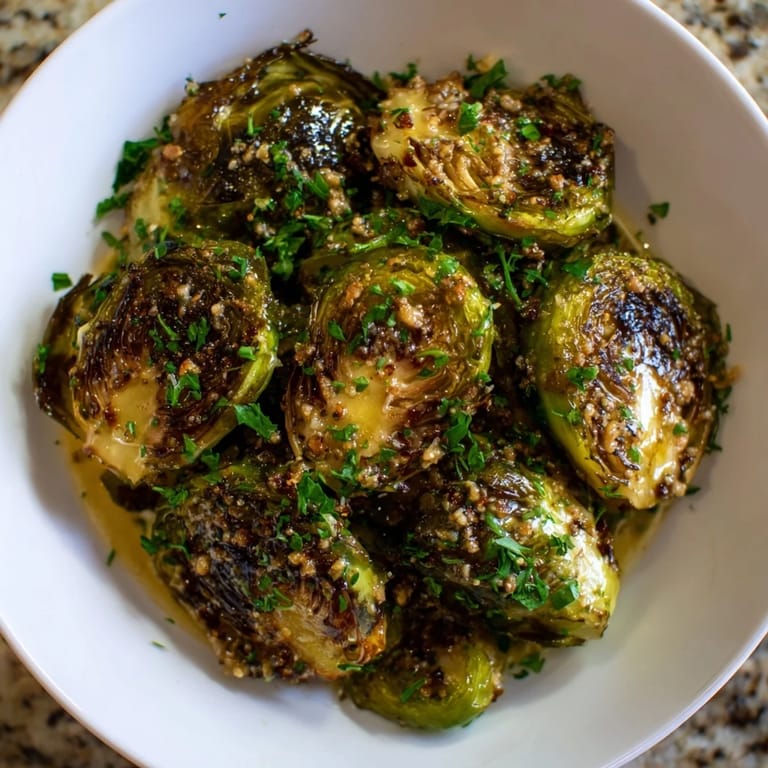
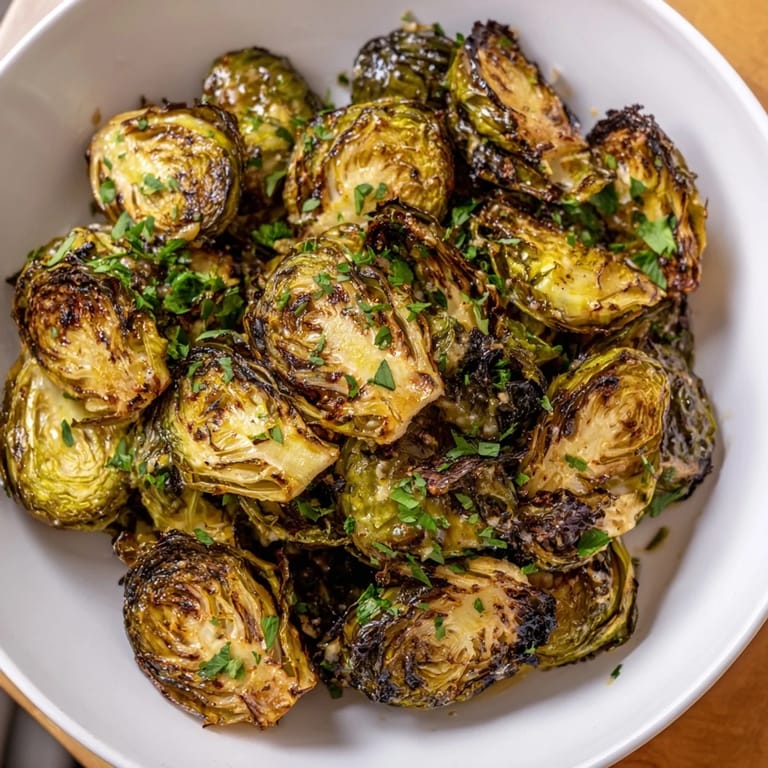
- Put them in the oven for 20–25 minutes, and flip them halfway through so both sides get golden. They're done when the cut sides are deep brown and the leaves have started to crisp at the edges, which usually happens around the 23-minute mark if your oven runs true.
- Finish and serve:
- Transfer to a serving dish while they're still warm, scatter parsley over the top if you're using it, and serve immediately while that crispy texture is still fighting the tender inside.
 Pin It
 There's a specific smell that fills the kitchen when these hit that perfect caramelization point—sharp from the mustard, sweet from the honey, with this almost burnt-edge aroma that signals they're ready. I've learned to trust that smell more than any timer because every oven is a little different, and your nose knows when things are done.
Why This Glaze Works
The honey and mustard combination is basically a classic pairing that shows up everywhere from salad dressings to glazed ham, but roasted Brussels sprouts is where it genuinely shines. The sweetness caramelizes under high heat while the mustard's tanginess keeps pace, and the apple cider vinegar prevents the whole thing from tasting cloying. It's a glaze that tastes intentional rather than accidental, which matters when you're serving this to people you want to impress.
The Vegetable Everyone Forgets to Cook Right
Brussels sprouts have a reputation for tasting bitter or sulfurous, but that's usually because they've been steamed or boiled into submission. Roasting them at high heat is what transforms them entirely—the Maillard reaction on the cut side creates this almost nutty sweetness that their haters have never actually tasted. When people say they don't like Brussels sprouts, what they really mean is they haven't had them cooked this way yet.
Variations and Serving Ideas
This recipe is a launchpad for whatever mood you're in. Some nights I add a pinch of chili flakes for gentle heat, and other times I stir in toasted pecans right before serving for texture that makes people ask if there's something special hiding in there. The glaze also works beautifully if you substitute maple syrup for honey, which gives the whole dish a deeper, more complex sweetness that feels especially good in cooler months.
- For extra crunch, toss in chopped toasted walnuts or pecans right before plating, while everything's still warm.
- If you're cooking for someone who avoids honey, maple syrup or agave nectar will work in exactly the same proportion.
- These are equally good served warm or at room temperature the next day, making them an excellent component for a composed plate or even a grain bowl.
 Pin It
 These Brussels sprouts have become my reliable choice for every kind of meal, from quiet weeknight dinners to potlucks where I'm not quite sure what everyone's eating. They remind me that sometimes the simplest formula—good vegetable, proper heat, a glaze that balances sweet and sharp—creates something worth reaching for a second time.
Recipe Questions & Answers
- → How do I get the Brussels sprouts caramelized?
Roasting them cut side down at 425°F until they turn golden brown helps develop a caramelized texture and rich flavor.
- → Can I substitute honey in the glaze?
Yes, maple syrup works well as a vegan alternative while maintaining the glaze's sweetness.
- → What does the glaze consist of?
The glaze combines olive oil, honey, dijon and whole-grain mustard, garlic powder, apple cider vinegar, salt, and pepper for a sweet and tangy coating.
- → Are there any optional ingredients to enhance flavor?
Chopped toasted pecans or walnuts add crunch, and a pinch of chili flakes can introduce mild heat.
- → Is this dish suitable for special diets?
It's vegetarian and gluten-free, though double-check mustard ingredients if allergies are a concern.