 Pin It
 There's a particular magic to risotto that I discovered almost by accident one autumn evening when I had a handful of mushrooms from the farmers market and absolutely nothing else that felt exciting. I started stirring, added the wine, and suddenly the whole kitchen smelled like a restaurant I couldn't afford. That night, I understood why Italians have been making this dish for centuries—it's not fancy or complicated, just rice that transforms into something creamy and alive with your own hands.
I made this for a friend who'd just moved to the city and was feeling homesick, and watching her face light up as she tasted it reminded me that food isn't really about technique—it's about that moment when someone realizes you made something warm and delicious just for them.
Ingredients
- Arborio rice: This starchy variety is essential because it releases starch gradually, creating that signature creamy texture without cream—don't substitute with regular long-grain rice.
- Mixed wild mushrooms: Cremini, shiitake, and porcini each bring different depths of flavor; if you can only find one type, that's fine, but the mix makes it sing.
- Vegetable broth: Keep it warm in a separate pot so each addition cooks the rice evenly—cold broth will stop the cooking process and mess with your timing.
- Dry white wine: The acidity cuts through the richness and adds a subtle complexity that makes people ask what your secret ingredient is.
- Parmesan cheese: Freshly grate it yourself; pre-grated versions have anti-caking agents that make the final dish grainy instead of silky.
- Cold butter: This final addition, called the mantecatura, is what turns good risotto into creamy risotto—don't skip it or rush it.
Tired of Takeout? 🥡
Get 10 meals you can make faster than delivery arrives. Seriously.
One email. No spam. Unsubscribe anytime.
Instructions
- Warm Your Broth:
- Pour your vegetable broth into a separate saucepan and keep it at a gentle simmer throughout the cooking process. Warm broth integrates smoothly into the rice, while cold broth would shock the grains and interrupt the creaming action.
- Build the Mushroom Foundation:
- Heat the oil and butter in your skillet until it foams slightly, then add the onion and let it soften for a few minutes until it's translucent and sweet. Add the garlic, and immediately follow with the mushrooms—you'll hear them sizzle and smell that earthy, almost meaty fragrance that tells you they're caramelizing, not steaming.
- Toast the Rice:
- Stir the Arborio rice into the mushroom mixture and listen for the subtle crackling sound as the grains toast for about a minute. This step coats each grain with fat and prevents them from sticking together later.
- Deglaze with Wine:
- Pour in the white wine and stir constantly, watching as it bubbles and gets absorbed by the rice. The rice will look almost dry when the wine is fully incorporated, and that's the signal to start adding broth.
- Add Broth Gradually:
- Add one ladleful of warm broth and stir frequently—not constantly, but enough to keep the rice from sticking. When most of the liquid is absorbed and you can drag your spoon through the rice leaving a temporary trail, add the next ladleful. This takes about eighteen to twenty minutes, and your arm might get tired, but trust the process.
- Finish with Grace:
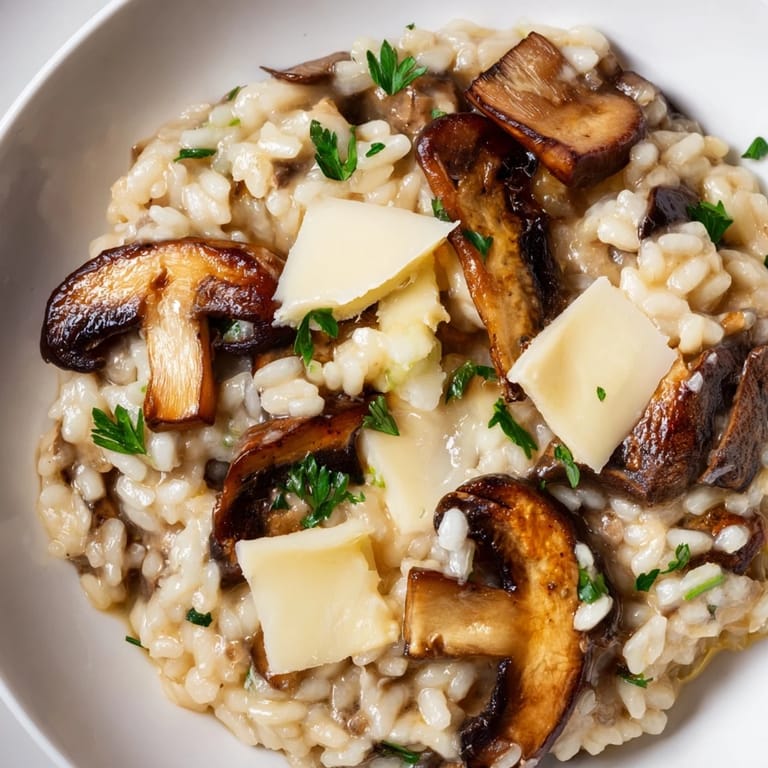
- When the rice is creamy but still has a slight firmness when you bite it, remove the pan from heat and quickly stir in the cold butter cubes and grated Parmesan. The rice will suddenly look glossy and luxurious, and the stirring will take just a minute—this is the magic moment.
- Rest and Serve:
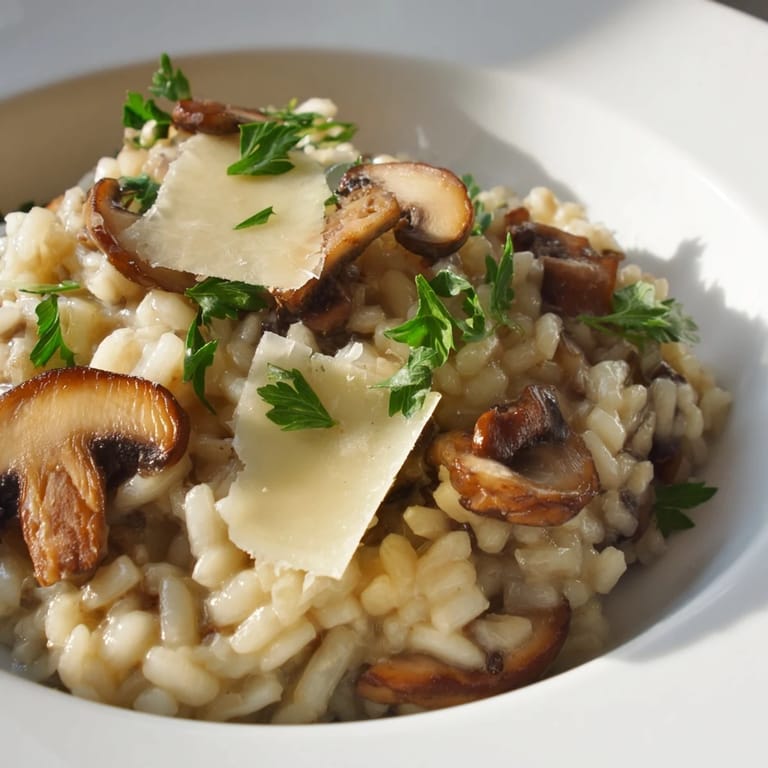
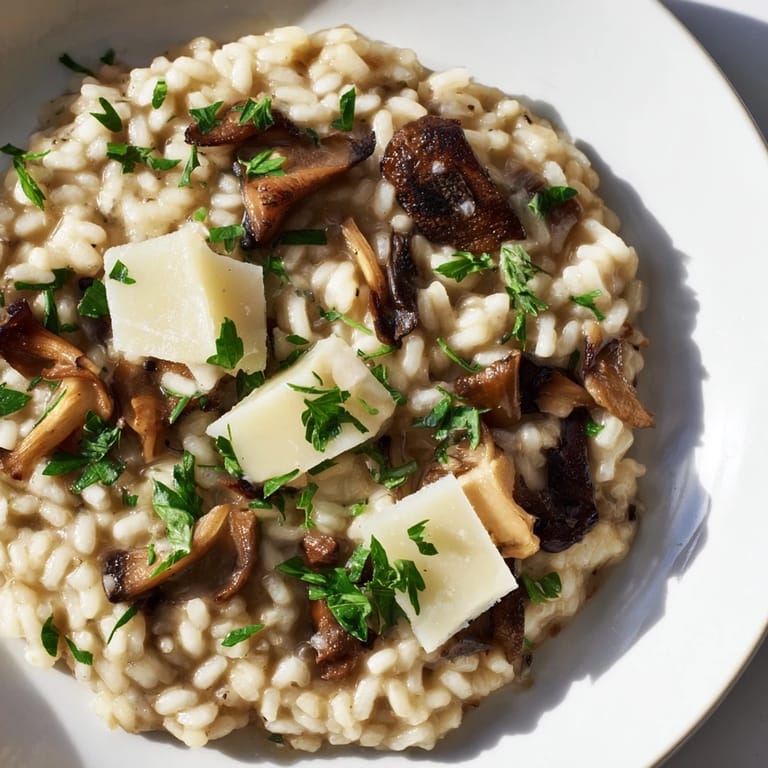
- Let the risotto sit for two minutes, which allows the starches to set slightly and makes it easier to plate. Serve immediately in warm bowls with extra Parmesan and fresh parsley scattered on top.
 Pin It
 I've learned that risotto is less about following instructions and more about developing a conversation with your rice—you're watching, tasting, adjusting. The moment when you taste it and realize it's exactly the right consistency, with that perfect balance of creaminess and tooth, is when you know you've done something right.
Why This Dish Deserves Its Reputation
Risotto has this undeserved reputation for being difficult, probably because fancy restaurants charge a lot for it and use fancy terminology. The truth is that the technique is straightforward—you're just cooking rice gently and stirring regularly. The reason it tastes so good is simple: you're building flavor with mushrooms, you're creating creaminess naturally from the rice itself, and you're finishing with butter and cheese, which makes almost anything delicious. Once you've made it once, you'll wonder why anyone ever thought it was intimidating.
Variations That Keep This Interesting
The beauty of risotto is that it's endlessly adaptable once you understand the basic method. You can swap the mushrooms for asparagus, roasted butternut squash, or even seafood like shrimp or scallops—just adjust the cooking time slightly depending on what you're using. Some nights I add a handful of fresh thyme or rosemary to the broth, or stir in a spoonful of truffle oil at the very end if I'm feeling indulgent. The structure stays the same; only the flavors change. This is why risotto is such a perfect weeknight dish—it's flexible enough to use what you have on hand, but structured enough that it always comes out beautifully.
Pairing and Serving Suggestions
Risotto is satisfying enough to be a meal on its own, but it's also elegant enough to serve as a first course at dinner. A crisp Pinot Grigio or Chardonnay pairs wonderfully because the acidity cuts through the richness, and the wine's minerality echoes the earthiness of the mushrooms. For sides, add a simple green salad dressed with lemon and olive oil, or some roasted vegetables if you want color on the plate. The risotto itself is rich and substantial, so you don't need much else to feel completely satisfied.
- Finish each bowl with a small handful of fresh parsley and an extra grating of Parmesan to add brightness and visual appeal.
- Serve in warm, shallow bowls so the risotto spreads into a creamy pool that's beautiful to look at and easy to eat.
- If you're cooking for guests, have everything prepped and ready because the final stretch moves quickly once you start.
 Pin It
 This risotto will become one of those recipes you turn to when you want to feel capable in the kitchen and feed someone well, whether that someone is yourself or people you care about. It's Italian comfort at its most honest—simple ingredients, proper technique, and the kind of deliciousness that makes time slow down a little.
Recipe Questions & Answers
- → What type of rice is best for this dish?
Arborio rice is preferred for its creamy texture and ability to absorb liquids while retaining firmness.
- → Can other mushrooms be used?
Yes, a mix of wild mushrooms like shiitake, cremini, and porcini adds depth and variety to the flavor.
- → What is the role of white wine in the cooking?
White wine adds acidity and brightness, enhancing the overall flavor and helping balance the richness of the dish.
- → How is creaminess achieved without cream?
The creamy texture comes from slowly absorbing warm broth while stirring, releasing starch from the rice, combined with butter and Parmesan cheese.
- → What sides pair well with this dish?
A crisp green salad or roasted vegetables complement the rich and earthy notes without overpowering the flavors.