 Pin It
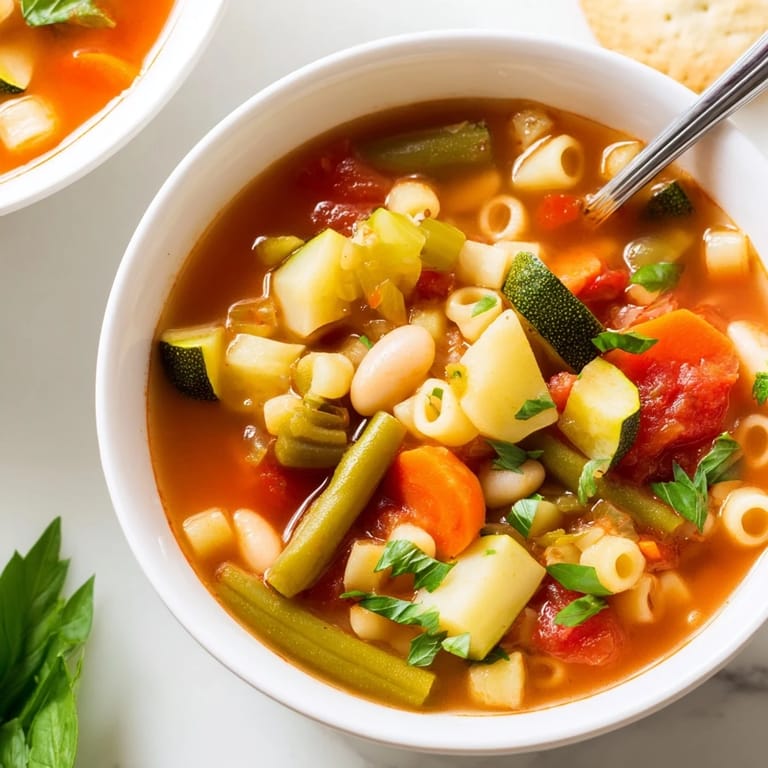
 Last February, when my radiator hissed more than usual and the windows frosted overnight, I found myself craving something that felt like a warm embrace. My grandmother would've said this soup was cucina povera, humble cooking that transforms whatever's lingering in the crisper drawer into something extraordinary. I've since learned that minestrone isn't really about following a formula at all, it's about trusting your instincts and letting the vegetables tell you what they need.
I remember making a huge batch for my sister when she was recovering from surgery and she said every spoonful felt like being wrapped in a blanket. There's something deeply nourishing about a soup that doesn't ask for much but gives everything in return.
Ingredients
- Olive oil: This is your foundation so use something decent enough that you'd drizzle it on bread without hesitation
- Onion and garlic: Take your time here because rushing this step is exactly where most people lose that deep savory base that makes minestrone sing
- Carrots and celery: These aromatic vegetables build that classic soup flavor that everyone recognizes but cant quite place
- Zucchini and potato: The potato thickens the broth naturally while zucchini adds sweetness without overwhelming everything else
- Green beans: They hold up beautifully during simmering and add this wonderful little pop of texture in every other spoonful
- Canned diced tomatoes: I've tried fresh and honestly canned gives you that consistent acidity and depth that fresh tomatoes sometimes lack in winter
- Vegetable broth: Homemade is lovely but a good quality store bought one absolutely works here without any shame
- Water: Never underestimate what plain water can do to let all those vegetable flavors shine without interference
- Cannellini beans: These creamy little beans melt slightly into the broth making it luxuriously thick without any actual cream
- Small pasta: Ditalini or elbows are perfect because they catch in your spoon ensuring every bite has something substantial
- Dried oregano and basil: These herbs need time to rehydrate and bloom which is exactly why they go in early
- Bay leaf: Its subtle but that one leaf adds an earthy depth that people notice most when its missing
- Fresh parsley and basil: Added at the very end these wake everything up with a bright freshness that cuts through the richness
- Parmesan cheese: Even a modest dusting transforms the bowl into something restaurant worthy
Tired of Takeout? 🥡
Get 10 meals you can make faster than delivery arrives. Seriously.
One email. No spam. Unsubscribe anytime.
Instructions
- Build your flavor foundation:
- Warm that olive oil in your biggest pot and let the onions and garlic soften until they're translucent and sweetly fragrant, taking care not to rush or brown them too aggressively
- Give the vegetables a head start:
- Add all those chopped vegetables except the tomatoes and let them hang out together for about five minutes until they start to glisten and soften slightly, which helps them hold their shape later
- Create the soup base:
- Pour in the tomatoes with every drop of their juice along with your broth and water then stir in those dried herbs and bay leaf until everything comes to a enthusiastic boil
- Let it simmer gently:
- Drop the heat to a lazy bubble and cover the pot for fifteen minutes to let all those flavors start getting acquainted while the vegetables begin to tenderize
- Add the heart:
- Stir in those creamy white beans and the pasta then leave the lid off so the soup can thicken slightly as it simmers for another ten to twelve minutes until everything is perfectly tender
- Finish with fresh brightness:
- Fish out that bay leaf then stir in handfuls of fresh parsley and basil right at the end so their flavor stays vibrant and alive
 Pin It
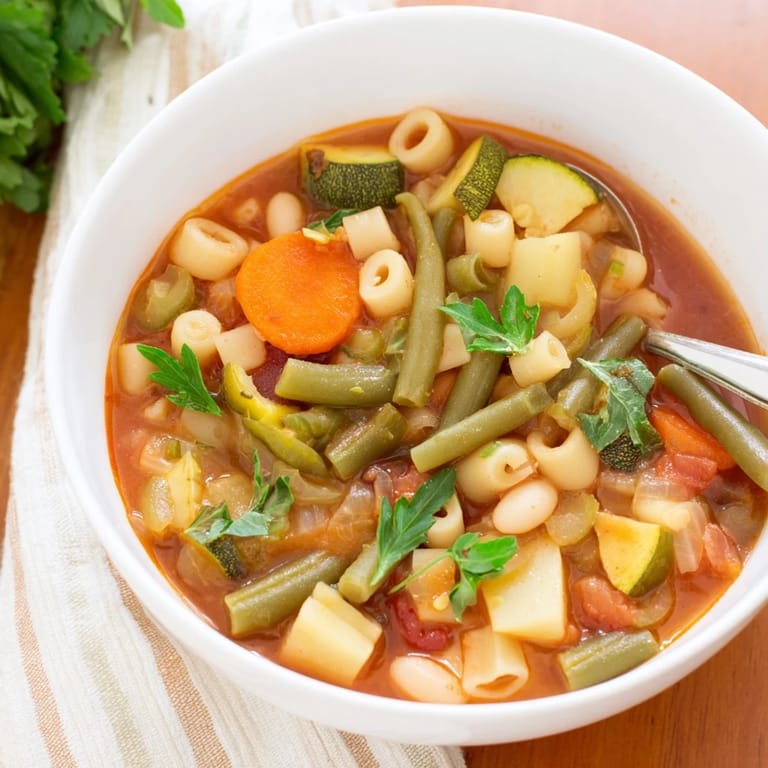
 My neighbor asked for the recipe after smelling it through our shared wall and now she makes it every Sunday for her family's week ahead. Food has this way of traveling through walls and into hearts.
Making It Your Own
I've made this in every season and the beautiful thing is how it adapts to whatever the garden or market offers. In spring I'll add peas and asparagus while winter calls for kale and extra beans, but the method stays exactly the same.
The Pasta Question
Cooking pasta directly in the soup thickens it beautifully but if you're planning to freeze portions cook it separately and add when reheating to avoid mushy noodles. I learned this after an unfortunate freezer incident that I still think about sometimes.
Serving Suggestions
A thick slice of toasted bread rubbed with garlic and drizzled with olive oil turns this into a complete meal that feels like something you'd eat in a tiny Italian kitchen. I've also been known to crouton some leftover bread directly into my bowl for texture.
- Let it rest for at least ten minutes before serving so the flavors can settle into their best version
- The soup will thicken considerably as it sits so thin with extra water or broth when reheating
- Always finish with that Parmesan even if you think you might not need it
 Pin It
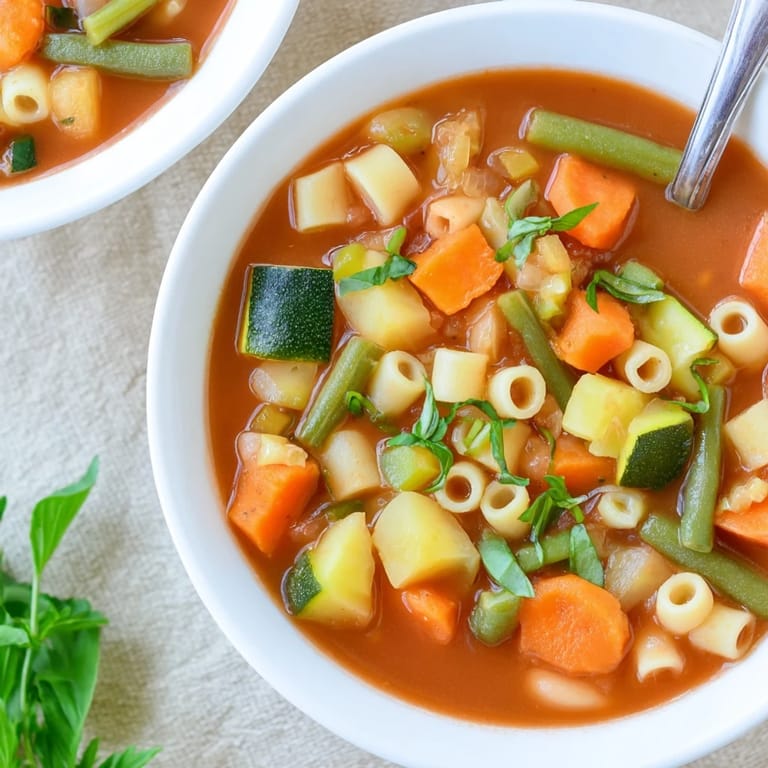
 There's nothing quite like standing over a steaming pot of minestrone while it bubbles away, knowing you're about to feed people something that will genuinely make them feel better than they did before.
Recipe Questions & Answers
- → What vegetables work best in minestrone?
Classic minestrone includes carrots, celery, onions, zucchini, potatoes, and green beans. You can adapt based on seasonality—add spinach, kale, or cabbage in colder months, or fresh peas and corn in summer. The key is using vegetables that hold their shape during simmering.
- → Can I make minestrone soup ahead of time?
Absolutely. Minestrone actually tastes better the next day as flavors meld together. Store in the refrigerator for up to 4 days. If making ahead, cook the pasta separately and add when reheating to prevent it from becoming too soft.
- → Is minestrone soup suitable for freezing?
Yes, minestrone freezes beautifully for up to 3 months. For best results, freeze without the pasta and add freshly cooked pasta when reheating. Cool completely before transferring to airtight containers, leaving some space for expansion.
- → What pasta shapes are traditional for minestrone?
Small pasta shapes work best—ditalini, elbow macaroni, small shells, or tubetti. These tiny shapes catch in your spoon with every bite. Traditional Italian minestrone might also use torn pieces of lasagna sheets or small ear-shaped pasta called orecchiette.
- → How can I add more protein to minestrone?
Beyond cannellini beans, you can add diced pancetta or prosciutto during the initial sauté for depth and protein. For vegetarian options, increase the bean quantity or add lentils. A dollop of pesto or grated Parmesan also boosts both protein and flavor.
- → What's the difference between minestrone and other vegetable soups?
Minestrone specifically combines vegetables, beans, and pasta or rice in a tomato-based broth. Unlike lighter vegetable broths, it's hearty and meant to be a complete meal. The addition of beans and starch makes it substantial, while fresh herbs finish it with brightness.