 Pin It
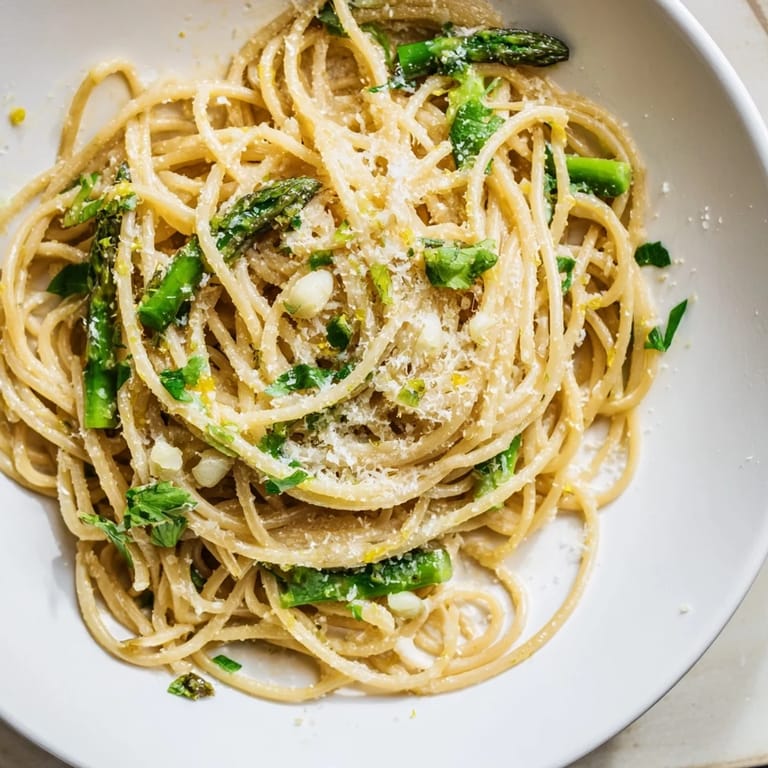
 There was this Tuesday evening when my tiny apartment smelled like a whole Italian kitchen. I had a head of garlic sitting on the counter and asparagus that needed using, so I just threw them in the oven with some olive oil and waited. When the garlic came out sweet and spreadable, I knew I had something special.
I made this for my sister when she was visiting last spring. She took one bite, put down her fork, and said okay, you need to write this down before you forget what you did. We ended up sitting at the table for two hours just talking and picking at the serving bowl.
Ingredients
- 1 large head garlic: Roasting whole transforms sharp raw garlic into something sweet, mellow, and spreadable almost like butter
- 1 bunch fresh asparagus: Look for tight tips and firm stalks, the thinner ones roast more tenderly
- 12 oz spaghetti: The long strands catch the roasted garlic perfectly
- 1/4 cup extra-virgin olive oil: This becomes your silky sauce base, so use the good stuff
- 1/2 teaspoon sea salt: Enhances the natural sweetness of roasted vegetables
- 1/4 teaspoon freshly ground black pepper: Adds just enough warmth to cut through the richness
- 1/4 teaspoon red pepper flakes: Optional but adds this gentle hum that lingers
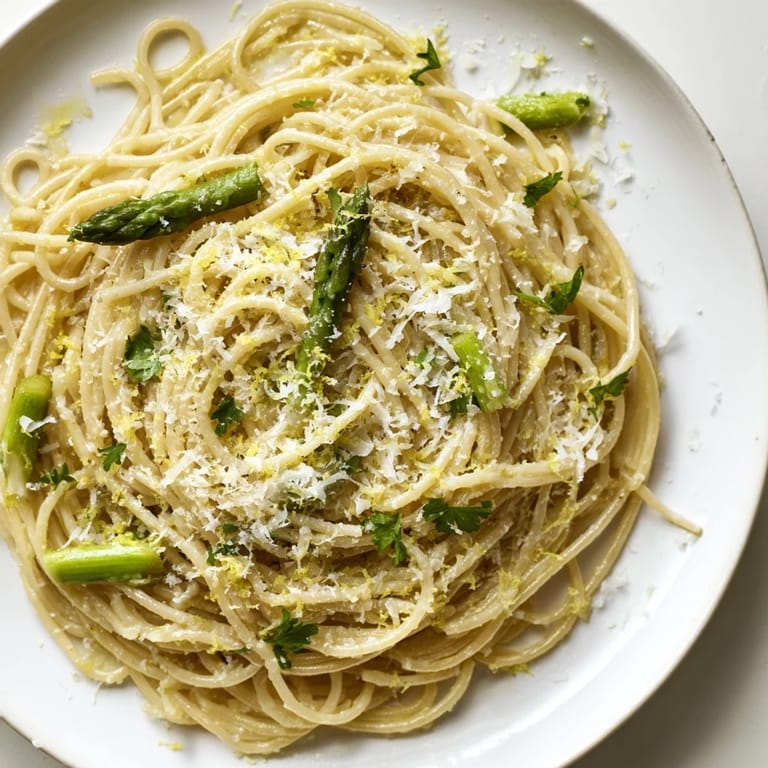
- 1/2 cup grated Parmesan cheese: Creates umami depth and helps the sauce cling
- Zest of 1 lemon: Brightens everything so the dish never feels heavy
- 2 tablespoons fresh parsley: Adds fresh color and a spring like finish
Tired of Takeout? 🥡
Get 10 meals you can make faster than delivery arrives. Seriously.
One email. No spam. Unsubscribe anytime.
Instructions
- Roast the garlic until golden:
- Slice the top off your garlic head to expose all the cloves, drizzle with olive oil, wrap tightly in foil, and let it roast at 400F for 30 minutes until the cloves are soft and golden.
- Roast the asparagus alongside:
- After 15 minutes, spread your asparagus on a baking sheet with olive oil, salt, and pepper, then roast for 12 to 15 minutes until just tender and slightly crisped at the tips.
- Cook the pasta:
- Boil salted water and cook spaghetti until al dente, but before draining, save that starchy pasta water which will help everything come together.
- Prep the garlic base:
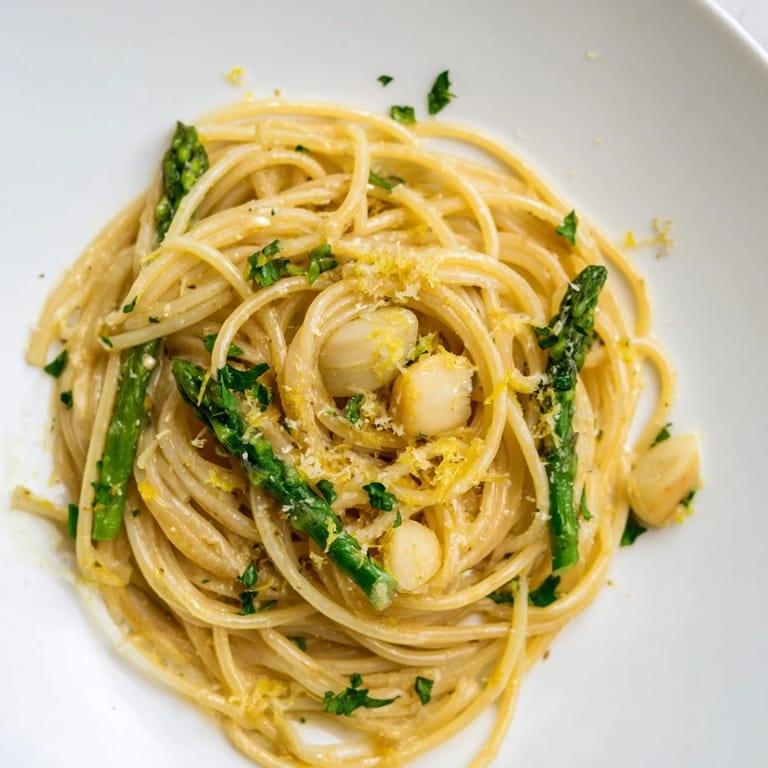
- Squeeze those soft roasted cloves right out of their skins and mash them with a fork until they spread like soft butter.
- Build the sauce:
- Warm olive oil in your skillet, add the mashed garlic, and let it sizzle for a minute or two until the kitchen smells incredible.
- Bring it all together:
- Add the asparagus and pasta to the skillet, tossing constantly and splashing in pasta water until everything gets coated in this glossy, silky sauce.
- Finish with brightness:
- Stir in Parmesan, lemon zest, parsley, and red pepper flakes, then taste and adjust salt and pepper until it sings.
- Serve it up:
- Plate while steam is still rising and offer extra Parmesan at the table because everyone will want more.
 Pin It
 This recipe became my go to for nights when I want comfort food that still feels light and fresh. Something about the combination of sweet roasted garlic and bright lemon just works.
Making It Your Own
Sometimes I add toasted pine nuts or walnuts right at the end for crunch, and a handful of arugula wilts beautifully into the hot pasta. The dish is flexible enough that you can follow the method and swap vegetables based on what you have.
Perfect Pairings
A crisp Sauvignon Blanc cuts through the richness beautifully, and a simple green salad with vinaigrette balances the meal. For something heartier, grilled shrimp or chicken would work nicely alongside.
Storage And Reheating
This keeps well in the refrigerator for up to three days, though the pasta will absorb more of the sauce as it sits. When reheating, add a splash of water or olive oil to bring back that silky texture.
- Squeeze a little fresh lemon over leftovers to wake up the flavors
- The garlic mellows even more overnight, making it taste even better
- Avoid reheating more than once or the pasta can become gummy
 Pin It
 Hope this brings some spring comfort to your table too.
Recipe Questions & Answers
- → Can I prepare the roasted garlic and asparagus ahead of time?
Yes, you can roast both the garlic and asparagus up to 2 days in advance. Store them in separate airtight containers in the refrigerator. Simply reheat gently in the skillet before tossing with pasta, or add them at room temperature if preferred.
- → How do I know when the garlic is properly roasted?
The garlic head is ready when the exposed cloves appear golden brown and feel soft when pierced with a fork, typically after 30 minutes at 400°F. The flesh should squeeze easily from the skins. Avoid over-roasting, which can cause bitterness.
- → What can I substitute for Parmesan cheese?
For a vegan option, try nutritional yeast, cashew parmesan, or commercially available dairy-free parmesan. For other preferences, aged Pecorino Romano works beautifully and offers a sharper flavor. Always add cheese at the end to prevent clumping.
- → Can I use frozen asparagus instead of fresh?
Fresh asparagus is recommended for the best texture and flavor, but thawed frozen asparagus can work. Skip the roasting step and add thawed asparagus directly to the skillet in the final minute to prevent overcooking and maintain a tender bite.
- → How do I achieve a silky sauce without cream?
The starchy pasta water is key to creating a silky sauce. Reserve at least 1/2 cup before draining, then add it gradually while tossing the pasta with mashed garlic and asparagus. The olive oil and Parmesan also contribute to the creamy consistency.
- → What wine pairs well with this dish?
A crisp Sauvignon Blanc complements the fresh asparagus and roasted garlic beautifully. Alternatively, try Pinot Grigio or a light Vermentino for their bright acidity that cuts through the olive oil richness.