 Pin It
 The first time I watched fondue being made, I was mesmerized by how two humble cheeses could transform into liquid velvet at the gentlest heat. My Swiss friend Margot had invited me over on a cold winter evening, and as she stirred that pot with such deliberate care, I realized this wasn't just cooking—it was a ritual, a way of pulling people together. That night, dipping crusty bread into the creamy warmth while snow fell outside, I understood why this dish has endured for centuries. It felt less like dinner and more like belonging.
I remember my first attempt at making fondue alone, convinced I could rush it and still impress my dinner guests. The cheese seized into a grainy mess the moment I cranked up the heat, and I nearly threw the whole pot away before my neighbor suggested starting fresh with patience and a lower flame. That humbling moment taught me that fondue rewards gentleness—it's a dish that demands you slow down and stay present, which is perhaps why it tastes like comfort when made right.
Ingredients
- Gruyère cheese (200 g, grated): This is your backbone—aged, nutty, and melts into pure silk when it meets heat.
- Emmental cheese (200 g, grated): Adds a milder sweetness and helps the whole mixture stay silky smooth instead of separating.
- Dry white wine (1 cup): Acts as both flavor and the liquid medium that keeps everything emulsified—don't skip it or use anything sweet.
- Kirsch, optional (1 tbsp): This cherry brandy is the secret whisper that makes people ask what makes your fondue taste so good.
- Cornstarch (1 tbsp): Coats the cheese and helps prevent that dreaded graininess; this small addition is the difference between silky and separated.
- Garlic clove (1, halved): A quick rub of the pot and then discard—you just want the ghost of garlic, not the aggressive presence.
- Nutmeg and white pepper: Nutmeg brings warmth and spice, while white pepper adds a peppery note without the visual specks.
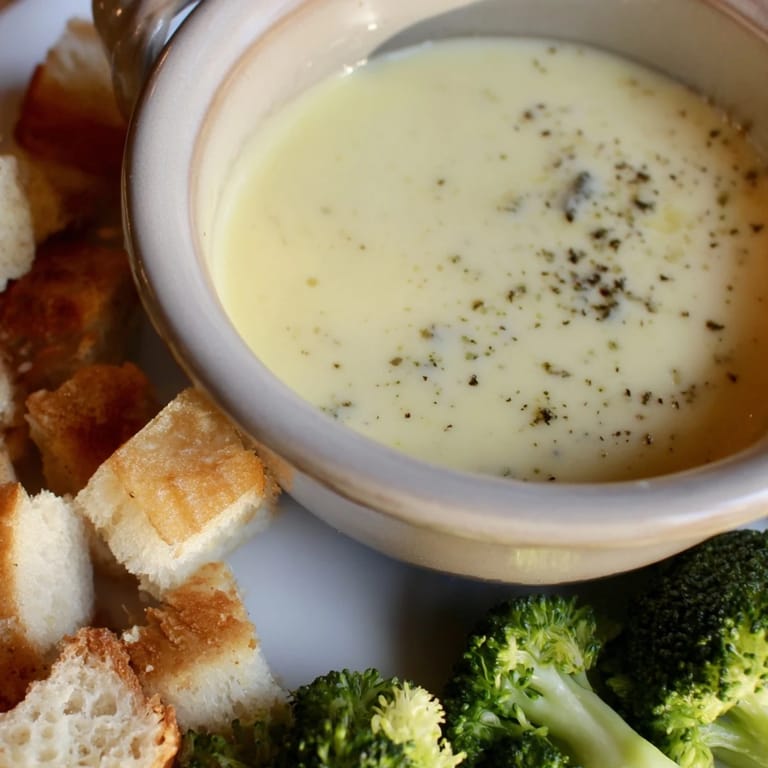
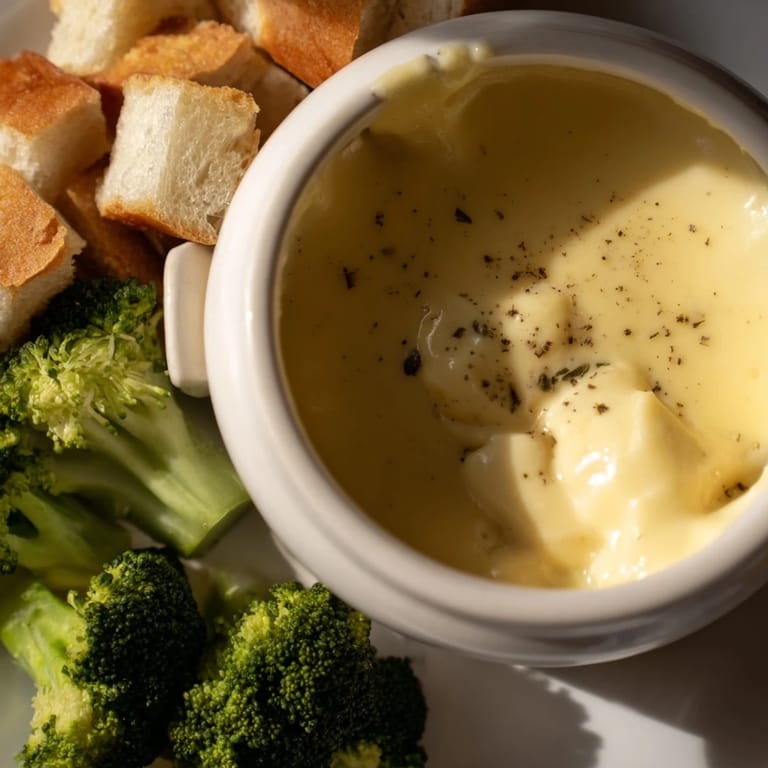
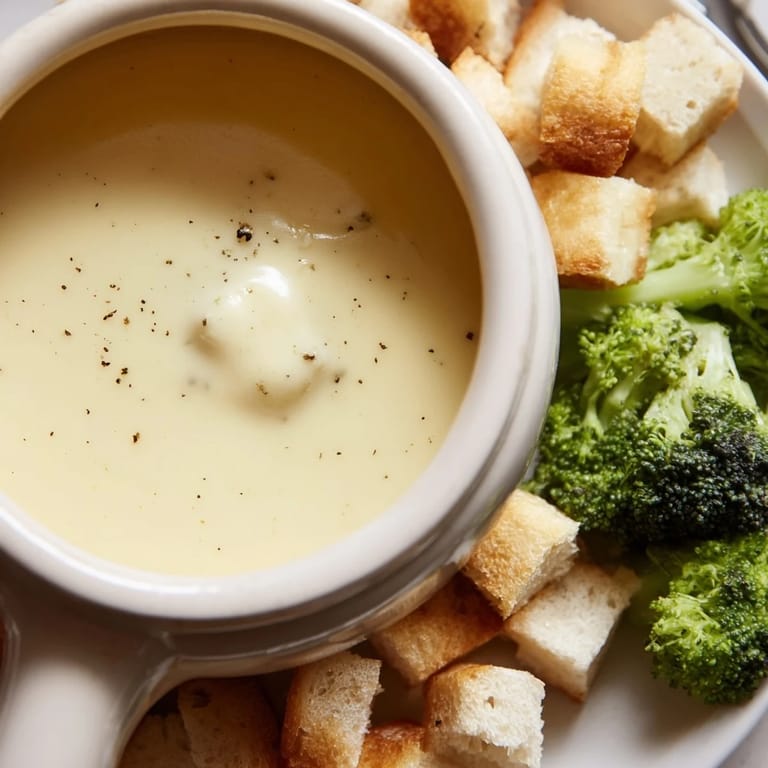
- Bread (1 baguette, cubed): Slightly stale bread holds onto the fork better than fresh; it's a learned detail that matters more than you'd think.
- Vegetables (broccoli, cauliflower, cherry tomatoes, baby carrots): Blanch the sturdy ones so they cook through when dipped; leave tomatoes raw for their fresh burst.
Tired of Takeout? 🥡
Get 10 meals you can make faster than delivery arrives. Seriously.
One email. No spam. Unsubscribe anytime.
Instructions
- Prepare the pot:
- Cut your garlic clove in half and rub the inside of your fondue pot as if you're blessing it with garlic's essence. Discard the clove—you just wanted its perfume, not its presence.
- Heat the wine gently:
- Pour the white wine in and let it warm over medium-low heat until you see soft, lazy bubbles breaking the surface. Rushing this step will make the cheese seize; patience here pays off.
- Coat the cheese:
- Toss your grated cheeses with cornstarch in a small bowl, making sure every shred gets dusted—this prevents clumping and keeps your fondue smooth.
- Add cheese in stages:
- Sprinkle the cheese into the hot wine slowly while stirring in that classic figure-eight motion; this keeps the temperature even and prevents curdling. It'll feel like you're dancing with the pot.
- Season and finish:
- Stir in the kirsch (if using), nutmeg, and white pepper, then keep the heat on low—just enough to maintain a gentle warmth. Never let it boil, or you'll break the spell.
- Set the table:
- Transfer to your tabletop burner, arrange bread and vegetables around the pot, and hand out fondue forks. This is the moment where the real magic begins.
 Pin It
 The best part of fondue isn't the cheese itself—it's the moment when someone takes their first bite and their eyes light up, then immediately reaches for another cube of bread. I'll never forget when my hesitant nephew, who usually ate the plainest foods, went back for thirds of vegetables dipped in that melted richness. That's when I realized fondue does something beyond feeding: it invites people to participate, to share, to enjoy something warm together.
The Art of Dipping
Dipping fondue is deceptively simple, yet there's a rhythm to it that becomes almost meditative. You pierce a bread cube or vegetable, lower it into the pot with a gentle twist to coat it fully, then bring it to your mouth. There's an unspoken rule that if your dipped morsel falls into the pot, you owe the group a song—or in my kitchen, a sip of wine and good-natured laughter. The beauty is that fondue slows you down; you can't rush it, which means you actually taste the flavors and feel the presence of people around you.
Variations and Substitutions
Once you've mastered the classic, fondue becomes a canvas for your preferences and what you have on hand. Some nights I'll add a touch of Appenzeller for a sharper edge, or swap half the wine for chicken stock if I'm in the mood for something less winey. I've even experimented with adding truffle oil or a hint of white miso for depth, though purists might scoff. The lesson I've learned is that fondue has enough structure to tolerate gentle innovation while still tasting authentically like itself.
Wine and Beer Pairings
The Swiss have spent centuries figuring out what to drink alongside fondue, and they've nailed it with light, crisp white wines like Fendant or a dry Chasselas that won't overpower the cheese. I've also discovered that a cold, clear lager beer is a revelation—the carbonation cleanses your palate between bites, and the slight bitterness balances the richness beautifully. Whatever you choose, avoid heavy reds or sweet wines; they'll clash with the delicate savory notes and leave your mouth feeling sluggish rather than refreshed.
- Fendant and other Swiss whites echo the flavors already in the pot without competing.
- A crisp lager offers refreshment and makes the meal feel celebratory rather than heavy.
- Sip something cool between bites to reset your palate and keep enjoying each dip fully.
 Pin It
 Fondue is one of those rare dishes that tastes like luxury but asks only for presence and care in return. When you gather people around a warm pot of melted cheese on a cold evening, you're doing something that humans have done for centuries—creating a moment where food becomes an excuse for connection.
Recipe Questions & Answers
- → What cheeses are best for this fondue?
Gruyère and Emmental are traditional choices that melt smoothly and create a rich, flavorful blend.
- → Can I substitute kirsch if unavailable?
Kirsch adds depth but is optional; omitting it won’t affect the creamy texture.
- → How should I prepare the bread and vegetables for dipping?
Cut bread into bite-sized cubes and blanch vegetables like broccoli, cauliflower, and carrots for ideal dipping.
- → What’s the best way to prevent the cheese from separating?
Coating grated cheese with cornstarch and melting it slowly over low heat helps maintain a smooth consistency.
- → How can I enhance the flavor of the melted cheese blend?
Adding a pinch of freshly grated nutmeg and white pepper enhances aromatic complexity without overpowering.