 Pin It
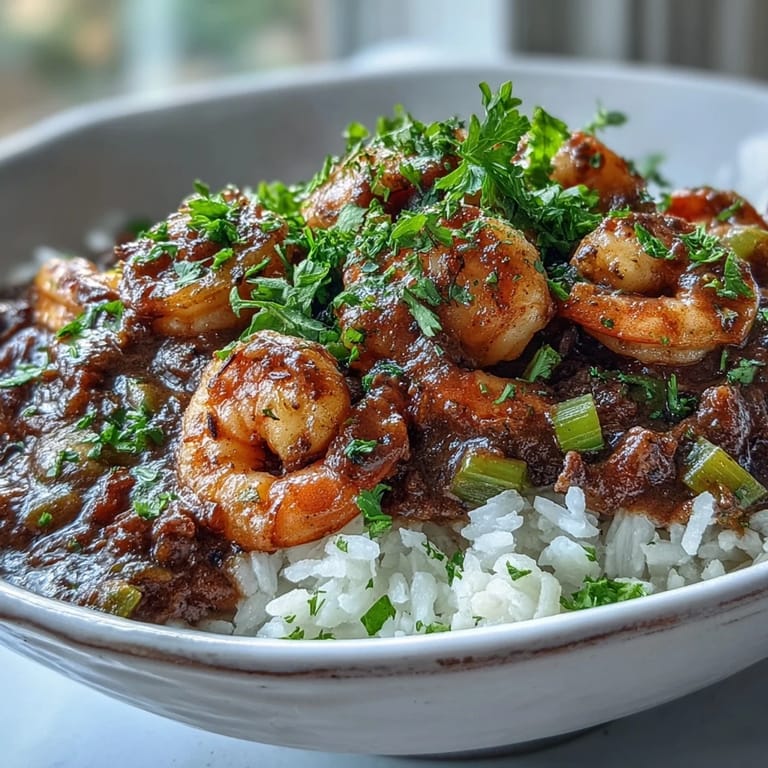
 The first time I watched my friend Marie's grandmother make étouffée in her tiny kitchen outside New Orleans, I couldn't believe how something so rich could come from such humble ingredients. She stirred that roux for what felt like an eternity, telling me patience was the only secret worth knowing. The whole house filled with this incredible nutty aroma that made my stomach growl before she'd even added the shrimp. That afternoon changed everything I thought I knew about Cajun cooking.
Last February I made this for my snowed-in neighbors who'd never had Cajun food beyond a restaurant sampler plate. Watching their faces light up at that first bite reminded me why some dishes are meant to be shared. They kept asking what was in the sauce, like there had to be some hidden ingredient I wasn't telling them about.
Ingredients
- Vegetable oil: Neutral oil lets the roux develop without competing flavors
- All-purpose flour: Forms the base of your roux and gives the sauce its body
- Onion, bell pepper, celery: The holy trinity of Cajun cooking that builds the aromatic foundation
- Garlic: Add this after the roux is done so it doesnt burn and turn bitter
- Shrimp or crawfish: Fresh shrimp gives the sweetest flavor but crawfish makes it even more authentic
- Seafood stock: Homemade is best but a good quality store bought works perfectly fine
- Worcestershire sauce: Adds that subtle umami depth that rounds out the flavor profile
- Cajun seasoning: Adjust this to your heat tolerance since blends vary wildly in intensity
- Bay leaf: Dont forget to fish it out before serving unless you want an unpleasant surprise
Tired of Takeout? 🥡
Get 10 meals you can make faster than delivery arrives. Seriously.
One email. No spam. Unsubscribe anytime.
Instructions
- Make your roux:
- Heat the oil in your heavy pot over medium heat and gradually whisk in the flour until smooth. Stir constantly without stopping until the roux turns the color of chocolate, about 15 to 20 minutes.
- Add the vegetables:
- Toss in your onion, bell pepper, and celery once the roux reaches that deep brown color. Cook for 5 to 7 minutes until the vegetables are soft and coated in that beautiful dark roux.
- Build the base:
- Stir in the garlic and let it cook for just one minute until you can smell it. Pour in the stock gradually, whisking furiously to prevent lumps from forming.
- Add the shrimp and season:
- Toss in your shrimp along with the Worcestershire sauce, Cajun seasoning, cayenne pepper, bay leaf, salt, and pepper. Give everything a good stir to combine.
- Let it simmer:
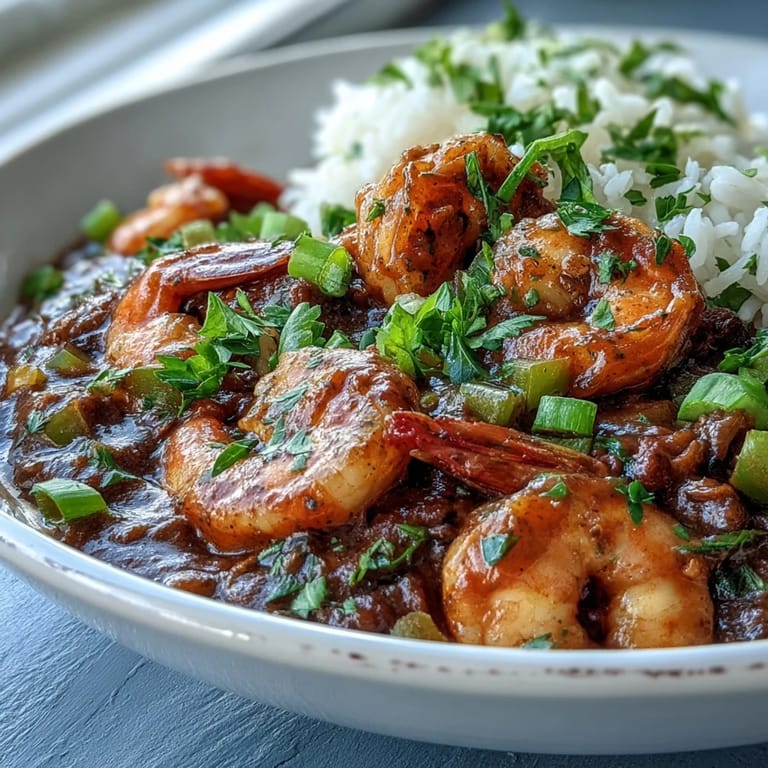
- Bring the mixture to a simmer then lower the heat and let it cook uncovered for 20 to 30 minutes. The sauce will thicken and the shrimp will turn pink and curl up.
- Finish and serve:
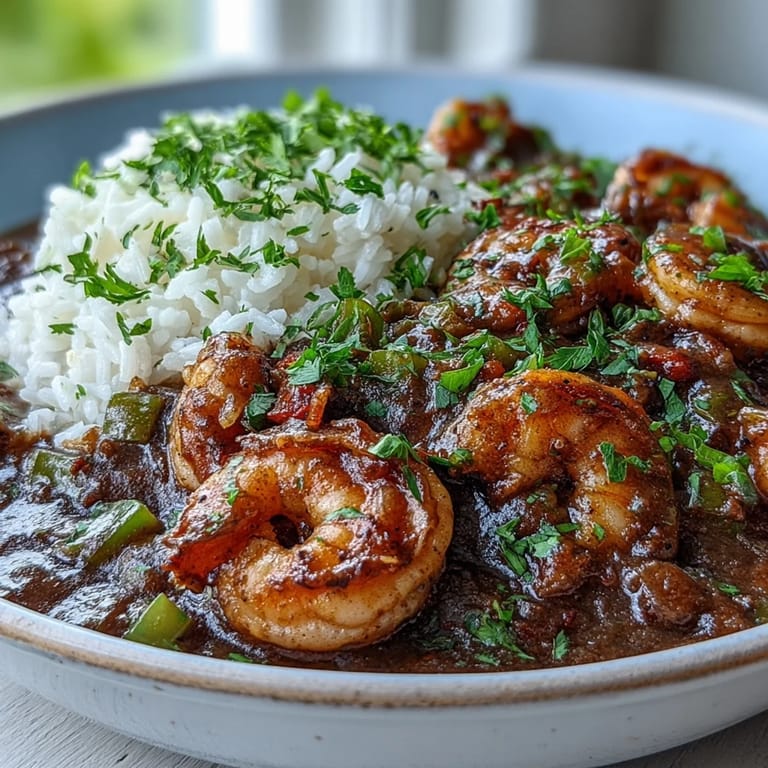
- Taste and adjust the seasoning if needed before removing that bay leaf. Spoon the étouffée over hot rice and top with green onions and parsley.
 Pin It
 My now husband still talks about the étouffée I made on our third date, even though I accidentally used twice the cayenne he could handle. We spent the evening drinking milk and laughing, which turned out to be a pretty good foundation after all.
The Art of the Dark Roux
That gorgeous chocolate color isnt just for appearance. The longer you cook the roux, the more complex and nutty the flavor becomes. I set a timer the first few times because it goes from perfect to burned in about thirty seconds.
Making It Your Own
The beauty of étouffée is how it adapts to whatever you have in the kitchen. I've made versions with crab during season and even a mushroom version for my vegetarian sister that still had that same rich soul.
Serving Suggestions
A crusty baguette is practically mandatory for sopping up that incredible sauce. Some cold beer on the side helps balance the richness and heat perfectly.
- Cole slaw with a vinegar dressing cuts through the richness
- Cornbread works surprisingly well for soaking up the sauce
- Keep hot sauce on the table for the brave souls who want more heat
 Pin It
 There's something about a bowl of étouffée that feels like a warm hug from someone who knows exactly what you need.
Recipe Questions & Answers
- → What is a roux and why is it important in this dish?
A roux is a cooked mixture of fat (oil) and flour, used as a thickener and flavor base in many Cajun and Creole dishes. For Étouffée, it's cooked to a deep golden or chocolate brown, providing rich, nutty, and savory notes crucial to the dish's depth.
- → Can I use other proteins instead of shrimp?
Yes, absolutely! While shrimp or crawfish are traditional, you can easily substitute with chicken, sausage, or even mushrooms for a vegetarian option. Adjust cooking times as needed to ensure the new protein is cooked through.
- → How can I adjust the spice level?
The spice level can be adjusted by varying the amount of cayenne pepper and Cajun seasoning. For a milder dish, reduce or omit the cayenne. For more heat, add a little extra. Always taste and adjust to your preference during the simmering stage.
- → What's the best way to serve Étouffée?
Étouffée is traditionally served hot over a bed of fluffy white rice. Garnish with fresh chopped green onions and parsley for a burst of color and freshness. It's also excellent with crusty French bread to soak up the delicious sauce.
- → Can this dish be made ahead or frozen?
Étouffée often tastes even better the next day as the flavors have more time to meld. You can prepare it in advance and reheat gently. If freezing, prepare without shrimp, then add cooked shrimp during reheating for optimal texture. The sauce itself freezes well.
- → How do I make this gluten-free?
To make this dish gluten-free, substitute the all-purpose flour for a certified gluten-free flour blend when making the roux. Additionally, ensure that your seafood or chicken stock is also certified gluten-free, as some brands may contain gluten-containing ingredients.