 Pin It
 The first time I made Dutch croquettes, I was standing in my friend's tiny Amsterdam kitchen on a rainy afternoon, watching her grandmother move through the recipe with the kind of practiced ease that only comes from making something hundreds of times. She let me handle the shaping, and I remember the warmth of that firm, creamy filling in my hands, the slight resistance as I rolled it into neat cylinders. When the first batch came out of the oil, golden and crackling, she smiled and said, "Now you understand why we always have these at every celebration." I've been chasing that perfect balance of crispy and creamy ever since.
I served these at a dinner party last winter when an unexpected snow left everyone stranded at my place for the evening. Someone had brought a bottle of good mustard, and watching people's faces light up as they bit into their first croquette—that moment made me realize these aren't just appetizers, they're little packages of joy that somehow make people happy in a way other food doesn't quite manage.
Ingredients
- Stewing beef (250g): Chuck works beautifully here because it becomes impossibly tender when simmered, but honestly, any cut meant for long, slow cooking will give you that melt-in-your-mouth texture that makes these special.
- Beef broth (500ml): Use homemade if you can; it makes a noticeable difference in depth, though good quality store-bought won't let you down.
- Bay leaf: That quiet background note of flavor that makes people ask what the secret ingredient is.
- Unsalted butter (40g for roux): Don't skip this or substitute—you need real butter for the roux to create that silky texture.
- All-purpose flour (40g): This is your thickening agent; measure it properly or you'll end up with either soup or paste.
- Whole milk (150ml): Full fat matters; it creates the creamy richness that defines a proper filling.
- Nutmeg (1/2 tsp): A tiny whisper of it, but it's what separates homemade croquettes from the forgettable kind.
- Eggs and breadcrumbs: For the coating—panko gives a lighter crunch, while traditional paneelmeel is traditional and slightly finer.
- Neutral oil for frying: The temperature matters more than the type here, so pick whatever you have that won't smoke.
Tired of Takeout? 🥡
Get 10 meals you can make faster than delivery arrives. Seriously.
One email. No spam. Unsubscribe anytime.
Instructions
- Build your beef base:
- Combine your beef with broth and a bay leaf, then let it simmer gently for about an hour until the meat is so tender it practically falls apart. The slower you go, the better—rushing this step will show in your final croquette.
- Sauté the aromatics:
- Melt a tablespoon of butter and cook your finely chopped onion until it's soft and translucent, about three minutes. This is when your kitchen will smell incredible—don't skip this moment.
- Create your roux:
- In a separate pan, melt 40g of butter and whisk in the flour, cooking for just two minutes over low heat. Gradually add your reserved beef broth and milk, whisking constantly until you have a smooth, thick sauce that coats the back of a spoon.
- Combine everything:
- Fold the cooked beef and onions into your roux along with the nutmeg and parsley, stirring until you have a thick, cohesive ragout. Taste it now and adjust the seasoning—this is your only chance before it sets.
- Chill the mixture:
- Spread everything into a shallow dish and refrigerate for at least an hour until it's firm enough to shape. I usually do this overnight because patience here pays dividends in how cleanly your croquettes fry.
- Shape with care:
- Once chilled, use damp hands to shape the filling into ten cylinder-shaped croquettes about 8cm long. The damp hands prevent sticking, and the uniform shape ensures even cooking.
- Set up your breading station:
- Line up three shallow bowls with flour, beaten eggs, and breadcrumbs in that order. Roll each croquette in flour first, then egg, then breadcrumbs—for extra crispiness, do the egg and breadcrumb again for a double coat.
- Fry to golden perfection:
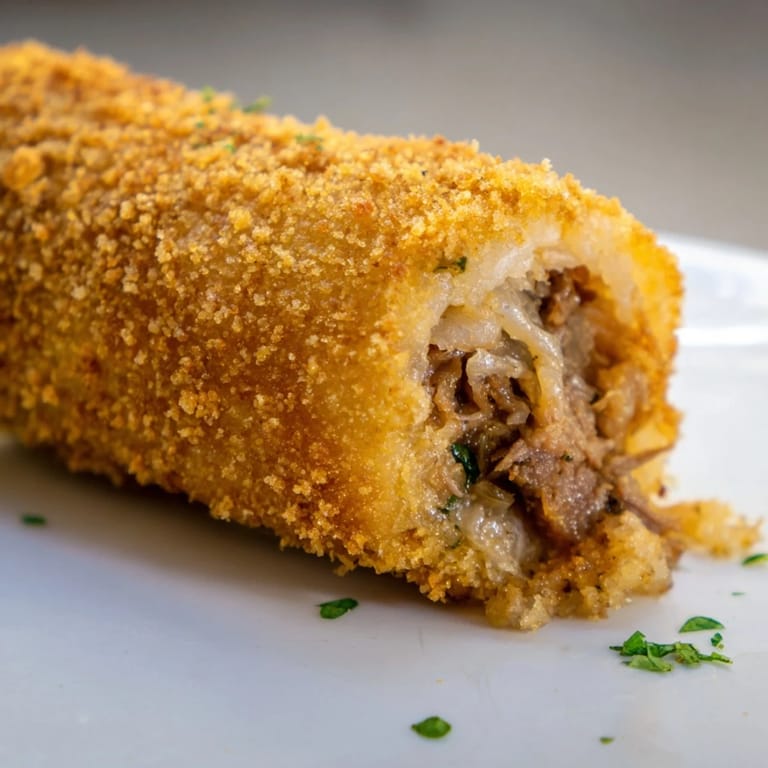
- Heat your oil to 180°C (350°F) and fry in batches for three to four minutes until deep golden brown. Drain on paper towels and serve immediately while the contrast between crispy and creamy is most dramatic.
 Pin It
 There's something about the ritual of making these that changes how I think about cooking. It's methodical and requires patience, but when you pull that first golden croquette from the oil and bite into it, listening to that crackle, you understand why this dish has survived for generations in Dutch kitchens.
The Ragout is Everything
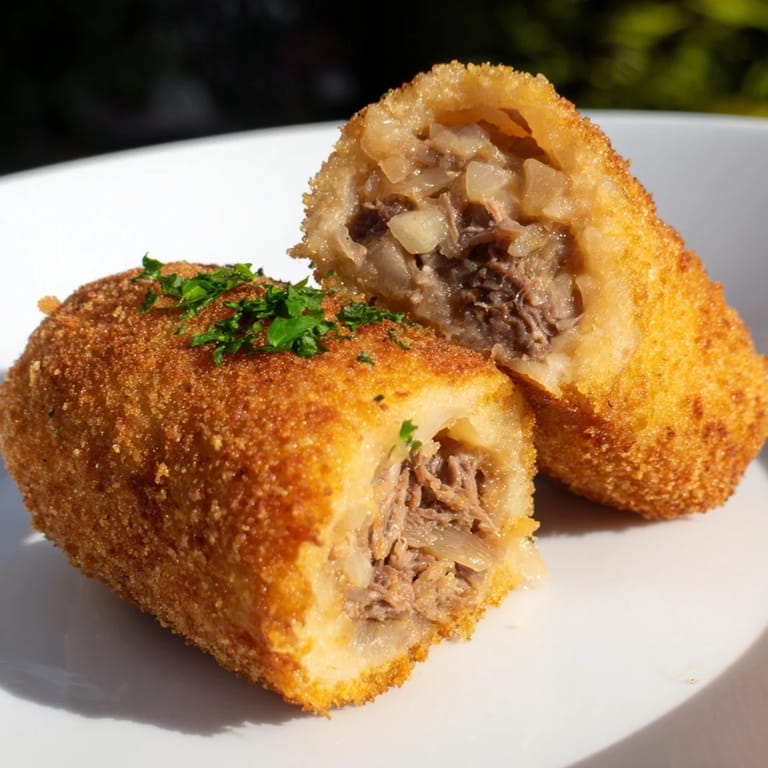
Don't think of the filling as an afterthought—it's the soul of the croquette. A properly made ragout is thick, creamy, and seasoned with enough confidence that even a small spoonful on its own tastes complete. The beef should practically melt, the onion should be invisible but present, and the nutmeg should be a secret no one can quite identify. I learned this the hard way after trying to rush through the filling stage and wondering why my croquettes tasted flat compared to my friend's grandmother's version.
Timing and Temperature
These thrive on patience at every stage—the slow simmer of the beef, the chilling of the filling, the precise oil temperature during frying. I used to think I could speed things up, but the croquettes always turned out better when I just accepted that this is a two-hour process (mostly waiting) rather than a thirty-minute rush. The golden rule I follow now: if you're not willing to chill the filling properly and maintain your oil temperature, you're setting yourself up for disappointment.
Serving and Pairing
These are infinitely flexible in how you serve them—as a standalone appetizer, alongside crispy fries for a proper Dutch experience, or even crumbled into a warm bread roll like a croquette sandwich. A cold, crisp pilsner or pale lager is the traditional pairing, but honestly, they're good with almost any drink because that ragout filling is so satisfying it doesn't demand much companionship.
- Make them ahead and freeze the breaded croquettes for up to a month; just fry from frozen and add an extra minute or two to the cooking time.
- If you want to experiment, try substituting half the beef with veal or even ground pork mixed with a bit of ham for a different flavor profile.
- Leftover ragout (if you somehow have any) makes an incredible filling for crepes or a topping for buttered toast.
 Pin It
 These croquettes represent something I love about cooking from other cultures—the way a simple combination of beef, butter, and bread becomes something that makes people genuinely happy. Once you've made them, they'll keep appearing on your table at celebrations, quiet dinners, and those moments when you want to cook something that feels both comforting and a little bit special.
Recipe Questions & Answers
- → What cut of beef is best for the filling?
Stewing cuts like chuck work well as they become tender and flavorful after slow simmering.
- → How can I ensure a creamy texture inside?
Combining cooked shredded beef with a roux made from butter, flour, and milk creates a smooth, creamy filling.
- → What is the coating process for the croquettes?
The croquettes are rolled in flour, dipped in beaten egg, then coated with fine breadcrumbs, repeated for extra crispiness.
- → Can I prepare the croquettes in advance?
Yes, they can be breaded and frozen before frying. Fry from frozen, adding a couple extra minutes to cooking time.
- → What oil temperature is ideal for frying?
Maintain oil temperature around 180°C (350°F) to achieve a golden, crispy crust without absorbing excess oil.
- → Are there any common allergens in the ingredients?
These croquettes contain gluten from flour and breadcrumbs, eggs, and dairy from butter and milk.