 Pin It
 The smell of cumin and smoked paprika simmering together always takes me straight back to my tiny apartment kitchen, windows fogged up on a cold Tuesday night. I had thrown together what I thought was going to be a basic pot of chili, but somewhere between the second bell pepper and that splash of broth, it turned into something I actually looked forward to eating all week. There's something about a bowl of chili over rice that feels less like following a recipe and more like building yourself a little edible hug. I've made this dozens of times since then, tweaking the heat, swapping the grains, piling on different toppings depending on what's in the fridge. It never gets old.
I made this for a friend who had just moved into a new place and didn't have much more than a single pot and a rice cooker. We sat on her living room floor with mismatched bowls, piling on cheese and avocado, and she said it was the first meal that made the apartment feel like home. That's when I realized this dish isn't just easy to make, it's easy to share. It doesn't demand a fancy table or perfect timing, it just shows up warm and ready to fill you up. I've brought it to potlucks, served it to picky eaters, and eaten it alone on a Sunday night, and it always delivers.
Ingredients
- Olive oil: This is your flavor base, helping the onions and peppers soften without sticking, and it adds a subtle richness that butter can't quite match.
- Onion: Diced medium so it melts into the chili, adding sweetness and depth without stealing the spotlight.
- Garlic: Minced fresh is best here, it blooms in the oil and makes the whole pot smell like you know what you're doing.
- Red bell pepper: Adds a slight sweetness and a pop of color that makes every spoonful feel more interesting.
- Green bell pepper: Brings a little bitterness that balances out the tomatoes and beans beautifully.
- Ground beef: Use whatever you have, beef, turkey, or plant based, they all brown up nicely and soak up the spices.
- Tomato paste: This little squeeze deepens the tomato flavor and thickens the chili just enough to coat the rice.
- Diced tomatoes: The backbone of the sauce, bringing acidity and texture that ties everything together.
- Kidney beans: Creamy and hearty, they hold their shape and make the chili feel more substantial.
- Black beans: A little firmer than kidney beans, they add variety and extra protein without much effort.
- Corn kernels: Sweet little bursts that lighten up the richness and add a nice textural contrast.
- Chili powder: The star spice, bringing warmth and a little smokiness that defines the whole bowl.
- Ground cumin: Earthy and warm, it makes the chili taste like it's been simmering for hours.
- Smoked paprika: Adds a subtle campfire vibe that makes every bite feel a little more special.
- Dried oregano: A hint of herbiness that rounds out the spice blend without overpowering it.
- Salt: Essential for bringing out every other flavor, taste as you go and adjust to your liking.
- Black pepper: Just enough to add a tiny kick in the background.
- Cayenne pepper: Optional, but if you like heat, this is where you control it.
- Beef or vegetable broth: Loosens everything up and adds another layer of savory depth.
- Cooked rice or grains: The foundation of your bowl, soaking up all that flavorful sauce and making the meal complete.
Tired of Takeout? 🥡
Get 10 meals you can make faster than delivery arrives. Seriously.
One email. No spam. Unsubscribe anytime.
Instructions
- Start with the aromatics:
- Heat the olive oil in a large pot over medium heat, then add the diced onion and let it sizzle gently for 2 to 3 minutes until it softens and smells sweet. This is your flavor foundation, so don't rush it.
- Add the peppers and garlic:
- Toss in the garlic and both bell peppers, stirring them around until the garlic is fragrant and the peppers start to lose their crunch, about 3 to 4 minutes. The colors will brighten and the kitchen will smell incredible.
- Brown the meat:
- Add your ground beef or alternative and break it up with a spoon, stirring occasionally until it's browned all over and no longer pink. If there's excess fat, you can drain some off, but a little adds flavor.
- Bloom the tomato paste:
- Stir in the tomato paste and cook it for a full minute, letting it darken slightly and caramelize. This step deepens the tomato flavor and makes the whole pot taste richer.
- Build the chili:
- Add the diced tomatoes, both types of beans, corn, and all your spices, chili powder, cumin, smoked paprika, oregano, salt, pepper, and cayenne if using. Stir everything together so the spices coat the meat and vegetables evenly.
- Simmer low and slow:
- Pour in the broth, bring everything to a gentle simmer, then reduce the heat to low and cover the pot. Let it cook for 25 to 30 minutes, stirring occasionally, so the flavors meld and the chili thickens just enough to cling to a spoon.
- Prepare your base:
- While the chili simmers, cook your rice or grains according to the package directions. Fluff it with a fork when it's done and keep it warm until you're ready to serve.
- Assemble and top:
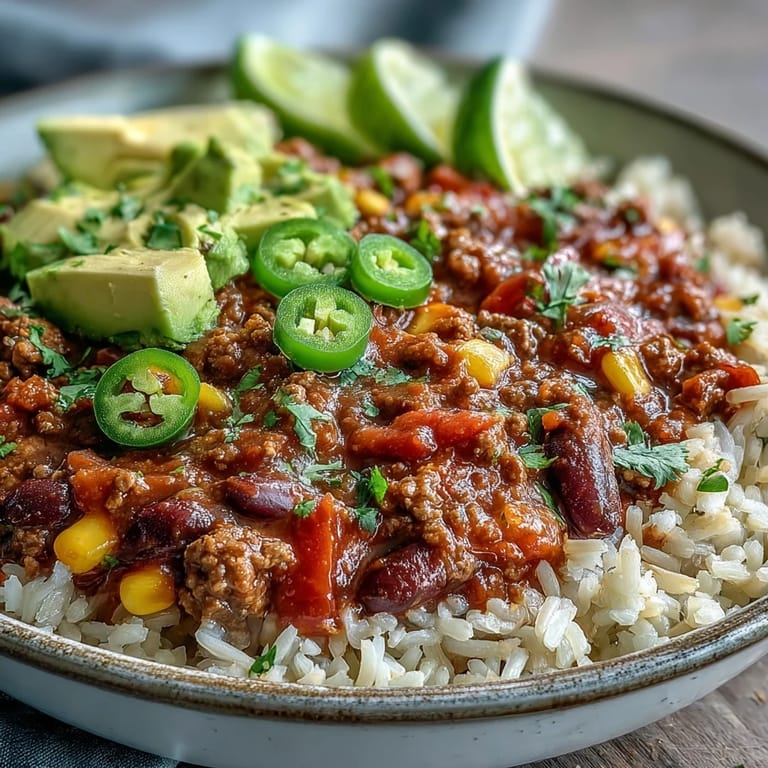
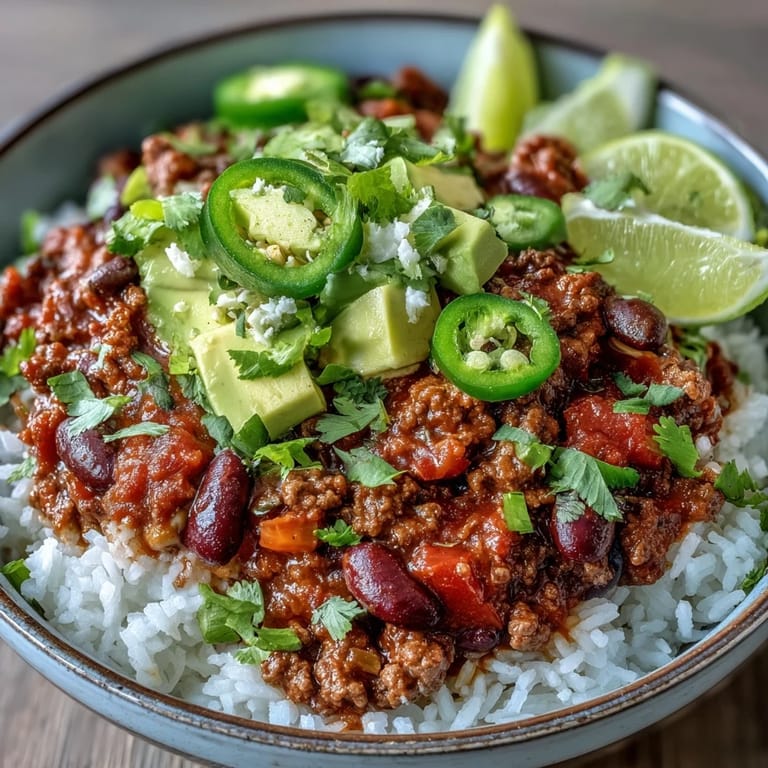
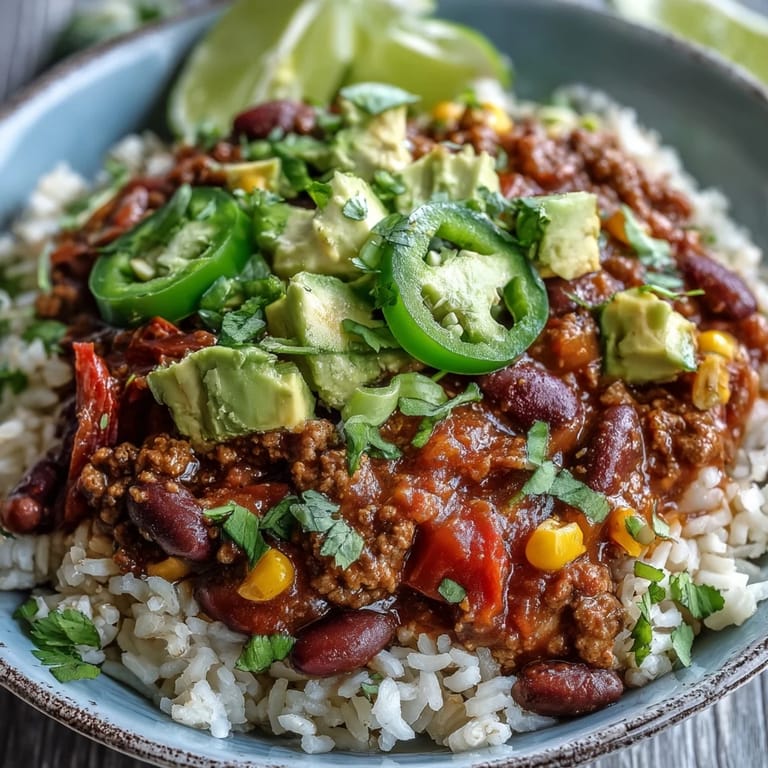
- Spoon a generous scoop of rice or grains into each bowl, ladle the hot chili over the top, and pile on your favorite toppings. This is where you make it your own.
 Pin It
 There was one night I made this with farro instead of rice, just to see what would happen, and it turned into my favorite version. The grains stayed chewy and nutty, soaking up the chili without getting mushy, and everyone at the table kept asking what I'd done differently. It reminded me that recipes are really just starting points, and the best meals come from trying something new on a whim. Now I keep a rotation of grains in the pantry just so I can switch it up depending on my mood.
Choosing Your Grain
Rice is classic and comforting, but don't be afraid to experiment with quinoa for extra protein, farro for a chewy bite, or even barley if you want something heartier. Each grain changes the texture and how the chili sits in the bowl, some soak up more sauce, others stay distinct and toothsome. I've learned to cook the grain just slightly less than the package says if I'm planning to let it sit under hot chili for a few minutes. It keeps everything from turning to mush and makes each spoonful more interesting. Brown rice is my go to when I want something wholesome and filling without any fuss.
Toppings That Transform
The toppings are where this dish really comes alive, and I've found that even people who claim they don't like chili will dig in once you set out a spread. Shredded cheese melts into the hot chili and makes everything creamy, sour cream cools down the heat and adds tang, and fresh cilantro and green onions bring a bright, herby contrast. Avocado adds richness and a silky texture that balances the spice, and a squeeze of lime at the end wakes up every flavor in the bowl. I like to put everything in little bowls and let people build their own, it turns dinner into something a little more fun and interactive.
Making It Your Own
This recipe is endlessly adaptable, and I've probably made it a dozen different ways depending on what's in the fridge or who I'm feeding. Swap the ground beef for turkey or a plant based crumble, add an extra can of beans for a vegetarian version, or throw in some diced sweet potato for extra sweetness and texture. You can dial up the heat with extra cayenne or keep it mild for kids, and if you want it smokier, a pinch of chipotle powder does wonders. I've even stirred in a spoonful of cocoa powder once, just to see, and it added a subtle richness that made everyone ask for the recipe.
- Try adding a handful of chopped kale or spinach in the last few minutes of cooking for extra greens.
- If you like it thicker, mash some of the beans with a fork before adding them to the pot.
- Leftovers make an incredible topping for baked potatoes or nachos the next day.
 Pin It
 This chili bowl has become one of those recipes I don't have to think about anymore, I just make it when I need something warm, filling, and reliable. It's the kind of meal that feels like home no matter where you are.
Recipe Questions & Answers
- → Can I make this vegetarian?
Yes, simply replace the ground beef with plant-based meat crumbles or add an extra can of beans. Use vegetable broth instead of beef broth to keep it fully meat-free while maintaining all the hearty flavors.
- → What grains work best as a base?
White or brown rice are classic choices, but quinoa, farro, bulgur, and barley also work beautifully. Choose grains that complement the robust chili flavors and provide a satisfying foundation for the toppings.
- → How can I adjust the spice level?
Reduce or omit the cayenne pepper for milder heat. For more spice, increase the chili powder or add fresh jalapeños while cooking. The cayenne provides background heat while chili powder adds depth.
- → Can I freeze leftovers?
Absolutely. The chili freezes well for up to three months. Cool completely before storing in airtight containers. Thaw overnight in the refrigerator and reheat gently on the stovetop, adding a splash of broth if needed.
- → What are the best toppings?
Shredded cheddar, sour cream, diced avocado, fresh cilantro, sliced green onions, jalapeño rounds, and lime wedges are classic choices. The cool, creamy elements balance the warm, spiced chili perfectly.
- → How long does this keep in the refrigerator?
Stored properly in a sealed container, the chili lasts 4-5 days refrigerated. The flavors develop and intensify over time, making it an excellent meal prep option for quick lunches throughout the week.