 Pin It
 My neighbor came back from Seoul with a tiny jar of gochujang and no idea what to do with it. I promised her a dinner worth the luggage space, and this bowl was born on a Tuesday night with whatever I had on hand. The smell of sesame oil hitting the hot pan brought her to the kitchen before I even called her. We ate standing up at the counter, laughing at how something so simple could taste so alive. That jar lasted us three more dinners, and she still asks for this one by name.
I made this for my brother when he was training for a marathon and surviving on plain chicken and brown rice. He looked skeptical when I set the bowl down, but halfway through he stopped talking entirely. The pickled crunch, the sweet-savory beef, the way the sesame seeds clung to everything, it all just worked. He asked for the recipe in a text at six the next morning. Now he makes it every Sunday and preps it for the week, though he always doubles the ginger because he says I go too easy on it.
Ingredients
- Lean ground beef: The base of the bowl, and using lean cuts means you will not be swimming in grease, though a little fat adds flavor so do not go too lean.
- Soy sauce or tamari: This brings the salty umami backbone, and tamari keeps it gluten-free without losing any depth.
- Toasted sesame oil: A small amount fills the whole kitchen with nutty warmth, do not skip it or use the untoasted kind, it is not the same.
- Brown sugar: Just enough sweetness to balance the salty and spicy, and it helps the beef caramelize beautifully in the pan.
- Fresh ginger: Grating it fresh makes all the difference, the zing is sharper and the aroma is something jarred ginger just cannot match.
- Garlic: Minced fine so it melts into the sauce and perfumes the beef without burning.
- Gochujang or sriracha: Optional but encouraged, it adds a gentle heat and fermented complexity that makes the bowl feel authentic.
- Green onions: Stirred in at the end for a fresh bite and a pop of color against the dark, glossy beef.
- Sesame seeds: They add a quiet crunch and look like tiny stars scattered over the bowl.
- Jasmine rice or cauliflower rice: Your choice of base, jasmine rice is fluffy and fragrant, cauliflower rice keeps it light and quick.
- Carrot, cucumber, and radish: Julienned and pickled quickly, they bring acid and crunch that transform the bowl from good to crave-worthy.
- Rice vinegar, sugar, and salt: The simple brine that turns raw vegetables into tangy, crisp pickles in minutes.
Tired of Takeout? 🥡
Get 10 meals you can make faster than delivery arrives. Seriously.
One email. No spam. Unsubscribe anytime.
Instructions
- Quick pickle the vegetables:
- Whisk together rice vinegar, sugar, and salt in a bowl until the sugar dissolves completely. Toss in the julienned carrot, cucumber, and radish, making sure everything gets coated, then let it sit on the counter for at least 15 minutes, stirring once or twice so the flavors soak in evenly.
- Cook your rice base:
- Prepare jasmine rice or cauliflower rice following package directions and keep it warm while you cook the beef. If using cauliflower rice, a quick saute in a dry pan crisps it up nicely and keeps it from getting soggy.
- Brown the beef:
- Heat a large skillet over medium-high and add the ground beef, breaking it up with a spoon or spatula as it cooks. Let it brown for 5 to 7 minutes until no pink remains, then drain off any excess fat if the pan looks greasy.
- Build the sauce:
- Add soy sauce, sesame oil, brown sugar, grated ginger, minced garlic, and gochujang if using, stirring everything into the beef. Cook for another 2 to 3 minutes, letting the sauce thicken slightly and coat every bit of meat with that sweet, savory glaze.
- Finish with aromatics:
- Pull the skillet off the heat and stir in sliced green onions and sesame seeds so they stay vibrant and fragrant. The residual heat will soften the onions just enough without turning them limp.
- Assemble the bowls:
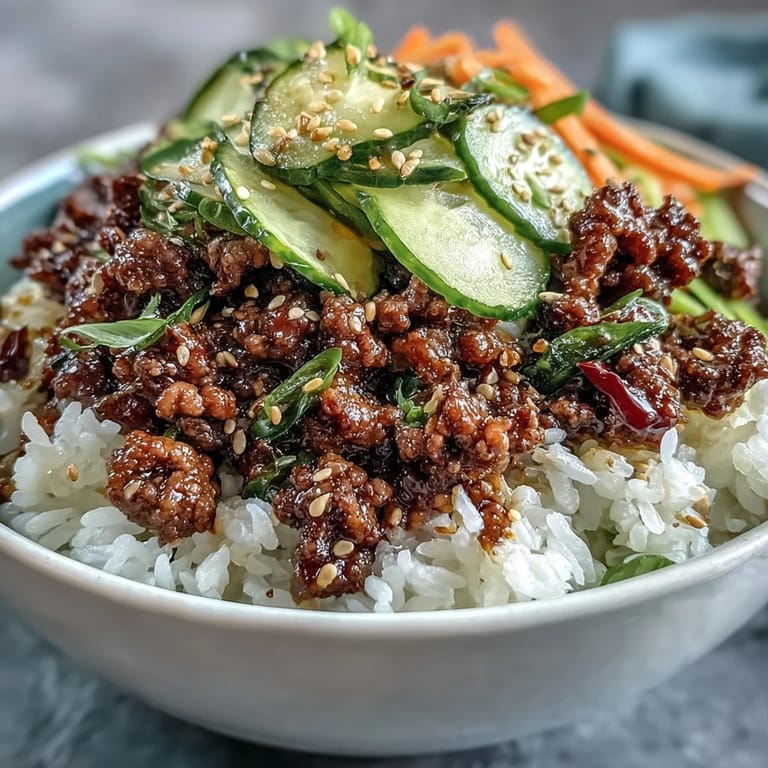
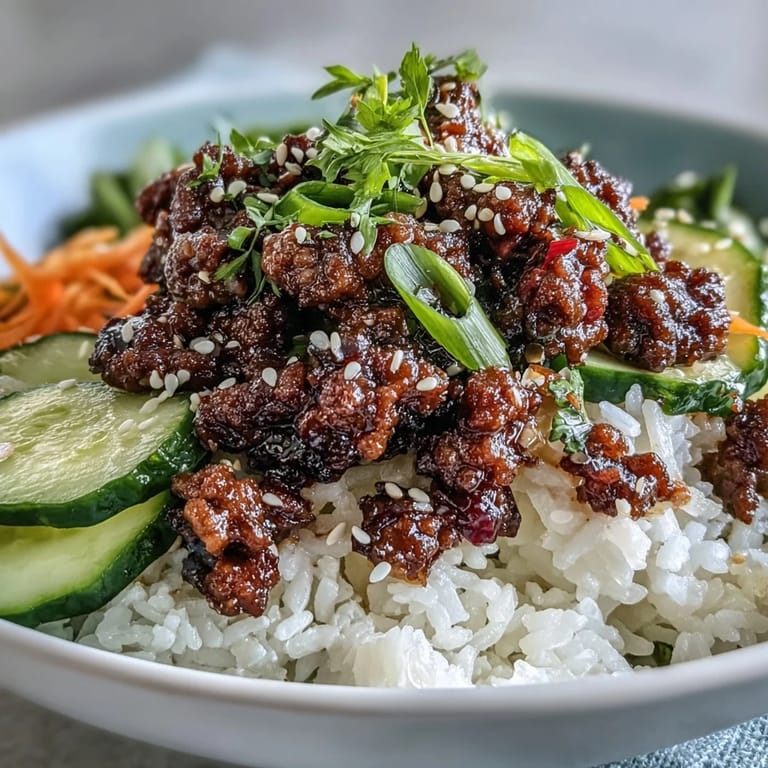
- Divide the rice or cauliflower rice among four bowls, spoon the seasoned beef over the top, and pile on a generous handful of the pickled vegetables. Garnish with extra green onions and sesame seeds, then serve immediately while everything is warm and the pickles are cold and crisp.
 Pin It
 The first time I brought this to a potluck, someone asked if I had ordered it from a restaurant. I laughed and told them it took me less time than the drive to pick up takeout. By the end of the night, three people had taken photos of the recipe on my phone. It is become my go-to when I want to look like I tried hard but actually just chopped a few vegetables and stirred a pan. The truth is, the flavor does all the heavy lifting.
Storing and Reheating
Keep the beef, rice, and pickled vegetables in separate containers in the fridge for up to four days. The beef reheats beautifully in the microwave or a skillet with a splash of water to loosen the sauce. The pickles actually get better after a day or two as they soak up more brine. I like to assemble each bowl fresh so the textures stay distinct, warm beef and rice against cold, crunchy pickles.
Swaps and Variations
Ground turkey or chicken work perfectly if you want something leaner, though I add a tiny drizzle of extra sesame oil to make up for the lost richness. For a vegetarian version, crumbled firm tofu or tempeh soaks up the sauce like a sponge, just press out the water first and brown it well. I have also used ground pork when it was on sale, and the slight fattiness made the sauce even more luscious. A fried egg on top turns this into breakfast, and the runny yolk mixing with the beef is borderline illegal.
Serving Suggestions
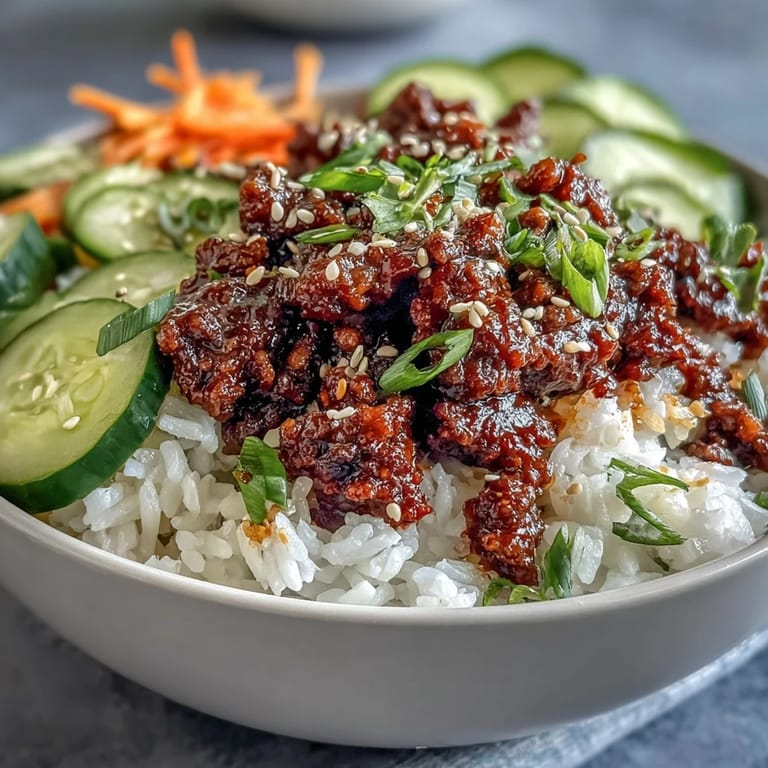
This bowl is a full meal on its own, but sometimes I will set out extra toppings like sliced avocado, a drizzle of sriracha mayo, or a handful of fresh cilantro for people to customize. It pairs well with a cold, crisp lager or a light iced green tea to cut through the richness. If you are feeding a crowd, double the pickles because they disappear fast.
- Add a soft-boiled egg for extra protein and a creamy contrast to the tangy pickles.
- Serve with a side of steamed edamame or miso soup to make it feel like a full Korean-inspired spread.
- Top with kimchi instead of pickled vegetables for a funkier, more fermented punch of flavor.
 Pin It
 This bowl has pulled me out of more weeknight slumps than I can count. It is proof that a handful of good ingredients and fifteen minutes of attention can turn into something that feels special, even on a random Wednesday.
Recipe Questions & Answers
- → Can I make this bowl ahead of time?
The seasoned beef and pickled vegetables both store well for 3-4 days in the refrigerator. Keep them separate from the rice and assemble when ready to serve. The pickled vegetables actually develop more flavor after marinating longer.
- → What can I substitute for gochujang?
Sriracha works well as a substitute, though it has a different flavor profile. You can also use red pepper flakes mixed with a little miso paste, or simply omit it for a milder dish while still enjoying the other aromatic seasonings.
- → Is cauliflower rice a good substitute?
Absolutely! Cauliflower rice works beautifully and reduces the carbohydrates significantly. It absorbs the savory beef juices well and maintains a nice texture. Just cook it according to package directions and keep it warm until assembling.
- → How spicy is this dish?
The base version is quite mild with just a hint of warmth from ginger and garlic. The gochujang adds moderate heat, but it's optional. Start with a small amount and adjust to your preference, or serve extra on the side for those who enjoy more spice.
- → Can I freeze the seasoned beef?
Yes, the cooked seasoned beef freezes well for up to 3 months. Let it cool completely, then store in an airtight container or freezer bag. Thaw overnight in the refrigerator and reheat gently on the stovetetop with a splash of water if needed.
- → What other vegetables work for pickling?
Try thinly sliced red onion, bell pepper strips, or daikon radish for variety. You can also add quick-pickled cabbage or even some fresh herbs like cilantro or mint to the vegetable mixture for extra freshness.