 Pin It
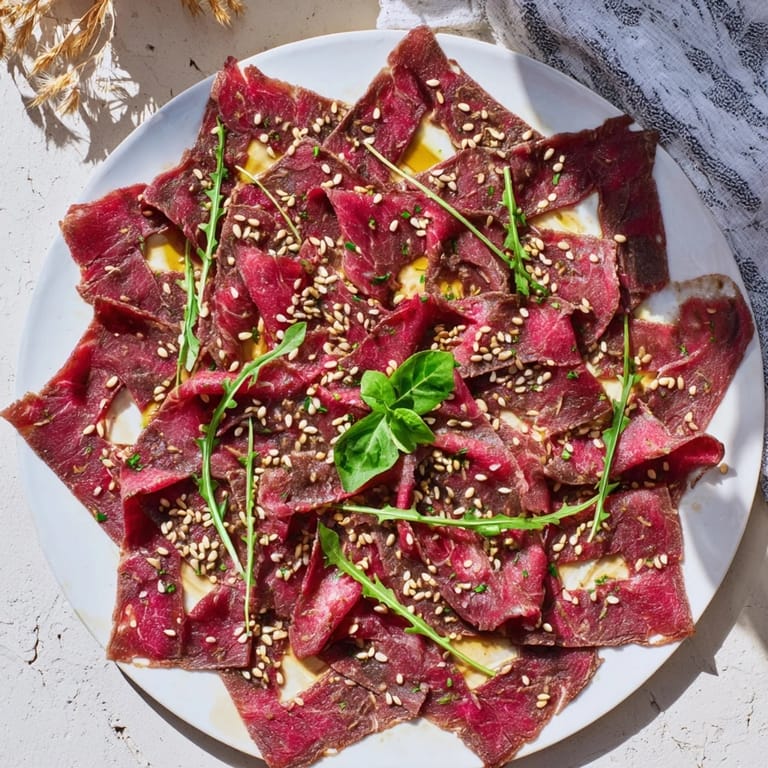
 I discovered the magic of folding beef the night a chef friend brought this to a dinner party, and I watched everyone stop mid-conversation to admire it before eating. The geometric precision felt almost like edible art, and I was fascinated that something so elegant required just careful hands and patience, no cooking required. That evening, I became obsessed with recreating it, and now it's my go-to move when I want to impress without spending hours in the kitchen.
My roommate walked in while I was practicing the folds and asked if I was making origami instead of dinner, which made me laugh so hard I nearly fumbled a triangle. But that's exactly the charm of this dish—it bridges that space between craft and cooking, and somehow that lightness makes it feel less intimidating to attempt.
Ingredients
- Beef carpaccio or very thinly sliced roast beef (300 g): The thinner the slices, the easier they fold without tearing; if your butcher hasn't already sliced it thin enough, pop it in the freezer for thirty minutes before slicing yourself.
- Extra virgin olive oil (2 tbsp): This carries the flavor into every fold, so don't skimp on quality here.
- Soy sauce (1 tbsp, gluten-free if needed): The umami backbone that makes each bite sing with savory depth.
- Lemon juice (2 tsp): A touch of brightness that cuts through the richness and keeps things from feeling heavy.
- Dijon mustard (1 tsp): Just enough tang to add complexity without announcing itself loudly.
- Freshly ground black pepper (1/2 tsp): Grind it fresh right before mixing; pre-ground loses its punch fast.
- Sea salt (1/4 tsp): Enhances the beef's natural flavor and helps the marinade cling to each fold.
- Baby arugula (40 g): A peppery bed that supports the beef and adds a subtle contrast in texture.
- Toasted sesame seeds (2 tbsp): The crunch here is essential; it adds dimension to what might otherwise feel delicate.
- Finely chopped chives (1 tbsp): A whisper of onion flavor and green brightness that lifts the whole plate.
- Shaved Parmesan cheese (50 g): Use a vegetable peeler to create thin shards; thick chunks overwhelm the delicate beef.
Tired of Takeout? 🥡
Get 10 meals you can make faster than delivery arrives. Seriously.
One email. No spam. Unsubscribe anytime.
Instructions
- Mix Your Marinade:
- In a small bowl, whisk together olive oil, soy sauce, lemon juice, Dijon mustard, pepper, and salt until the mustard dissolves and everything feels cohesive. This takes about two minutes of steady whisking, and you'll notice the texture shift from separated to silky.
- Season the Beef:
- Lay your beef slices flat on a clean cutting board or work surface, then brush each one lightly with the marinade using a pastry brush, being gentle so you don't tear the delicate meat. Reserve about half the marinade for a final drizzle later.
- Create Your Folds:
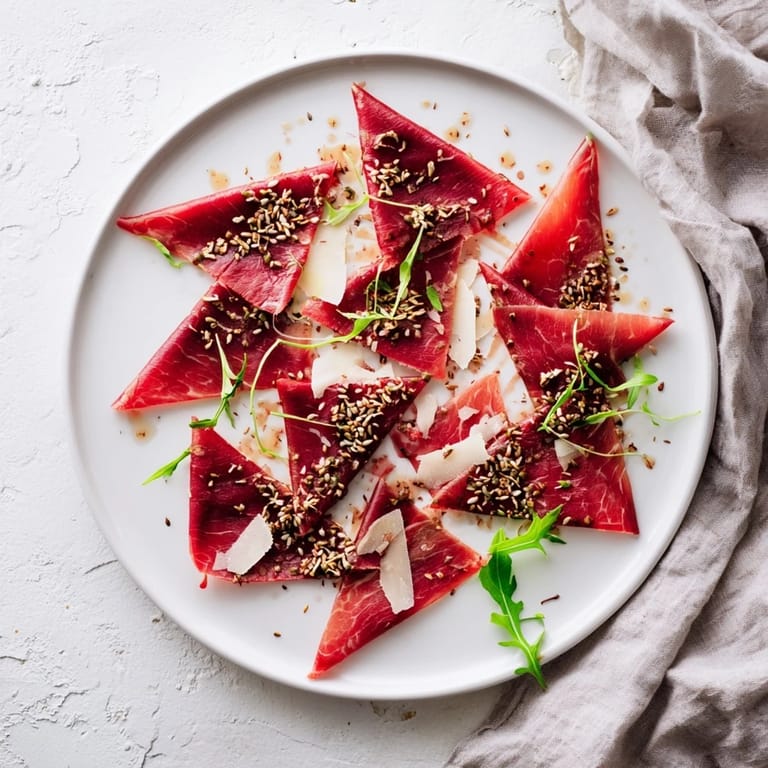
- This is where the art begins: take each slice and fold it slowly into geometric shapes like triangles, squares, or even fan-like origami patterns, using gentle, deliberate pressure to hold the shape. If the folds won't stay put, secure them with a chive stem or cocktail pick pushed gently through the layers.
- Build Your Platter:
- Arrange your folded beef pieces on a serving platter lined with the baby arugula, creating a visual rhythm across the plate. Step back and look at it—the arrangement matters as much as the folding.
- Add the Final Touches:
- Sprinkle the toasted sesame seeds, chopped chives, and shaved Parmesan over the beef, distributing them so every piece gets a taste of each element. Just before guests arrive or just before serving, drizzle the reserved marinade lightly across the platter.
 Pin It
 The first time I made this for a small gathering, I was nervous the folds wouldn't impress and that the simplicity might feel cheap. Instead, a guest asked for the recipe mid-bite, and another spent five minutes examining the plate before eating, genuinely moved by how something so simple could feel so intentional and elegant.
The Folding Technique
The key to confident folding is understanding that you're not fighting the beef; you're coaxing it into shape with steady, gentle hands. Start with triangles if you're new to this—they're the most forgiving, requiring just two or three folds from corner to corner. Once triangles feel natural, move to squares by folding opposite corners inward, or try the fan shape by folding the slice accordion-style from one end.
Pairing and Serving Suggestions
This appetizer shines alongside a crisp Sauvignon Blanc or a dry rosé, where the wine's acidity mirrors the lemon juice in the marinade and cuts through the richness of the beef and Parmesan. I've also found that serving it with thinly sliced baguette or rice crackers lets guests build their own bites if they want more substance, though honestly, the folded beef alone is the star of the show.
Make It Your Own
Once you master the beef version, you can experiment with thinly sliced tuna or salmon for a pescatarian angle, or even add a drop of truffle oil to the marinade if you want to push the elegance even further. The beauty of this recipe is that it's a canvas—the folding technique stays the same, but the variations are endless.
- Try swapping the arugula for microgreens or baby spinach for a slightly different flavor and texture.
- A whisper of wasabi mixed into the marinade adds heat without overwhelming the delicate beef.
- Always taste the marinade before brushing it on; it should make you want to keep tasting it.
 Pin It
 This appetizer has become my quiet confidence move—something I can pull together in under thirty minutes that makes people pause and appreciate the moment. It's proof that elegance doesn't require complexity, just intention.
Recipe Questions & Answers
- → What type of beef is best for folding?
Use very thinly sliced beef carpaccio or roast beef to ensure easy folding without tearing.
- → How do I keep the folded shapes intact?
Apply gentle pressure when shaping and use a chive stem or cocktail pick to secure if needed.
- → Can I prepare the beef in advance?
Marinate and fold the beef shortly before serving to maintain freshness and shape.
- → Are there alternative garnishes to use?
Yes, you can substitute baby arugula with microgreens and add toasted nuts instead of sesame seeds.
- → Is there a recommended beverage pairing?
A crisp Sauvignon Blanc or a dry rosé complements the savory and citrusy notes perfectly.