 Pin It
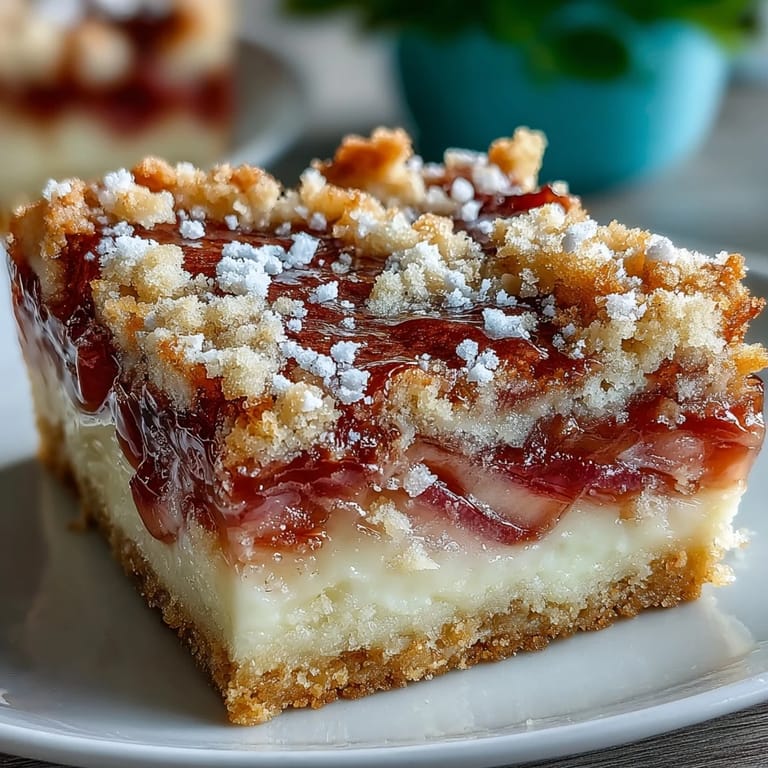
 The first time I baked these rhubarb custard bars, I could hear the rain tapping gently against my kitchen window while the scent of steamy butter and tart fruit rose from the oven. The anticipation built as I watched the custard transform from liquid to silky pale gold, barely containing my curiosity about how the layers would taste together. Spring always brings rhubarb to market stands, and that morning I was lured in by the shockingly pink stalks poking from the crate. There was something almost mischievous about tucking such tartness into something so delicate. In the end, I found myself tidying up the floury counter with a grin, knowing dessert would brighten a gray day.
The last time I made these bars for a neighbor moving away, the kitchen felt alive with the clink of measuring cups and the hum of quiet conversation. We both sampled the baked edges straight from the pan, still warm, exchanged a look, and couldn’t help grinning as the tart rhubarb gave way to the buttery base.
Ingredients
- Unsalted butter: Softened butter makes the crust ultra-tender and is easiest to blend when left out for 30 minutes first.
- Granulated sugar: Used in each layer, it sharpens the rhubarb’s tang and sweetens the custard just enough.
- All-purpose flour: Sift the flour if you can—it helps with an especially soft shortbread and a smooth custard.
- Salt: Only a pinch is needed to sharpen all the flavors in crust and custard.
- Fresh rhubarb: Choose the brightest stalks; if yours is greenish, the flavor is still perfect, just a touch less showy.
- Eggs: Bring eggs to room temperature for a lighter, more cohesive custard layer.
- Heavy cream: Adds richness that balances the rhubarb’s tart bite—don’t skim on this.
- Pure vanilla extract: The vanilla perfumes the custard; real extract really does make a difference.
- Powdered sugar: A sprinkling on top just before serving looks lovely and gives the bars a gentle sweetness.
Tired of Takeout? 🥡
Get 10 meals you can make faster than delivery arrives. Seriously.
One email. No spam. Unsubscribe anytime.
Instructions
- Prep the pan:
- Line your baking pan with parchment paper, letting the edges hang over slightly so you can lift the whole batch out later.
- Make the shortbread base:
- Beat the softened butter and sugar until light and fluffy, enjoying the way the mixture clings to the beaters, then add flour and salt until a soft dough forms that looks almost like pale playdough.
- Bake the crust:
- Press the dough firmly into the pan, smoothing corners with your fingertips, and bake just until the edges show a golden hint—try not to overbake, as the crust will continue cooking.
- Prepare the rhubarb:
- Toss the bright rhubarb pieces in sugar so they glisten, set them aside, and resist the urge to nibble until their juices start to appear.
- Whisk the custard:
- In a new bowl, whisk the eggs and sugar together until loose and glossy, then add flour, cream, vanilla, and a pinch of salt, whisking again until the batter is silky and lump-free.
- Layer it up:
- Scatter sugared rhubarb across the still-hot crust, pour in the custard, and marvel at how the colors swirl for a moment before settling.
- Second bake:
- Return to the oven and bake until the custard puffs at the edges and the top is faintly golden, gently shaking the pan to check for just-set firmness in the center.
- Cool and finish:
- Let the bars cool fully in the pan—for neat slices, patience is your friend—then dust with powdered sugar before lifting them out and cutting clean squares.
 Pin It
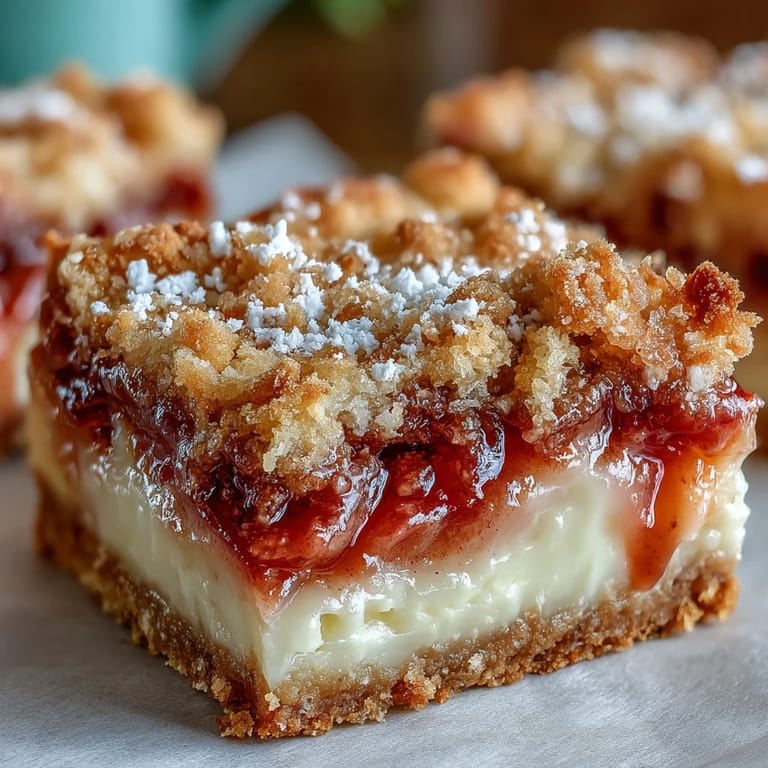
 Sometime last spring, I packed these bars for a picnic by the river and was surprised at how quickly they disappeared once the box was opened. That day, bites of tart-sweet custard shared between laughter and warm sunlight reminded me how food can turn an ordinary outing into a small celebration.
Choosing and Prepping Rhubarb
In my experience, slicing rhubarb evenly helps ensure each square has a burst of color and tartness. If the stalks are very thick, halving them lengthwise before chopping makes for a more delicate bite. I’ve also found that letting chopped rhubarb sit in sugar while you prepare other ingredients draws out just enough juice to keep the bars moist but not soggy.
Making the Shortbread Extra Special
For a shortbread layer that’s both crispy and buttery soft, chill the dough in the pan for ten minutes before baking. A friend of mine sprinkles a pinch of flaky salt on top just before baking, and I can confirm it adds a spark of flavor that’s worth trying. The aroma when it hits the oven always signals that something truly comforting is on its way.
Serving Up and Storing
These bars slice best if you use a long, sharp knife wiped clean after each cut. I like serving them still cool from the fridge on warm afternoons, but they’re equally dreamy at room temperature the next day.
- Store leftovers in an airtight container to prevent the crust from drying out.
- Wait until just before serving to dust with powdered sugar or it may dissolve.
- Bring bars along to gatherings—they travel well and make friends fast.
 Pin It
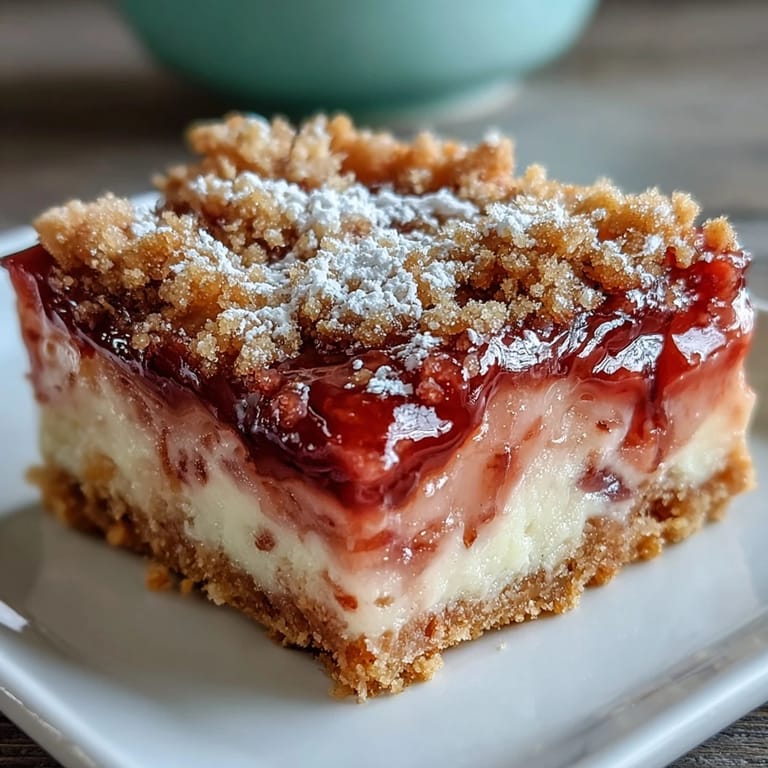
 Whether you’re dodging a spring rain or collecting smiles at a sunny potluck, these rhubarb custard bars always feel like a small celebration. May every square remind you of how delightful it is to bake just for the joy of it.
Recipe Questions & Answers
- → Can I use frozen rhubarb?
Yes. Thaw and drain excess liquid, then toss with the sugar before layering. Patting pieces dry helps prevent an overly wet custard and soggy crust.
- → How do I know the custard is set?
The custard should be lightly golden and no longer jiggly in the center; a slight wobble is fine as it will firm while cooling. A toothpick inserted near the center should come out mostly clean.
- → How can I avoid a soggy shortbread base?
Blind-bake the pressed crust until the edges are light golden (18–20 minutes) and pour the filling over a hot crust. Using a thicker cut of flour in the custard and draining excess rhubarb juices also helps keep the base crisp.
- → Can these bars be made ahead?
Yes. Cool completely, then refrigerate in an airtight container for up to 3 days. Chill before slicing for cleaner cuts; bring to room temperature briefly before serving if you prefer a softer custard.
- → What substitutions work for dairy or eggs?
For dairy-free, try a full-fat canned coconut milk in place of heavy cream; texture will be slightly different. For eggs, use a commercial egg replacer or a cornstarch-thickened custard, but expect a change in richness and set.
- → Any tips for adding texture or flavor variations?
Fold 1/2 cup chopped toasted nuts into the crust for crunch, or replace half the rhubarb with strawberries for a sweeter profile. A touch of lemon zest in the custard brightens the flavors.