 Pin It
 The first time I truly understood what makes a Wiener Schnitzel special wasn't from reading about it, but from the sound it made when my neighbor Martha flipped hers in her Vienna kitchen. That unmistakable crackle of golden breadcrumbs hitting hot butter is a sound you can't unhear. She handed me a plate with a lemon wedge and the most impossibly thin, crispy cutlet I'd ever seen, and suddenly all those cooking rules about not pressing the breading down made perfect sense. That meal changed how I thought about simple, honest food.
I made this for my sister's birthday dinner, and watching her close her eyes after that first bite told me everything—no fancy plating, no pretension needed. The kitchen smelled like clarified butter and the kind of warmth that makes people linger at the table longer than they planned. By the end of the meal, she was asking if I'd teach her, and that's when I knew this recipe deserved a permanent spot in my regular rotation.
Ingredients
- Veal cutlets (4 pieces, about 150 g each): Thin veal is the heart of authenticity here; pounding them yourself ensures they're uniform and cook evenly, and you'll feel the difference in every bite compared to pre-pounded cuts.
- All-purpose flour (100 g): Plain and simple, it's the first layer of your crispy coating and helps the egg wash stick properly.
- Eggs (2 large) and milk (4 tbsp): This combination creates an adhesive that lets the breadcrumbs cling without making the coating heavy or soggy.
- Fine dry breadcrumbs (150 g): Use panko or finely ground breadcrumbs, never fresh; they're what delivers that audible crackle when you bite into it.
- Clarified butter or neutral oil (250 ml): Clarified butter is traditional and worth seeking out—it browns the breading beautifully and adds a subtle richness that regular butter can't match because the milk solids are removed.
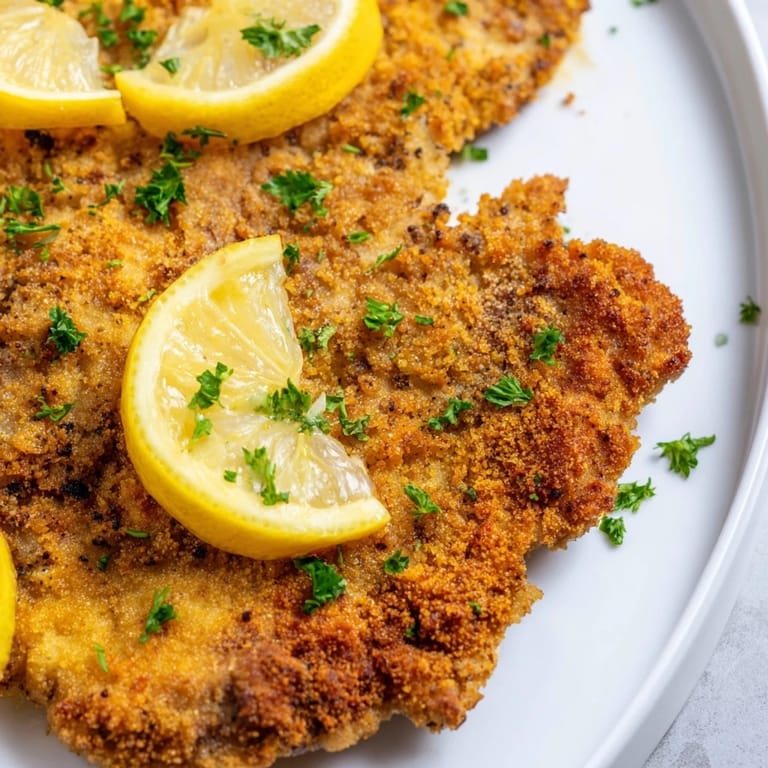
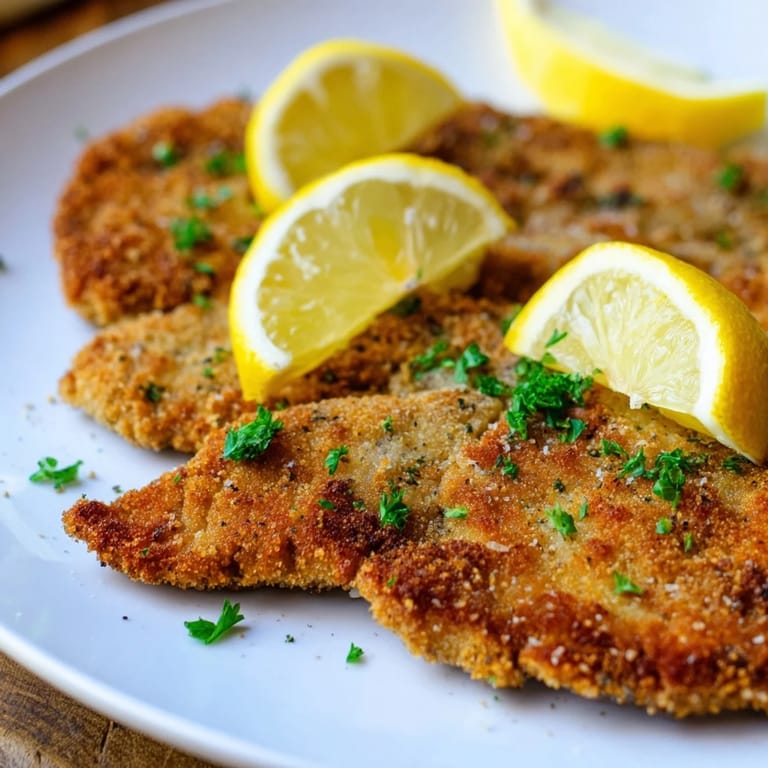
- Lemon wedges and fresh parsley: These aren't garnish afterthoughts; the brightness cuts through the richness and makes the whole plate feel alive.
Tired of Takeout? 🥡
Get 10 meals you can make faster than delivery arrives. Seriously.
One email. No spam. Unsubscribe anytime.
Instructions
- Pound the veal gently and with intention:
- Place each cutlet between plastic wrap and use a meat mallet with steady, even strokes to reach 1/4 inch thickness—this is about control, not aggression. Pat them completely dry after pounding because any moisture will steam instead of fry, and that's the enemy of crispiness.
- Build your breading station like a ritual:
- Three shallow dishes in a row, each with its purpose: flour first, then the egg-milk mixture, then breadcrumbs last. Having everything ready means you work quickly and confidently, which keeps the veal from absorbing moisture from the air while waiting.
- Bread with a light hand and patience:
- Flour, then egg wash, then breadcrumbs—but here's the secret: lay the breaded cutlet on a plate for a minute before frying so the coating sets slightly and stays loose. Press the breadcrumbs down with your fingertips only enough to make them adhere; a loose, almost shaggy coating is what turns golden and shatters under your fork.
- Let the fat do the work:
- Heat your clarified butter or oil until it shimmers visibly—this is about 350-360°F if you're checking with a thermometer. Fry just one or two cutlets at a time depending on your pan; they should have room to swim, and the fat should bubble around them but not splash over the sides.
- Tend to them like they matter:
- After 2-3 minutes per side, you'll see the edges turn golden, then use a slotted spatula to tilt the pan and spoon the hot fat over the top of each cutlet for even, golden browning. This extra step takes 30 seconds and makes the difference between good and unforgettable.
- Drain and serve immediately:
- Slide each schnitzel onto paper towels for just a moment to let excess oil drip away, then transfer to a warm plate. The window between hot and perfect is brief, so have your lemon wedges and serving plates ready before you even start frying.
 Pin It
 There's a moment during dinner when someone you're feeding looks up from their plate with genuine surprise and appreciation—that's the moment a Wiener Schnitzel earns its place. It's not fancy or complicated, but it carries the weight of tradition and the satisfaction of something done right, and that combination is somehow more memorable than any elaborate dish could ever be.
The Art of Pounding
The pounding stage is more than just tenderizing meat; it's where you set yourself up for success. Use even pressure and let the mallet do the work rather than fighting the cutlet, and you'll end up with a uniform thickness that cooks evenly. I used to think my arm would get tired, but I discovered that a relaxed, consistent rhythm is actually faster and produces better results than aggressive whacking.
The Science of Crispiness
Crispiness comes from two things: a dry surface before breading and hot enough fat during frying. Any moisture on the veal will turn to steam and soften your coating, so those paper towels are doing essential work, not just cleanup. The temperature of your fat matters too—too cool and you get a greasy, soggy result; too hot and the outside burns before the inside cooks through. That shimmering stage just before frying is your visual cue that everything is ready.
Serving and Variations
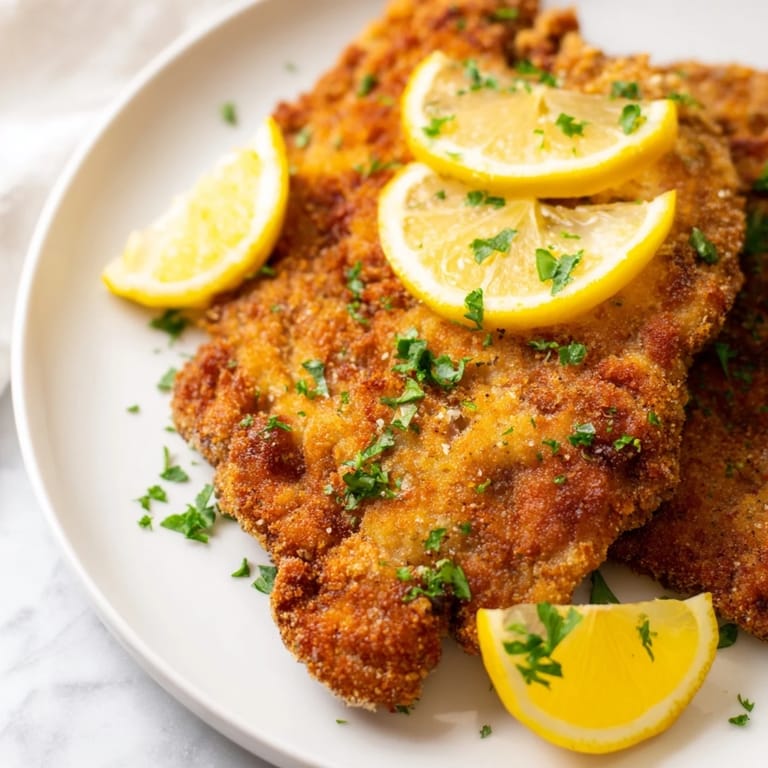
In Austria, Wiener Schnitzel appears on tables with quiet confidence, usually flanked by potato salad (the warm vinegar-dressed kind) and cucumber salad or sometimes lingonberry jam for a subtle sweetness. I've served it with a simple green salad on warmer evenings, and the lemon wedge remains non-negotiable because it cuts through the richness and makes each bite feel lighter than it actually is. The parsley is optional but I never skip it—it adds a fresh, grassy note that reminds you this is a meal made from real ingredients, not a heavy indulgence.
- Potato salad with warm vinegar dressing pairs beautifully and is traditional in Vienna.
- Fresh lemon juice squeezed over the schnitzel right before eating brightens every bite.
- A simple green salad with sharp vinaigrette balances the richness if you're serving it as a lighter meal.
 Pin It
 This is the kind of dish that deserves to be cooked with full attention and served with pride, not rushed or apologized for. It's a reminder that sometimes the simplest preparations—tender veal, crispy breading, hot fat, and lemon—are the ones that stay with you longest.
Recipe Questions & Answers
- → What cut of meat is best for authentic Wiener Schnitzel?
Veal cutlets are preferred, pounded thin to achieve tender texture and even cooking.
- → How do you achieve a crispy coating without it falling off?
Lightly coat the veal in flour, dip in egg wash, then loosely cover with fine breadcrumbs without pressing.
- → Why is clarified butter recommended for frying?
Clarified butter has a higher smoke point and adds rich flavor while helping the coating crisp evenly.
- → Can the dish be served with condiments or sides?
It is traditionally enjoyed with lemon wedges, fresh parsley, and sides like potato or cucumber salad.
- → How thick should the veal cutlets be pounded?
Approximately 1/4 inch thick to ensure quick, even cooking and tender texture.