 Pin It
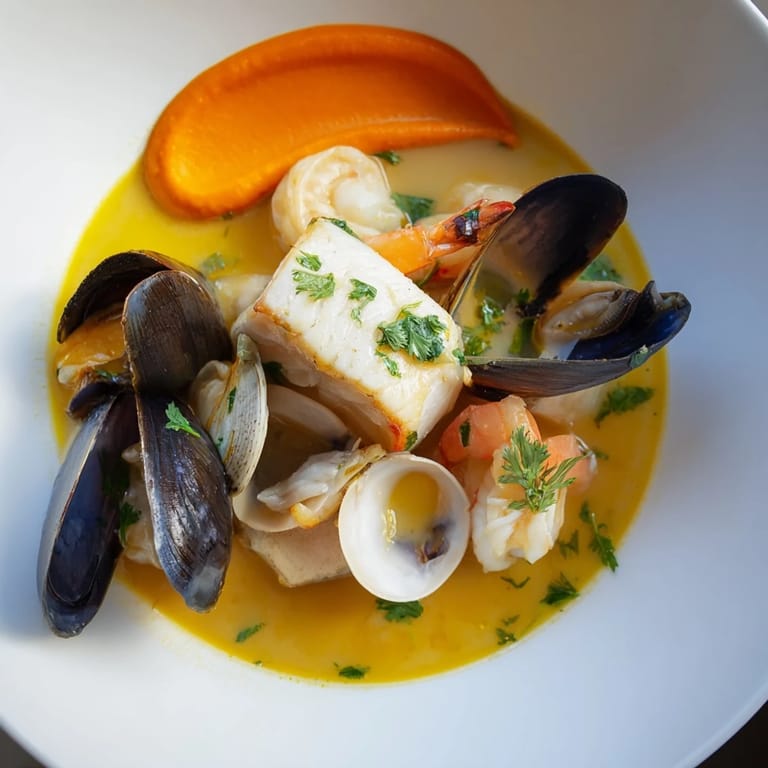
 Years ago, I watched a weathered fishmonger in Marseille arrange his daily catch with the care of an artist, and when I asked him what made a proper bouillabaisse, he smiled and said it starts with respecting what the sea gives you. That moment stuck with me, and now whenever I make this russet-hued Provençal stew, I feel that same reverence for the fish, the saffron, the orange zest that somehow makes everything sing. It's not just dinner—it's an edible conversation between the Mediterranean and your table.
I'll never forget the first time I made this for a dinner party and miscalculated the timing—I was plating when guests arrived, and somehow that panic melted the moment I heard them respond to the aroma wafting from the kitchen. Someone asked for seconds before finishing their first bowl, and another guest asked why restaurants charge so much for this when it's clearly meant to be made at home with love.
Ingredients
- Firm white fish fillets (monkfish or sea bass): These stay tender and hold their shape through the gentle simmering, giving the stew backbone and substance.
- Oily fish fillets (red mullet or similar): The fat adds richness and depth that turns the broth into something you could honestly drink on its own.
- Mussels and shrimp: Fresh is everything here—these cook so quickly that any staleness becomes immediately obvious, so visit a fishmonger you trust.
- Olive oil: Use good oil, the kind you'd drizzle on bread, because it flavors the entire pot and makes the rouille sing.
- Fennel bulbs and fennel seeds: The pairing creates a subtle anise note that feels distinctly Provençal without overwhelming anything else.
- Saffron threads: Buy whole threads and bloom them gently—they transform from threads into a concentrated golden elixir that colors and flavors the broth.
- Orange zest: Just the colored part, never the white pith; it adds brightness that keeps the stew from feeling heavy or one-dimensional.
- Rouille ingredients (egg yolk, garlic, saffron, chili): This mayonnaise-style sauce is the counterpoint to the stew's warmth, and making it by hand teaches you patience and the power of gradual emulsification.
Tired of Takeout? 🥡
Get 10 meals you can make faster than delivery arrives. Seriously.
One email. No spam. Unsubscribe anytime.
Instructions
- Build the aromatic base:
- Heat olive oil in your pot and let the onion, leek, fennel, carrot, and garlic soften slowly over medium heat for 8–10 minutes. You're not rushing—you're coaxing out their sweetness without letting them color, which takes time but rewards patience with deeper flavor.
- Layer in the flavor foundations:
- Add tomatoes, orange zest, bay leaf, thyme, parsley, saffron, fennel seeds, and peppercorns, then cook for 5 minutes so everything starts to meld. This step takes less than a minute of active work but shifts the entire aroma profile of your kitchen.
- Wine and stock:
- Pour in white wine and let it bubble gently for 2 minutes, then add your fish stock or water and bring to a gentle boil. Lower the heat and let it simmer uncovered for 25 minutes—during this time, walk away and let the vegetables soften and the flavors marry.
- Strain for clarity and purity:
- Pour the broth through a fine sieve, using the back of a spoon to press the vegetables and extract every last bit of flavor into the liquid. This step feels like alchemy—you're leaving behind the fiber and keeping the pure, concentrated essence.
- Cook the seafood gently:
- Bring the strained broth to a gentle simmer, add the firm white fish first and cook for 5 minutes, then add the oily fish, mussels, shrimp, and scallops. Simmer for another 5–6 minutes until everything is just cooked and any unopened mussels are discarded.
- Make the rouille:
- Whisk together egg yolk, garlic, chili, saffron with its soaking water, and mustard, then drizzle in olive oil very slowly while whisking constantly. It will transform from separated and loose into thick and luxurious, much like watching cream whip into being.
- Serve with ceremony:
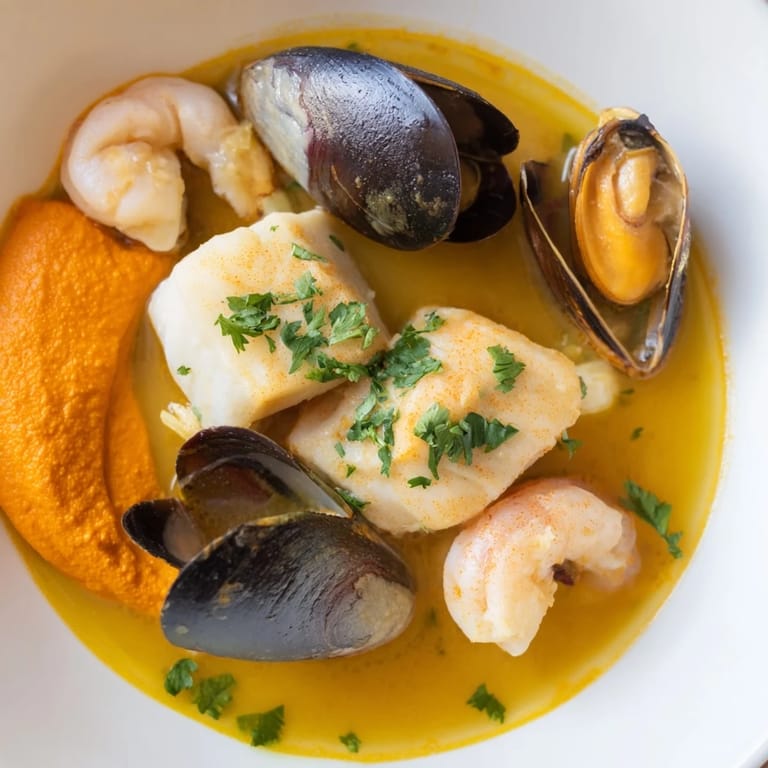
- Ladle the bouillabaisse into warm bowls, top with fresh parsley, and serve with toasted baguette slices and a generous spoonful of rouille alongside, letting each person build their bowl exactly how they like it.
 Pin It
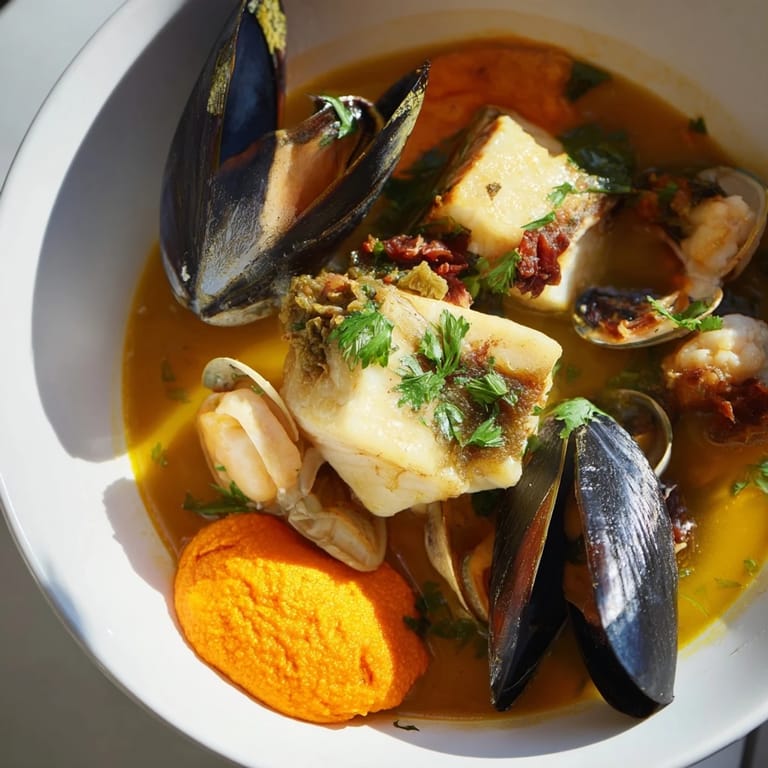
 There's a moment in every bouillabaisse that matters most: when someone tears a piece of toasted bread, spreads it thick with rouille, then uses it to scoop up seafood and broth in one bite, their eyes closing just slightly as they taste it. That moment reminds me why this dish endures—it's not fancy, but it's honest and generous and it tastes like it was made with intention.
Choosing and Preparing Your Fish
The soul of bouillabaisse is variety—traditional versions used whatever the boats brought in that day, usually at least three or four different fish. You're not trying to match a exact list but rather embracing what your fishmonger has fresh and beautiful. Ask them for recommendations; good fishmongers love the question and will steer you toward the day's best catch. Firm white fish like monkfish or sea bass stays intact during cooking, while oily fish like red mullet or mackerel adds fat and flavor that rounds out the broth. Ask for fillets and have them cut into chunks at the counter, or do it yourself with a sharp knife on a clean board, keeping pieces roughly the same size so they cook evenly.
The Rouille: Golden Sauce and Small Challenges
Rouille is a saffron-tinged mayonnaise that seems intimidating the first time you make it, and then you realize it's simply patience in a bowl. The egg yolk and oil need to emulsify, which means the oil has to go in slowly—so slowly that your hand cramps a little—while your whisk keeps constant, steady motion. If it breaks and separates, start with a fresh egg yolk in a clean bowl and whisk in the broken rouille slowly, and it will come back together. Some people use a food processor and it works fine, but making it by hand teaches you something about the sauce and how it actually works. You can make it up to a day ahead and refrigerate it, which is wonderful for entertaining because it's one fewer thing to worry about while your guests are arriving.
Wine, Herbs, and the Provençal Pantry
A dry white wine matters here because it adds acidity and complexity without sweetness, cutting through the richness of the fish and the cream-like quality the rouille adds. Sauvignon Blanc or Vermentino work beautifully, and whatever you choose to cook with is something you'd enjoy drinking alongside the finished dish. Saffron threads should be soaked in warm water before they go into the pot, which blooms their color and flavor and prevents them from sitting as hard little specks. The fennel—both the bulb and the seeds—creates a subtle, almost licorice-like undertone that's classically Provençal and somehow makes the seafood taste more of itself. Fresh herbs matter, so if you're using dried thyme, use half the amount, and parsley should always be fresh and added at the very end so it stays bright green rather than fading to khaki.
- Taste the broth before adding seafood and adjust salt boldly, because it will absorb into fish and get diluted by their moisture.
- Pair this with a chilled Provençal rosé that's dry and mineral-forward, or a crisp white wine that won't compete with the saffron and fennel.
- For a gluten-free meal, substitute the baguette with a good gluten-free bread or simply skip bread entirely and let the stew be the star.
 Pin It
 This dish is a conversation between technique and intuition, between honoring tradition and making it your own with whatever the season and your fishmonger have to offer. Make it once and you'll make it again, probably with different fish but the same reverence for what's in the pot.
Recipe Questions & Answers
- → What types of fish work best in this dish?
Firm white fish like monkfish or sea bass combined with oily fish such as red mullet provide texture and flavor balance.
- → How is the saffron rouille prepared?
It’s made by whisking egg yolk, garlic, chili, soaked saffron, and mustard while slowly drizzling in olive oil until creamy.
- → Can I substitute the fish stock with another liquid?
Yes, water can be used, but fish stock adds a deeper, more authentic flavor to the broth.
- → What is the best way to serve this dish?
Serve hot with toasted baguette slices brushed lightly with olive oil and a generous spoonful of rouille on the side.
- → How long does it take to prepare and cook?
Preparation takes about 35 minutes, and cooking time is roughly 50 minutes, making the total time around 1 hour 25 minutes.