 Pin It
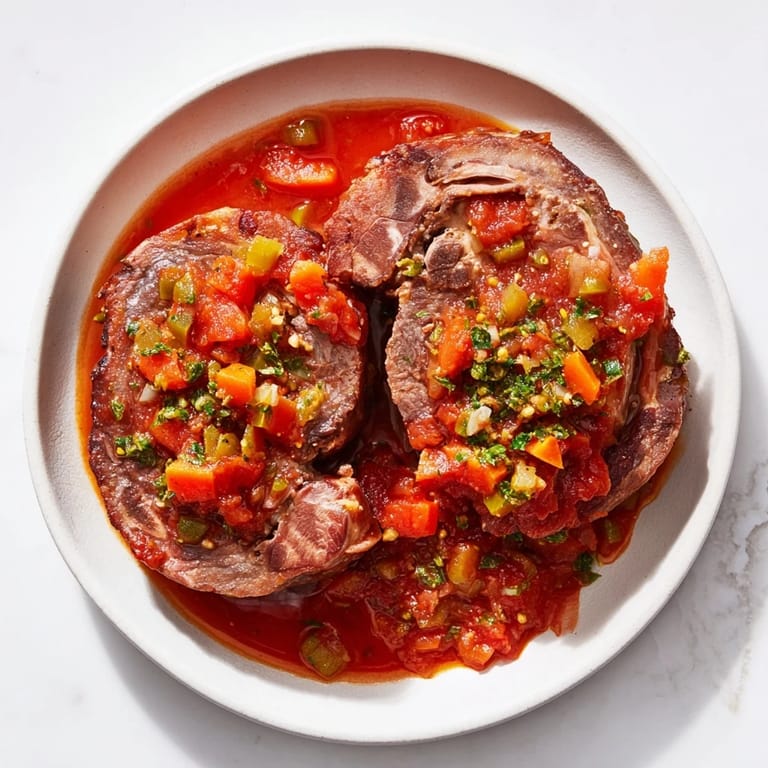
 The first time I truly understood what slow cooking meant was when my nonna placed a heavy Dutch oven in front of me, its lid clattering down with such finality that I knew nothing was rushing. Inside, veal shanks were about to become something I'd never experienced before—meat so tender it fell from the bone like it had been waiting for permission. That was osso buco, and it taught me that some of the most elegant dishes are born from patience, not complexity.
I remember serving this to friends on a cold February evening, and watching their faces when they took that first bite—it was the kind of quiet moment where everyone just stops talking because the food is speaking for itself. The kitchen had been steaming all afternoon, and by the time we sat down, the whole house smelled like a proper Italian home. That's when I realized osso buco isn't just dinner; it's an experience you share.
Ingredients
- Veal shanks: Look for cross-cut pieces about 350g each with bone still attached—the marrow becomes silky and contributes deep, savory notes to the sauce.
- Olive oil and butter: The combination creates a better browning surface than oil alone and adds a subtle richness to the braising liquid.
- Onion, carrots, and celery: This holy trinity builds flavor foundation; don't skip finely chopping them, as smaller pieces dissolve better into the sauce.
- Garlic: Mince it fine so it integrates completely and doesn't become bitter during the long braise.
- Dry white wine: Choose something you'd actually drink; it provides acidity and complexity that vinegar can't match.
- Diced tomatoes with juice: The juice matters as much as the tomatoes, so don't drain them.
- Beef or veal stock: Homemade is better if you have it, but quality store-bought works perfectly well.
- Tomato paste: This concentrated umami bomb should be cooked for a minute after stirring in to mellow its intensity.
- Bay leaves and thyme: These dried herbs are reliable here because fresh herbs would deteriorate over two hours in the oven.
- Lemon zest: Save half for the gremolata; it's what makes people pause and ask what that bright flavor is.
- Fresh parsley: Only use flat-leaf—curly parsley tastes slightly different and wilts oddly in the gremolata.
Tired of Takeout? 🥡
Get 10 meals you can make faster than delivery arrives. Seriously.
One email. No spam. Unsubscribe anytime.
Instructions
- Dry and season the shanks:
- Pat them completely dry with paper towels—this step matters because moisture prevents proper browning. Season aggressively with salt and pepper, then dredge lightly in flour, shaking off excess so you get a delicate coating, not a crust.
- Build a golden crust:
- Heat the oil and butter until the butter foams and stops crackling, then carefully lay each shank into the pot. Resist the urge to move them; let them sit for 3-4 minutes per side until they develop that mahogany color that whispers of caramelized flavors to come.
- Coax out the vegetables:
- In the same pot, the onion, carrots, celery, and garlic should soften gently over medium heat for about 6 minutes—you're building sweetness and depth here, not browning them aggressively. Stir occasionally and listen for that soft sizzle that tells you they're happy.
- Wake up the tomato paste:
- Stir it in and let it cook for just one minute with the vegetables, which mellows any harsh edges and deepens its flavor. It should smell almost nutty.
- Deglaze with purpose:
- Pour in the white wine and use a wooden spoon to scrape up every brown bit stuck to the bottom—that's concentrated flavor. Watch as the wine reduces slightly and the alcohol smell fades, usually within a minute.
- Build the braising liquid:
- Add the tomatoes with their juice, the stock, bay leaves, thyme, and half the lemon zest. Stir everything together so the flavors begin to mingle even before the oven does its work.
- Return the veal and begin the transformation:
- Nestle the shanks back into the liquid in a single layer, spooning sauce over them so they're partially submerged. Bring everything to a bare simmer on the stovetop—you should see gentle bubbles, not an aggressive boil.
- The long, slow braise:
- Cover the pot and slide it into a preheated 160°C (325°F) oven for 2 hours. Resist opening it frequently; each peek lets heat escape. After 90 minutes, you can gently peek if you're curious—the meat should be getting tender and the sauce should smell incredibly savory.
- Prepare the gremolata:
- While everything braises, mix the chopped parsley, minced garlic, and remaining lemon zest on a cutting board. The mixture should smell bright and herbaceous, almost alive compared to the deep aromatics coming from the oven.
- Finish and serve:
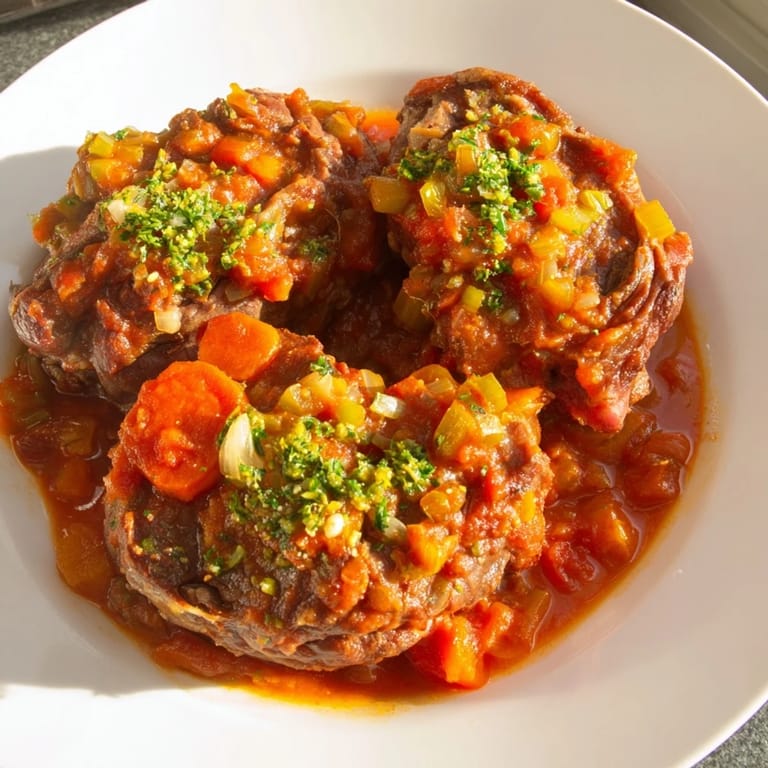
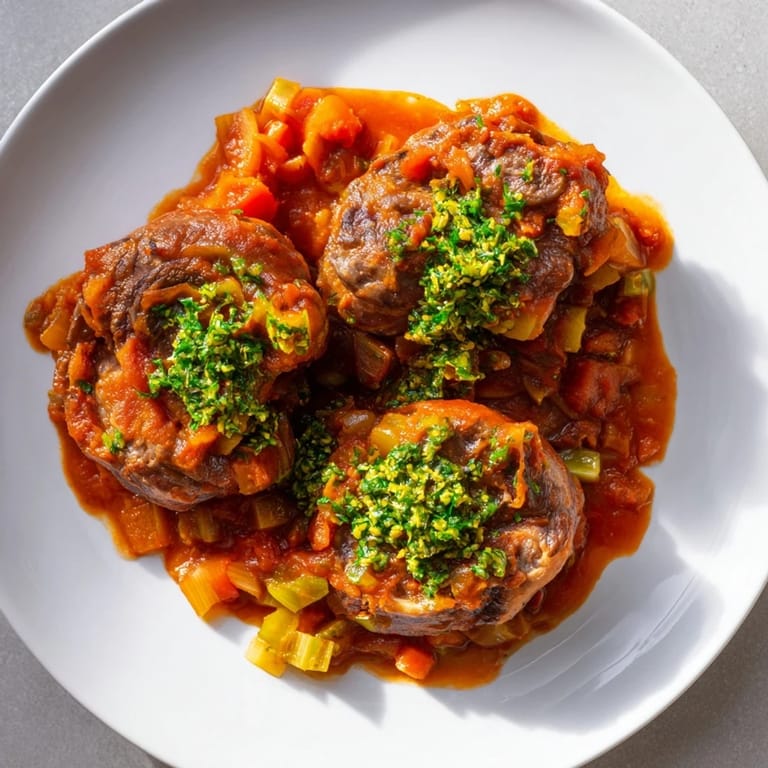
- Remove the shanks to a platter, then skim any excess fat from the sauce if desired and simmer briefly to thicken slightly if it seems loose. Spoon the sauce over the shanks and crown each one with a generous pinch of gremolata, letting that fresh brightness cut through the richness.
 Pin It
 There was a moment halfway through one winter evening when I lifted the lid and was met with a cloud of steam carrying the most magnificent smell—rosemary would have been too obvious, but this was subtle and complex, like the house itself was cooking. That's when osso buco stopped being a recipe and became a ritual, something I understood people traveled to Italy hoping to experience.
The Art of the Braise
Braising is one of those cooking techniques that looks deceptively simple but teaches patience in ways that quick cooking never can. The low heat and covered environment create a gentle, steamy atmosphere where collagen in the veal shanks slowly converts to gelatin, which is what gives the meat that silky, rich mouthfeel that feels almost luxurious. I learned that rushing this process—trying to use higher heat to save time—results in tough meat and a thin, watery sauce. The oven does the work; your job is to resist the urge to interfere.
Choosing Your Accompaniment
This dish is rich and demands something to balance it, which is why risotto alla Milanese with its delicate saffron thread is traditional—the creamy rice absorbs the sauce while the subtle spice provides contrast. Polenta works beautifully too, especially if you make it with butter and Parmigiano-Reggiano so it's velvety and luxurious. Even simple creamy mashed potatoes become special in this context, their plainness almost elegant next to the complexity of the braise.
Storing and Reheating
Osso buco might actually taste better the next day, once all the flavors have had time to settle and deepen—I often make it a day ahead specifically for this reason. Let it cool completely, then refrigerate in its pot or a container, and gently reheat over low heat on the stovetop with a splash of stock if the sauce has thickened too much. You can also freeze it for up to three months, and it defrosts beautifully.
- Make this the day before if you want less stress and deeper flavors.
- Reheat slowly and gently to preserve the tender meat and silky sauce.
- Freeze leftovers in individual portions for quick elegant dinners.
 Pin It
 Make this dish when you want cooking to feel intentional and meaningful, when you have time to let the kitchen fill with that incomparable aroma. Osso buco is how I learned that the best meals are built on time and care, not complexity.