 Pin It
 There's something almost magical about the moment when you realize you don't need hours at the stove to feed people well. I learned this on a random Tuesday when my neighbor dropped by right at dinnertime with her kids, and all I had was pasta, a jar of marinara, and a handful of spinach wilting in the crisper. Twenty minutes later, we were all gathered around steaming bowls, and somehow that simple dish felt like a small victory. That's when this recipe became a go-to—not because it's fancy, but because it proves that good food doesn't require drama.
I remember cooking this for my sister after she mentioned being too tired to think about dinner. She sat at my kitchen counter with a glass of wine, and by the time the pasta hit the pan, the whole kitchen smelled like garlic and basil. She didn't know she was about to eat spinach until she'd already decided it was her favorite thing I'd made in months. Those are the moments that stick with you—when something simple becomes proof that you care.
Ingredients
- Dried spaghetti or penne (12 oz): Pasta is the foundation here, and al dente is non-negotiable—it gives you something to push back against when you bite it, which is exactly what you want.
- Olive oil (2 tbsp): Good oil matters more than you'd think; it's what carries the garlic's flavor into every part of the dish.
- Garlic (3 cloves, minced): The thirty-second sauté is everything—you're looking for fragrant and golden, not brown and bitter.
- Marinara sauce (24 oz jar): Choose one you'd actually eat straight from a spoon; it's doing most of the heavy lifting here.
- Fresh baby spinach (5 oz): The delicate wilts almost instantly, so don't overthink it—just stir until it surrenders and turns silky.
- Red pepper flakes (1/2 tsp, optional): These are for when you want a whisper of heat that lingers on your lips.
- Parmesan cheese (1/4 cup grated, plus more): It's salty, nutty, and melts into the warmth of the pasta in the best possible way.
- Fresh basil (optional): A handful torn and scattered at the end is like adding a moment of brightness to the plate.
Tired of Takeout? 🥡
Get 10 meals you can make faster than delivery arrives. Seriously.
One email. No spam. Unsubscribe anytime.
Instructions
- Get the water boiling:
- Fill a large pot with water, salt it generously so it tastes like the sea, and let it come to a rolling boil—this is where the pasta learns its flavor. While you wait, you've got just enough time to gather everything else.
- Cook the pasta:
- Slide the pasta into the boiling water and stir right away so nothing sticks together. Check the package directions, but taste it at the lower end of the time range—you want it to have a slight firmness when you bite it.
- Reserve and drain:
- Before you drain the pasta, fish out about half a cup of the starchy cooking water and set it aside; you'll use this later to loosen the sauce if needed. Drain the rest and set the pasta aside.
- Sauté the garlic:
- In a large skillet over medium heat, warm the olive oil until it shimmers slightly, then add your minced garlic. Give it about thirty seconds—you'll know it's ready when the kitchen smells incredible and the garlic turns pale golden.
- Build the sauce:
- Pour in the marinara sauce and let it come to a gentle simmer, where little bubbles break the surface lazily. This is when you add the red pepper flakes if you're using them, stirring so they distribute evenly.
- Wilt the spinach:
- Add the fresh spinach in handfuls, stirring as it wilts down—it transforms from bright green leaves to tender, deep green ribbons in just two or three minutes. Keep stirring until there are no stiff leaves left.
- Bring it together:
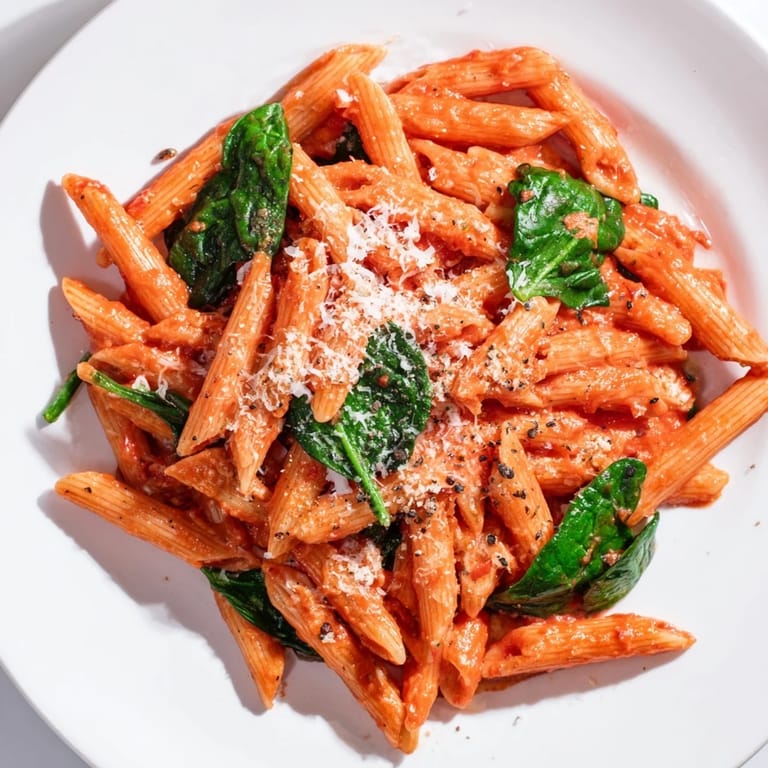
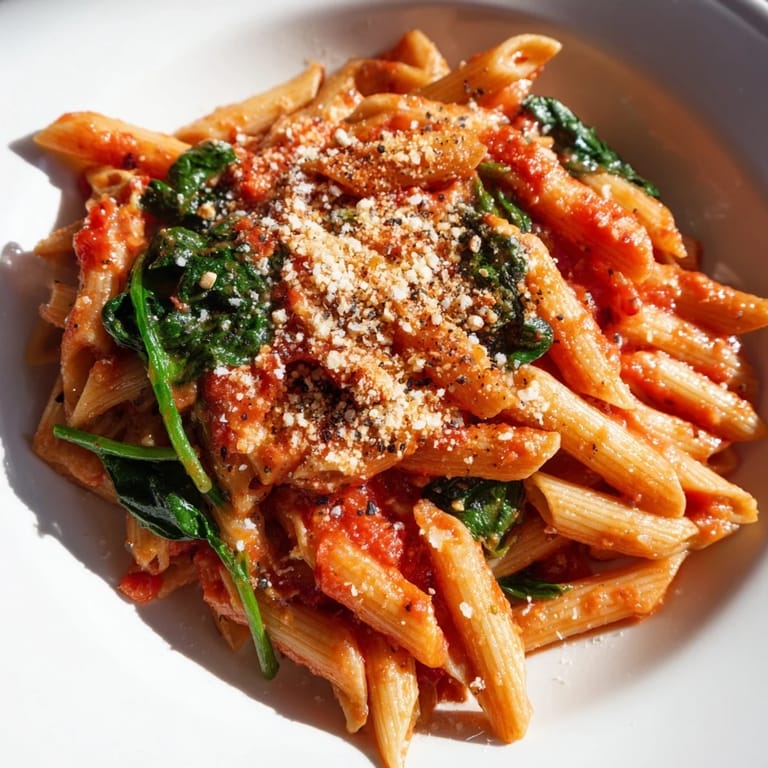
- Add your drained pasta to the skillet and toss everything until every strand is coated in that beautiful red sauce. If it looks too thick, splash in some of your reserved pasta water a little at a time until it flows the way you want.
- Finish and season:
- Stir in the grated Parmesan cheese, which will melt into warm pockets of salty, umami goodness. Crack fresh black pepper over everything and taste—adjust seasoning until it makes you happy.
- Serve with intention:
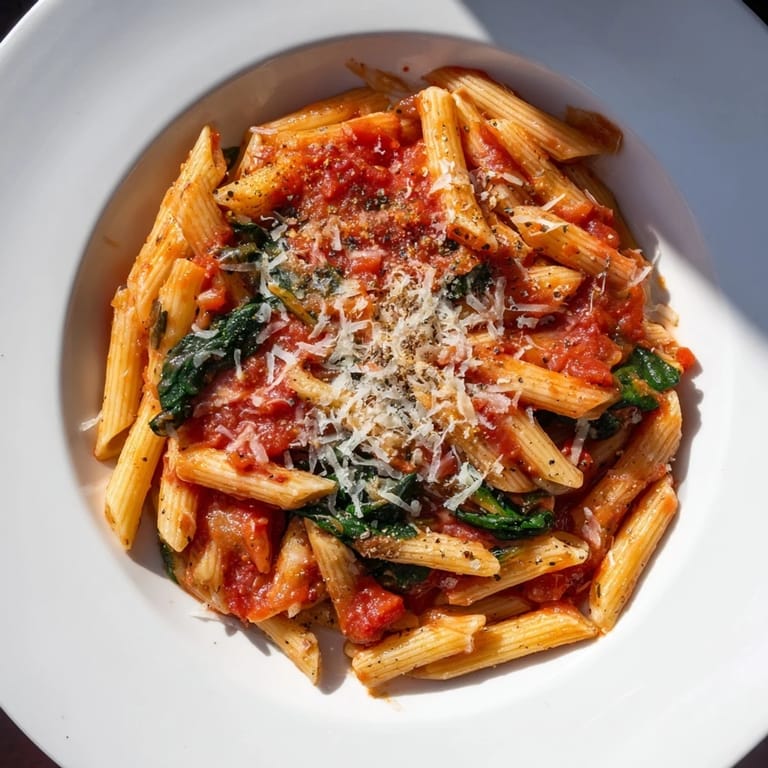
- Transfer to bowls or plates, garnish with extra Parmesan and torn basil if you have it, and serve right away while everything is still steaming.
 Pin It
 One evening, I made this for my partner right after we'd had a frustrating day, and halfway through eating, they looked up and said, "This is exactly what I needed." Sometimes the most powerful thing a dish can do is show up when you need it, without fanfare or pretense. That's what this recipe does.
The Secret of Timing
The entire magic of this dish lives in the pacing—everything happens in quick succession, which keeps the flavors bright and prevents the spinach from turning into mush. Start the pasta water first, then prep your ingredients while it heats, and by the time the pasta is cooking, you're already warming the oil and mincing garlic. This rhythm means nothing sits around waiting, and everything hits the pan at the exact moment it should. I've learned that rushing this dish doesn't hurt it; if anything, the quick cooking time is what keeps it fresh and alive on your plate.
When Simplicity is Elegance
There's a quiet confidence in a recipe that doesn't try to be more than it is. This pasta doesn't need cream or butter or complicated techniques to be satisfying—the acidity of the marinara sauce, the earthiness of the spinach, and the subtle sweetness of garlic create a balance that feels intentional and complete. Every time I make it, I'm reminded that sometimes the dishes we return to again and again are the ones that know exactly what they are. It's not about impressing anyone; it's about feeding them well.
Building Your Own Variations
Once you've made this dish a few times, you'll start noticing little ways you want to play with it—and that's the joy of a solid foundation recipe. Add white beans for protein and creaminess, sauté mushrooms until they're golden and deep, or toss in some red pepper flakes if you like heat that lingers. You could stir in a splash of balsamic vinegar for depth, or add a handful of sun-dried tomatoes for concentrated sweetness. The beauty is that every addition respects what's already working, rather than cluttering it.
- Cooked white beans add protein and a subtle creaminess without heavyweight richness.
- Sautéed mushrooms, especially cremini or shiitake, bring earthiness that feels like a secret ingredient.
- A pinch of garlic powder or a splash of balsamic vinegar deepens the sauce in ways that feel intentional.
 Pin It
 This recipe has become my answer to the question, 'What should we make for dinner?' on nights when time is short but hunger is real. It reminds me that good food is as much about the moment you're in as it is about the ingredients in your pantry.
Recipe Questions & Answers
- → Can I use fresh tomatoes instead of jarred marinara?
Yes, fresh tomatoes can be used by cooking them down with garlic and herbs to create a homemade sauce, though it will take longer to prepare.
- → What pasta types work best for this dish?
Spaghetti or penne hold the sauce well and provide the ideal texture for this preparation.
- → How can I make this dish vegan?
Omit the Parmesan cheese or substitute with a plant-based alternative to keep it vegan-friendly.
- → Is it necessary to reserve pasta water?
Yes, adding reserved pasta water helps loosen the sauce and ensures it evenly coats the pasta.
- → Can I add protein to this meal?
Consider incorporating cooked white beans or sautéed mushrooms to boost protein content while maintaining flavor balance.