 Pin It
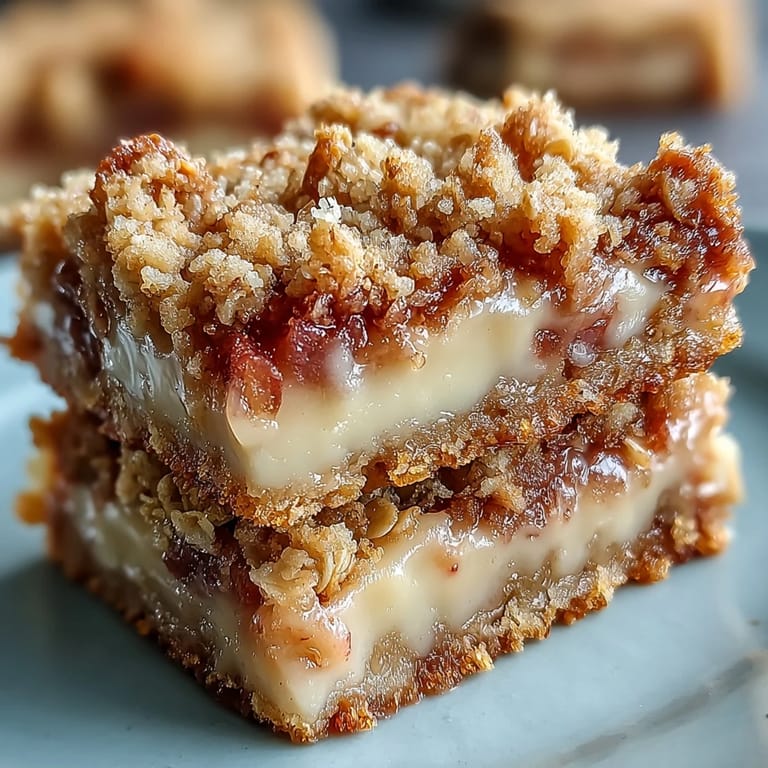
 My neighbor handed me a bundle of rhubarb stalks over the fence one Saturday morning, insisting I take them before they bolted. I had no plan, just a vague memory of my grandmother's crumble and a jar of custard powder collecting dust in the pantry. What came out of the oven that afternoon was a happy accident: tangy, creamy, crumbly, and utterly addictive. I've been making these bars every spring since, and they disappear faster than I can cut them.
I brought these to a garden party once, still chilled from the fridge, and watched people go quiet after the first bite. Someone asked if I'd trained at a bakery. I laughed and admitted I'd only learned to stop overbaking the custard after ruining two batches. The trick is patience: let them cool completely, then chill them long enough that the layers set firm and slice like a dream.
Ingredients
- Fresh rhubarb (400 g, trimmed and chopped): The star of the show, bringing that signature tart flavor that balances the sweetness. Choose firm, bright stalks and avoid any that feel rubbery.
- Granulated sugar (75 g for rhubarb, 60 g for custard): Just enough to tame the rhubarb without turning it into jam. I've tried cutting it down, but the bars end up too sour.
- Lemon juice (1 tbsp): Brightens the rhubarb and keeps the color vibrant. Freshly squeezed is best, but bottled works in a pinch.
- Cornstarch (1 tbsp for rhubarb, 2 tbsp for custard): The secret to a thick, scoopable rhubarb layer and a custard that sets without scrambling. Don't skip this.
- All-purpose flour (250 g): Forms the base and crumble topping. I use plain white flour, but a mix with whole wheat adds a nice nutty note.
- Rolled oats (100 g): Adds texture and a bit of chew to the crumble. Old-fashioned oats work better than instant here.
- Unsalted butter (150 g, cold and cubed): Cold butter is non-negotiable. It creates those flaky, golden crumbs that make the topping irresistible.
- Light brown sugar (100 g): Brings a hint of molasses and helps the crumble caramelize beautifully in the oven.
- Salt (1/2 tsp): Balances the sweetness and makes all the other flavors pop. I use fine sea salt.
- Whole milk (300 ml): The base of the custard. Whole milk gives the creamiest result, but I've used semi-skimmed when that's all I had.
- Large egg yolks (2): These thicken the custard and give it that rich, silky texture. Save the whites for meringues or an omelet.
- Vanilla extract (1 tsp): Pure vanilla is worth it here. The flavor shines through and makes the custard taste homemade, not powdered.
Tired of Takeout? 🥡
Get 10 meals you can make faster than delivery arrives. Seriously.
One email. No spam. Unsubscribe anytime.
Instructions
- Prep your pan:
- Preheat your oven to 180°C (350°F) and line a 23cm square baking pan with parchment paper, leaving some overhang on the sides. This makes lifting the bars out so much easier later.
- Cook the rhubarb:
- Combine the chopped rhubarb, 75 g sugar, lemon juice, and 1 tbsp cornstarch in a saucepan over medium heat. Stir often as it bubbles and thickens, about 8 to 10 minutes, until the rhubarb breaks down but isn't mushy. Set it aside to cool while you work on the base.
- Make the crumble mixture:
- In a large bowl, mix the flour, oats, brown sugar, and salt. Add the cold, cubed butter and rub it in with your fingertips or a pastry cutter until it looks like coarse breadcrumbs with some pea-sized bits. It should clump when you squeeze it.
- Form the base:
- Press two-thirds of the crumble mixture firmly and evenly into the bottom of your prepared pan. Use the back of a measuring cup to really compact it. Reserve the rest for topping.
- Bake the base:
- Slide the pan into the oven and bake for 15 minutes, just until the edges turn lightly golden. Pull it out and let it cool a bit while you make the custard.
- Prepare the custard:
- Heat the milk in a saucepan until it's steaming but not boiling. In a separate bowl, whisk together the egg yolks, 60 g sugar, and 2 tbsp cornstarch until smooth. Slowly pour the hot milk into the yolk mixture, whisking constantly so the eggs don't scramble. Pour everything back into the saucepan and cook over medium heat, stirring continuously, until it thickens enough to coat the back of a spoon, about 2 to 3 minutes. Remove from heat and stir in the vanilla.
- Assemble the layers:
- Spread the cooled rhubarb evenly over the baked base. Pour the warm custard over the rhubarb, spreading it gently to cover. Sprinkle the reserved crumble mixture evenly over the top.
- Bake until golden:
- Return the pan to the oven and bake for 30 minutes, or until the crumble topping is golden brown and the custard looks just set with a slight wobble in the center. It will firm up as it cools.
- Cool and chill:
- Let the bars cool completely in the pan on a wire rack. Once cool, cover and refrigerate for at least 2 hours before lifting out using the parchment overhang and slicing into squares.
 Pin It
 The first time I served these, my aunt asked for the recipe three times in one afternoon. She kept forgetting to write it down because she was too busy eating another bar. Now she makes them for every family gathering, and I pretend not to notice when she sneaks an extra one wrapped in a napkin for the drive home.
Storing and Serving
These bars keep beautifully in the fridge for up to three days, covered loosely with plastic wrap or in an airtight container. I actually prefer them the next day when the flavors have melded and the custard is perfectly firm. Serve them cold, dusted with powdered sugar, or with a scoop of vanilla ice cream if you're feeling indulgent. They're also lovely with a cup of strong tea in the afternoon.
Customizing the Flavors
If your rhubarb is especially tart, you can add a handful of raspberries or strawberries to the rhubarb layer for a sweeter, fruitier note. A pinch of ground ginger or cardamom in the crumble mixture adds warmth and complexity. I've also swapped the vanilla for almond extract in the custard when I wanted something a little different, and it was delicious.
Tools and Techniques
A good 23cm square baking pan is worth investing in. Mine is metal with straight sides, and it bakes evenly every time. Line it well with parchment, leaving enough overhang to lift the whole slab out once it's set. A flat-bottomed measuring cup is perfect for pressing the base firmly and evenly. When you're making the custard, a silicone whisk prevents scratching your saucepan and gets into the corners where the mixture tends to stick.
- Use a sharp knife, wiped clean between cuts, to get neat squares.
- If the bars are too cold and crumbly, let them sit at room temperature for 10 minutes before slicing.
- A pastry cutter makes the crumble come together faster, but your hands work just as well.
 Pin It
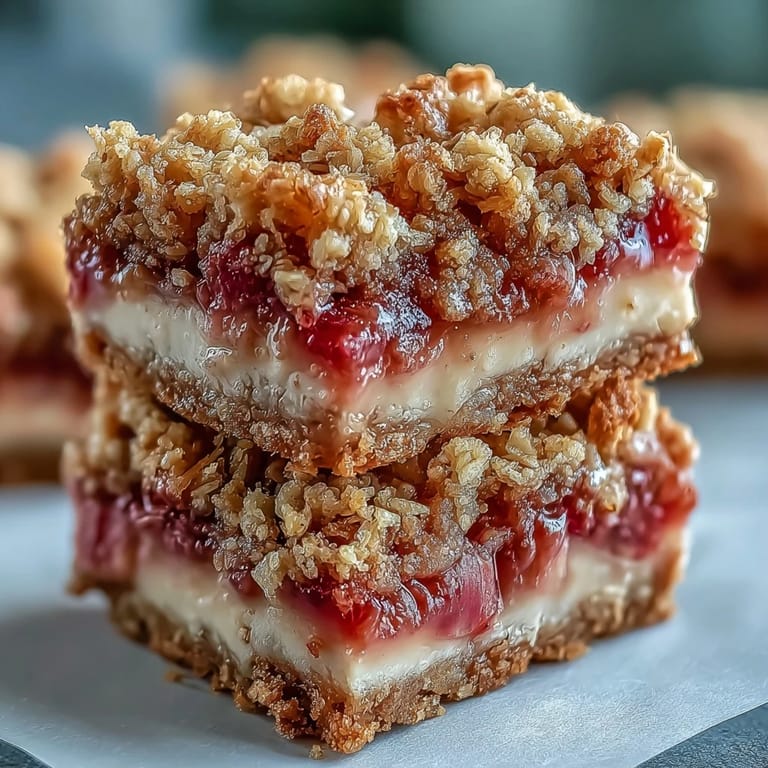
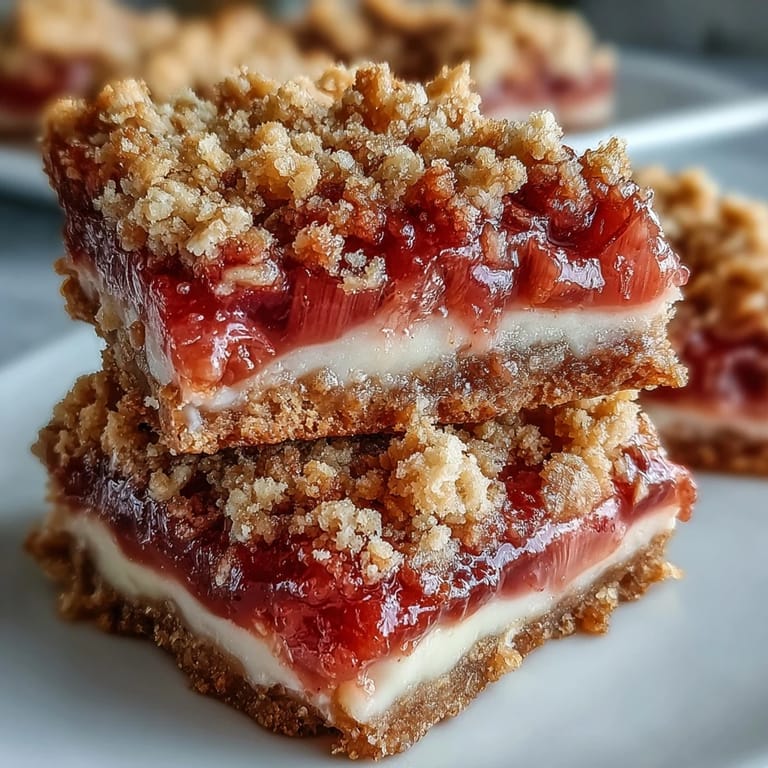
 There's something deeply satisfying about slicing into these bars and seeing those distinct layers: golden crumble, creamy custard, tangy rhubarb, all stacked like edible architecture. They taste like springtime, patience, and the kind of baking that's worth the wait.
Recipe Questions & Answers
- → Can I use frozen rhubarb instead of fresh?
Yes, frozen rhubarb works well. Thaw it first and drain excess liquid before cooking to prevent the bars from becoming too watery. You may need to cook it slightly longer to achieve the right consistency.
- → Why do I need to chill the bars before cutting?
Chilling allows the custard layer to set completely, making it much easier to cut clean, neat bars. Without chilling, the custard may be too soft and the bars will fall apart when sliced.
- → Can I make these bars ahead of time?
Absolutely. These bars are ideal for making ahead as they need to chill anyway. Store them covered in the refrigerator for up to 3 days. They actually taste better after a day as the flavors meld together.
- → What can I substitute for rhubarb?
Try using tart fruits like gooseberries, cranberries, or a mix of raspberries and strawberries. You may need to adjust the sugar depending on the sweetness of your chosen fruit.
- → How do I know when the custard is properly cooked?
The custard should coat the back of a spoon and hold a line when you draw your finger through it. It will thicken further as it cools, so don't overcook it or it may become grainy.
- → Can these bars be frozen?
Yes, wrap individual bars tightly in plastic wrap and freeze for up to 2 months. Thaw in the refrigerator overnight before serving. The texture may be slightly softer after freezing.