 Pin It
 The first time I made paella, I didn't own a proper paella pan. I used my widest skillet and called my abuela in a mild panic about whether it would still count. She laughed and said the pan doesn't make the dish, the saffron does. That lesson stuck with me. Now whenever I make this Spanish seafood paella, I'm transported to that conversation, to the smell of saffron hitting hot oil, to the exact moment when everything comes together on the stovetop.
I made this for my partner on a rainy Tuesday night when neither of us felt like going out. The kitchen filled with this golden warmth, and by the time the mussels opened, we'd already abandoned our phone scrolling and were just standing there watching it cook. That's when I realized this dish does something special, something beyond just tasting good.
Ingredients
- Saffron threads: Just a pinch of this stuff transforms everything. Buy it from a spice shop rather than a supermarket if you can, the difference is real.
- Short-grain paella rice (Bomba or Arborio): These varieties actually absorb liquid without turning mushy, which is the whole point. Regular rice will turn to porridge.
- Fish or seafood stock: Homemade is best if you have time, but a good store-bought version won't let you down. Cold stock is a mistake I made once.
- Shrimp, mussels, and clams: Buy them the same day you're cooking. The fresher they are, the sweeter they taste.
- Bell peppers (red and green): The colors are part of the whole experience, visually and flavor-wise.
- Smoked paprika: It gives that subtle smokiness that makes people wonder if you cooked it over a fire.
- Olive oil: Use something you actually like the taste of. This isn't a moment to grab the cheap bottle.
- Garlic and onion: The foundation. Fresh and finely chopped makes all the difference.
Tired of Takeout? 🥡
Get 10 meals you can make faster than delivery arrives. Seriously.
One email. No spam. Unsubscribe anytime.
Instructions
- Steep the saffron in warm stock:
- Pour your stock into a saucepan and warm it gently. Crumble those precious saffron threads into it and let them sit there, slowly releasing their color and flavor. You'll notice the liquid turning golden, which is one of the nicest moments in cooking.
- Build your flavor base:
- Heat oil in your paella pan and sauté the onion until it starts to soften, maybe 2 minutes. Add garlic and let it become fragrant, then the bell peppers. You're not rushing this, just gently coaxing everything to release what it has to offer.
- Add the tomato and let it break down:
- Stir in your grated tomato and cook it until most of the liquid evaporates. This concentrates the flavor and prevents your rice from becoming watery later.
- Toast the rice:
- Add your rice and stir it around so every grain gets coated with oil and nestled against the vegetables. Dust it with smoked paprika, salt, and pepper. This toasting step is why the rice stays separate instead of becoming risotto.
- Pour in the stock without stirring:
- Once the stock goes in, you stop stirring. Distribute the rice evenly, then step back and let it do its thing. This is hard for people who like to fidget while cooking, but it's the secret to the crispy bottom layer that everyone fights over.
- Arrange the seafood and cover:
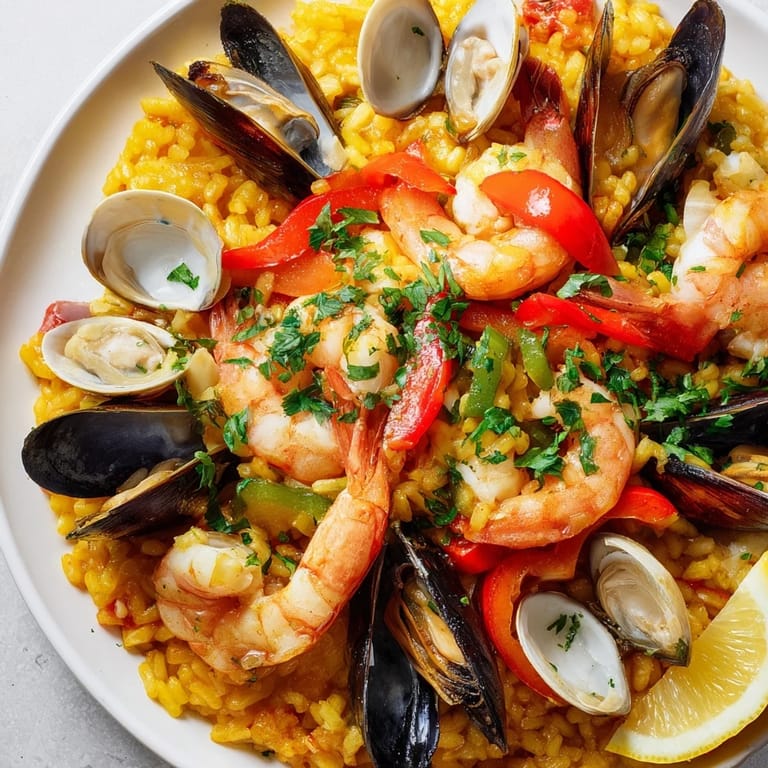
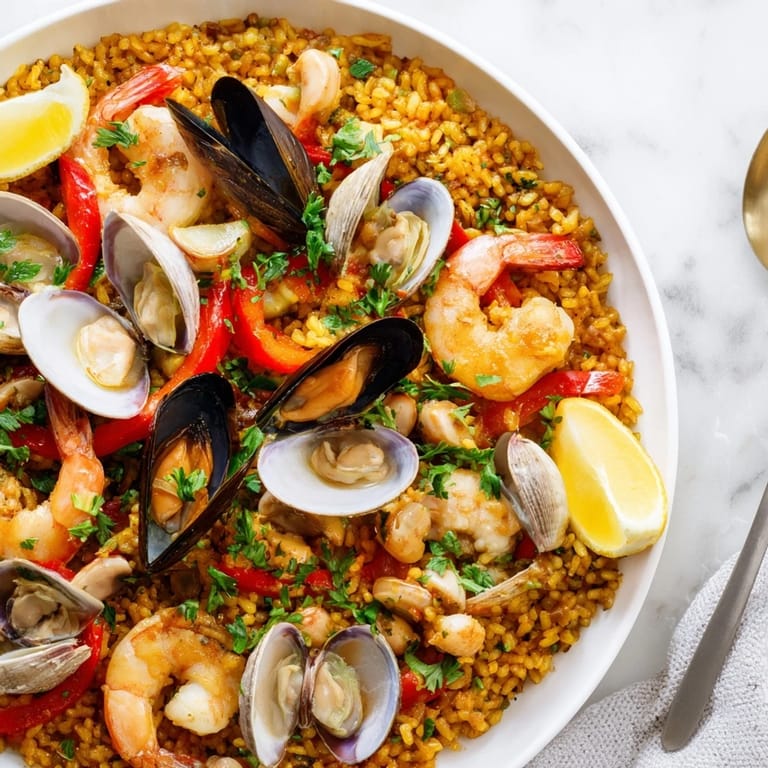
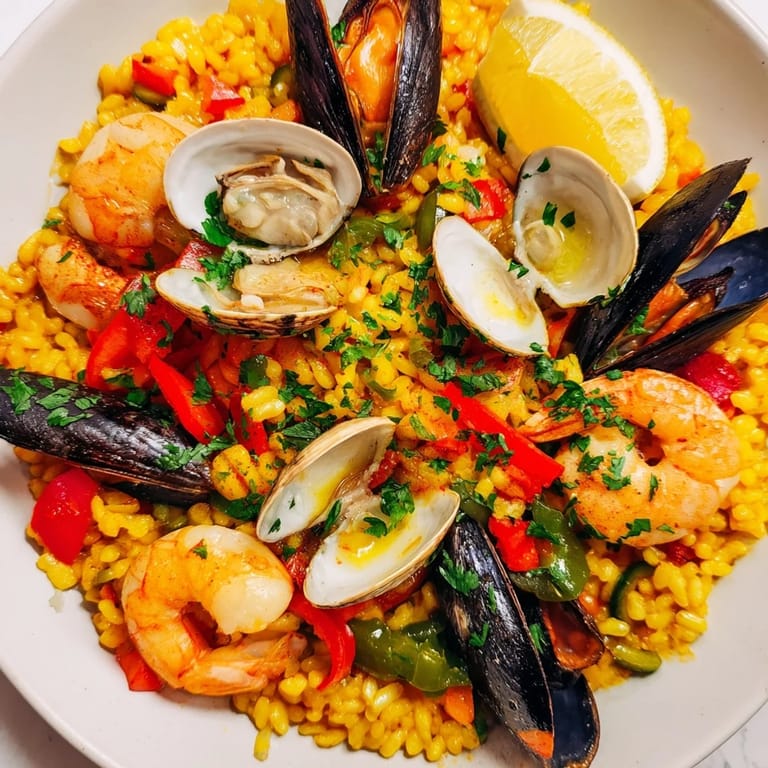
- Place your shrimp, mussels, and clams right on top of the rice. Cover loosely with foil or a lid and let it cook over medium-low heat for about 20 to 25 minutes. You'll know it's done when the rice is tender and the shells have opened.
- Rest and finish:
- Remove from heat, keep it covered for 5 minutes, then uncover and hit it with fresh parsley and lemon wedges. Serving it straight from the pan is part of the magic.
 Pin It
 There's something about watching seafood cook on top of rice that makes you feel connected to Spain, to the sea, to centuries of people doing exactly this. It's not fancy or complicated, but it feels significant somehow.
Why the Saffron Is Worth It
I used to skip the saffron because it seemed like an unnecessary expense. One day I splurged and understood immediately why every paella recipe mentions it first. The flavor isn't just in the taste, it's in the color, in the whole sensory experience. Saffron changes the rice from golden to something deeper, almost mysterious. Once you've had it with saffron, there's no going back.
Timing and Temperature Secrets
Medium-low heat is where the magic happens. I used to crank the heat thinking I'd speed things up, and I'd end up with burnt bottom and crunchy top. The slow cook lets the rice absorb everything gradually, lets the seafood stay tender. Patience is an ingredient in this dish just as much as saffron is.
Variations and Add-Ons
This is a foundation, not a law. I've thrown in frozen peas in the last few minutes, added a handful of calamari, even swapped some shrimp for firm white fish. The beauty of paella is that it adapts to what's in your kitchen and what you're craving that particular night. The rice and saffron are non-negotiable, but everything else is flexible.
- Frozen peas add color and sweetness if you want something lighter.
- A good Spanish white wine like Albariño pairs perfectly and adds brightness to the meal.
- Serve it straight from the pan and let people eat from the edges, the way it's meant to be done.
 Pin It
 Make this when you want to feel like you're cooking something special, because you are. It never fails to turn a regular evening into something worth remembering.
Recipe Questions & Answers
- → What type of rice is best for this dish?
Short-grain paella rice like Bomba or Arborio works best, as it absorbs broth well while remaining firm.
- → How is the saffron used?
Saffron threads are infused in warm seafood stock to release their color and aroma before adding to the dish.
- → Can I substitute the seafood?
Yes, firm white fish or calamari can replace or complement the shrimp, mussels, and clams for variety.
- → Why should the rice not be stirred after adding broth?
Allowing the rice to cook undisturbed helps develop a flavorful crust at the bottom, a signature of this dish.
- → What garnishes enhance the flavor?
Fresh chopped parsley and lemon wedges brighten the dish and add fresh notes to complement the rich seafood flavors.
- → Are there common allergens in this dish?
It contains shellfish and seafood stock; check stock labels if gluten sensitivity is a concern.