 Pin It
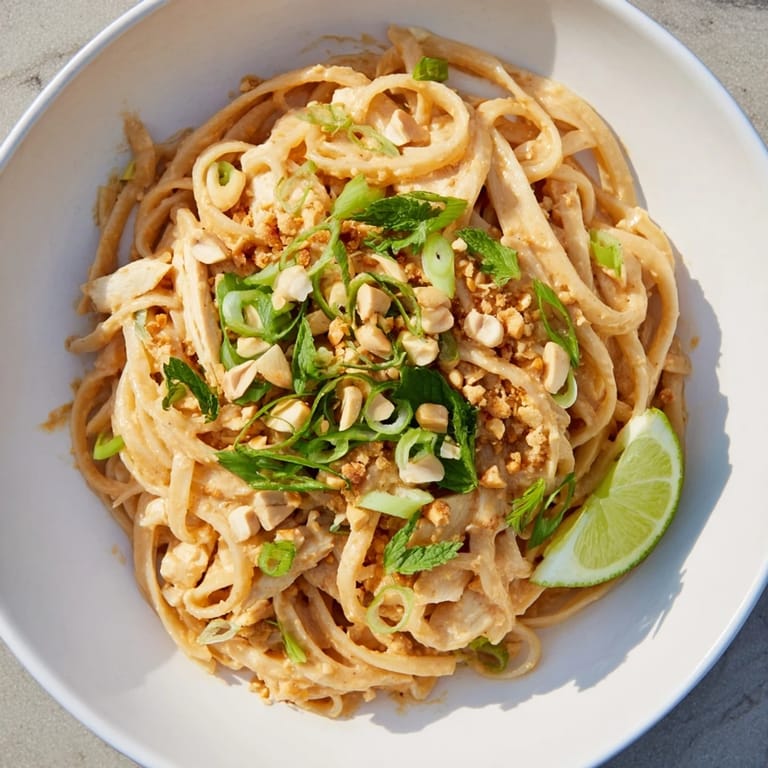
 There was this Tuesday night when I had leftover rotisserie chicken and a nearly empty pantry, so I grabbed a jar of Thai peanut sauce and wondered what would happen if I just threw it all together with pasta. Twenty minutes later, my roommate came home to the smell of ginger and lime wafting through the kitchen, and honestly, that accidental dinner became the dish I now make whenever I need something fast that feels like it took real effort.
I made this for a dinner party once and watched three different people ask for the recipe before they'd even finished eating, which never happens with the usual pasta dishes I attempt. My friend Sarah said it reminded her of her time in Bangkok, and suddenly we were trading stories about street food instead of talking about work, all because of a bowl of peanut pasta.
Ingredients
- Linguine or spaghetti, 340g: The shape matters more than you'd think—thinner noodles grab the sauce better and cook faster, which is why I usually skip fettuccine here.
- Chicken breast, 450g, thinly sliced: Thin slices cook in minutes and stay tender; thick chunks turn rubbery and drag down the whole meal.
- Vegetable oil, 1 tbsp: High smoke point is key for getting that golden crust on the chicken without burning the garlic you'll add later.
- Salt and black pepper: Season the chicken generously—this is where flavor begins, not at the end.
- Thai peanut sauce, 1 cup: Quality matters here since it's the backbone; read labels for ones with real peanuts and minimal additives.
- Soy sauce, 2 tbsp: Adds umami depth that balances the sweetness some peanut sauces bring.
- Lime juice, 2 tbsp: Fresh lime is non-negotiable—bottled tastes thin and sour in comparison.
- Fresh ginger, 1 tsp grated: Peeling and grating fresh ginger takes 30 seconds and changes everything, even if powdered would technically work.
- Garlic, 2 cloves minced: Mince it by hand if you can; garlic presses create a paste that burns too easily.
- Fresh cilantro and mint: These herbs are what transform a sauce into something alive and bright.
- Green onions, 2, thinly sliced: Split the bunch between cooking and garnish so you get freshness in both places.
- Roasted peanuts, 1/4 cup chopped: Toast them yourself if you have time; store-bought roasted are fine but fresh-toasted changes the nutty depth.
- Lime wedges for serving: Let people squeeze their own—it's interactive and gives control over tanginess.
Tired of Takeout? 🥡
Get 10 meals you can make faster than delivery arrives. Seriously.
One email. No spam. Unsubscribe anytime.
Instructions
- Get the pasta water going:
- Fill a large pot with water, salt it until it tastes like the sea, and bring to a rolling boil. This takes about 10 minutes, so do this first while you prepare everything else.
- Slice the chicken thin:
- Use a sharp knife and cut against the grain for tender pieces; if your chicken is thick, lay it flat and slice horizontally to open it up like a book.
- Cook the pasta:
- Add linguine to boiling water and stir immediately so it doesn't stick. Set a timer for one minute under the package time—pasta that's just barely al dente will finish cooking gently in the sauce.
- Sear the chicken until golden:
- Heat oil in a large skillet over medium-high heat until it shimmers, then add chicken in a single layer. Let it sit undisturbed for 2 minutes to develop color, then stir and cook another 3–5 minutes until no pink remains inside.
- Build the sauce:
- Reduce heat to medium, add peanut sauce, soy sauce, lime juice, ginger, and garlic to the empty skillet. Stir gently for 2–3 minutes, letting the garlic perfume the oil without browning.
- Bring it all together:
- Drain pasta and add it to the skillet along with the cooked chicken, tossing everything until the sauce coats every strand. The heat from the pan will help the flavors meld.
- Finish with freshness:
- Remove from heat, stir in cilantro, mint, and most of the green onions. Let it sit for 30 seconds so the herbs don't wilt completely.
- Plate and garnish:
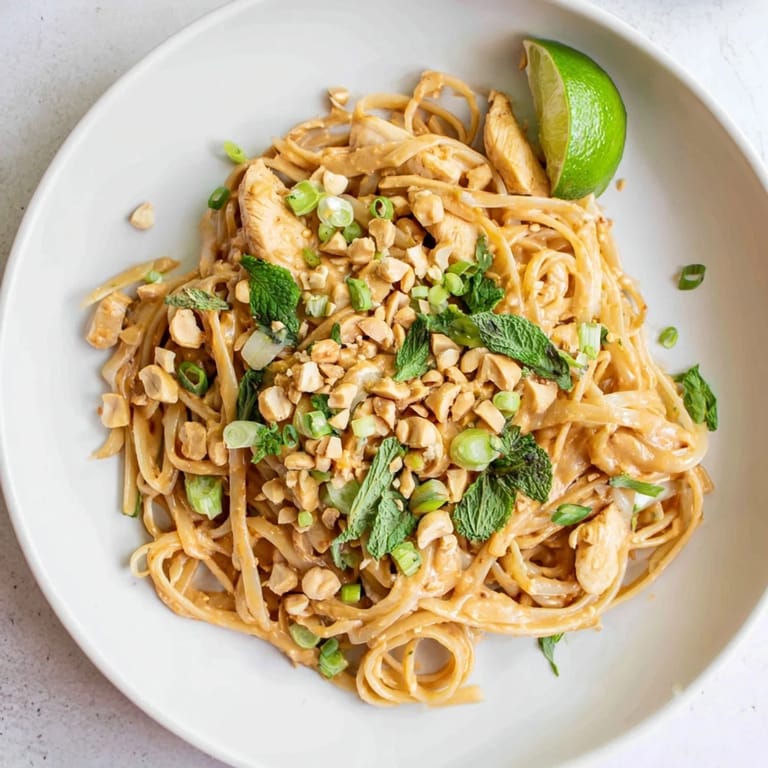
- Divide among bowls and top with chopped peanuts, remaining green onions, and a lime wedge for squeezing over the top.
 Pin It
 I remember standing in my kitchen on a random Thursday, tasting this dish and suddenly realizing why people talk about food the way they talk about memories—because somehow a bowl of pasta and peanut sauce carried the whole story of Thai street markets and quick weeknight dinners and the kindness of sharing something warm.
Why This Fusion Works
Thai peanut sauce and pasta shouldn't theoretically work together, but they do because both are built on similar principles: they're vehicles for bold flavors, they absorb sauces without falling apart, and they disappear quickly from plates. The creaminess of peanut sauce coats pasta the way butter or cream would, but with a depth and complexity that feels like traveling while sitting at your kitchen table. Cilantro and mint don't fight the richness; they dance around it, making each bite feel lighter than it has any right to be.
Playing with Heat and Flavor
This dish has a built-in temperature range depending on your mood and who's eating. On a mild night, lime juice and fresh herbs do all the talking. When I want more assertiveness, a small dash of sriracha or red chili flakes sharpens everything without overpowering the peanut. The beauty is that nothing is locked in—you can taste and adjust before serving, which is harder to do with most recipes.
Variations That Deserve Their Own Night
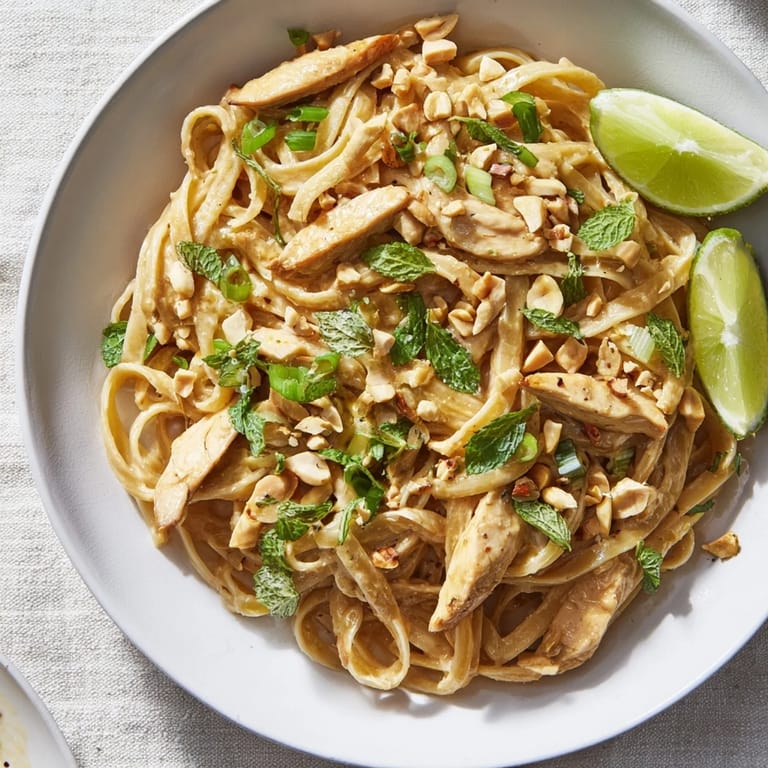
The version I make most often keeps the chicken, but sometimes tofu crumbles work when I'm cooking for vegetarian friends, and the texture contrasts beautifully with the silky sauce. Rice noodles add a different chewiness and absorb sauce differently than wheat pasta. Once I even tried it cold the next day, dressed with extra lime juice, and it became a completely different lunch—less comforting, more refreshing.
- Tofu works best if you press it first and toast it in a separate pan until the edges are crispy.
- Rice noodles cook faster and need more sauce because they're thirstier than wheat pasta.
- A cold version the next day should be tossed with a little extra sauce and lime juice before serving.
 Pin It
 This pasta has become my answer to the question people ask on tired evenings: what can we make that feels special but doesn't require a trip to three grocery stores? It's fast enough to pull together on a weeknight but bold enough to stand up to actual dinner guests.